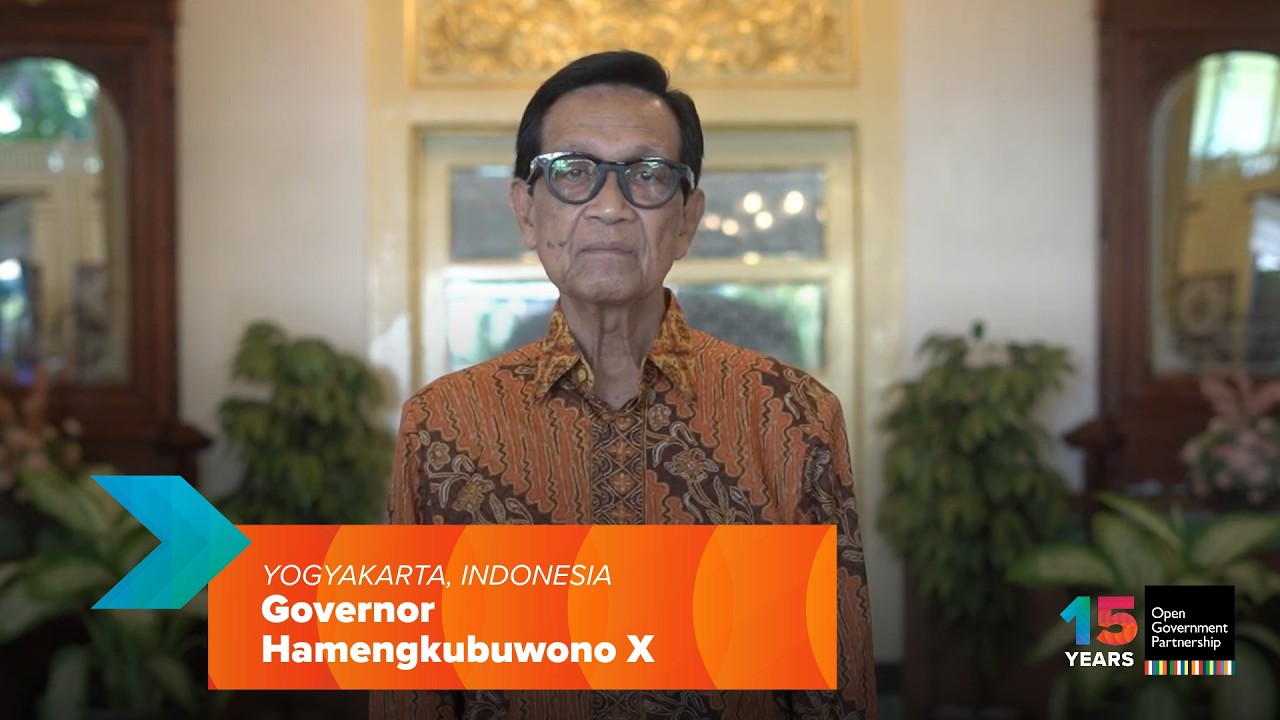
Governor of Yogyakarta: Open Government for Better Public Services
Hace quince años, el Open Government Partnership (OGP) comenzó con una idea simple pero audaz: los gobiernos funcionan mejor cuando son transparentes, rinden cuentas y están abiertos a la participación ciudadana. Lo que comenzó con ocho países fundadores se ha convertido en un movimiento global de 73 países, más de 135 gobiernos locales y miles de organizaciones de la sociedad civil que trabajan juntas para hacer que los gobiernos sean más abiertos. Durante ese tiempo, han cocreado miles de reformas que fortalecieron las leyes de derecho a la información, abrió el gasto público y la propiedad de las empresas, Mayor participación inclusiva, y más.
El 15º aniversario de la OGP llega en un momento crucial. Las democracias de todo el mundo se enfrentan a una disminución de la confianza, a la polarización y a desafíos cada vez más complejos. El gobierno abierto no solo es más relevante; es más necesario que nunca.. Este hito es a la vez un reconocimiento de lo que se ha construido y un llamado a ir más allá, ampliando las reformas ambiciosas, fortaleciendo las instituciones democráticas y promoviendo soluciones en temas como la gobernanza digital, el espacio cívico, la transparencia económica y la prestación de servicios públicos. Más información.
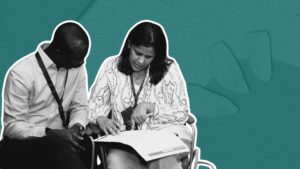
Governor of Yogyakarta: Open Government for Better Public Services
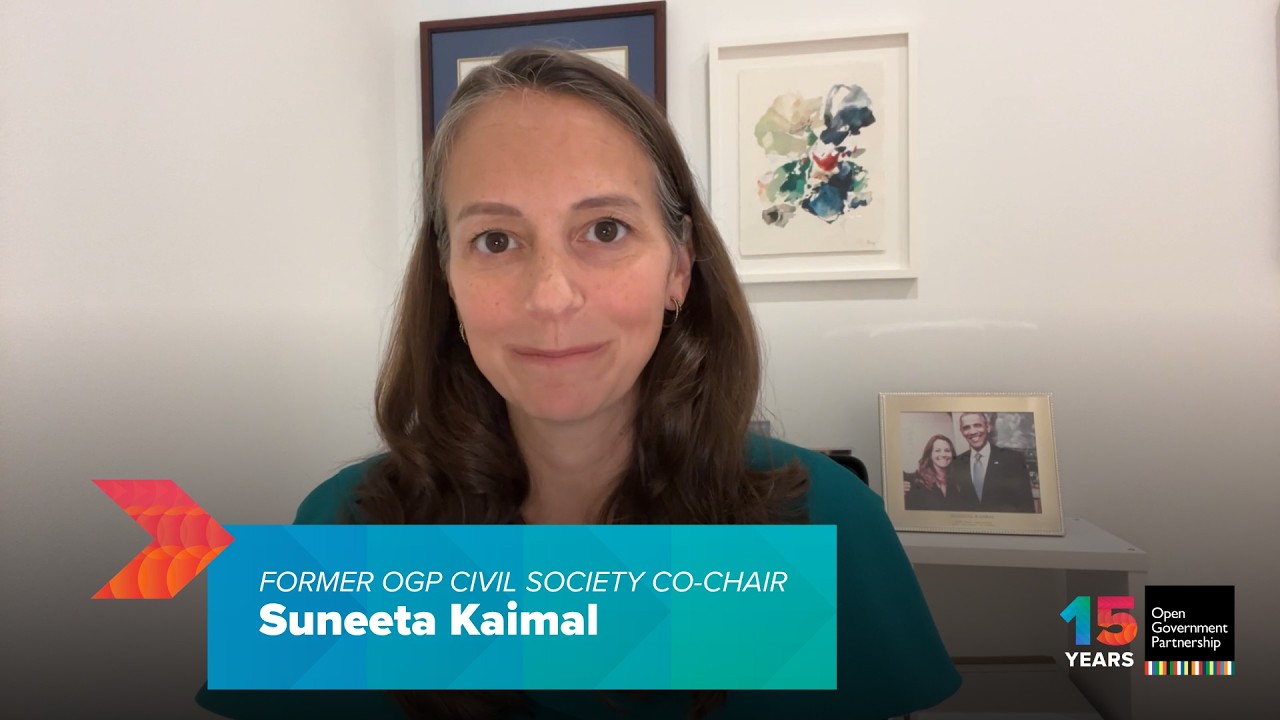
Suneeta Kaimal: Un gobierno abierto puede proteger a las personas y al planeta.
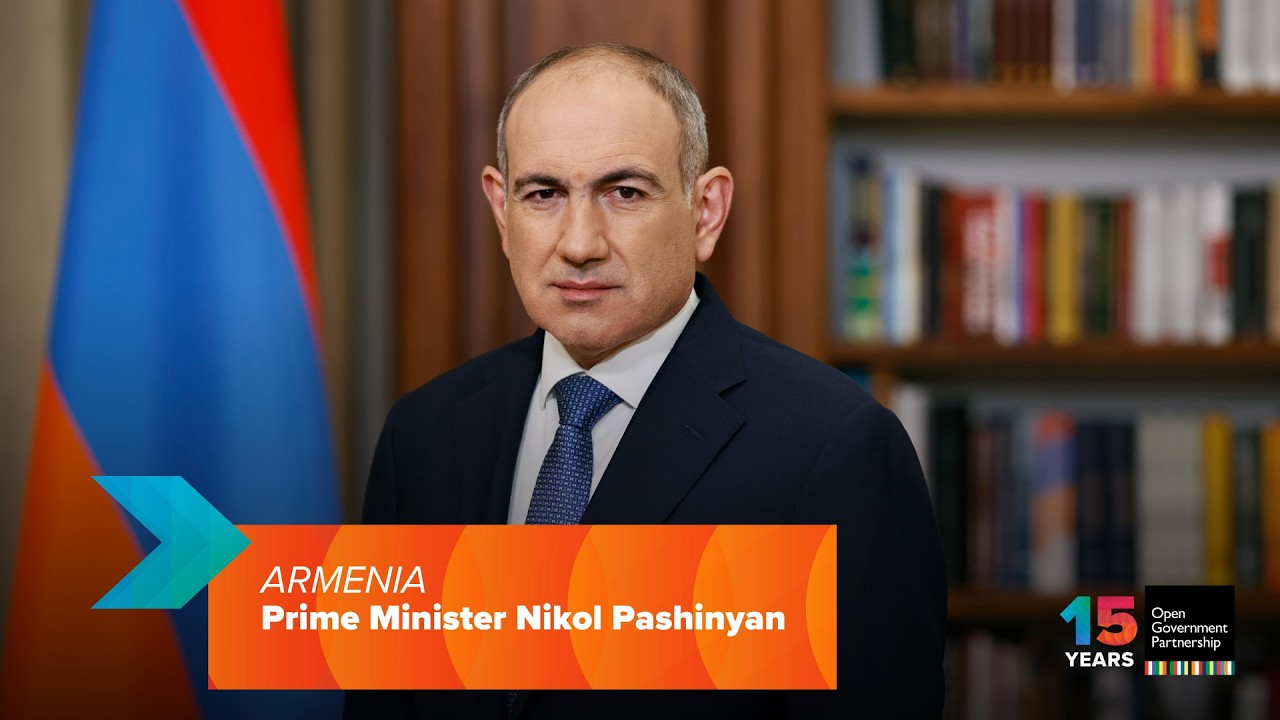
Primer Ministro de Armenia: Fomentando la confianza pública a través del gobierno abierto.
A lo largo de 15 años, la Alianza para el Gobierno Abierto (OGP) ha contribuido a definir cómo pueden y deben funcionar los gobiernos abiertos. Desde 2011, sus miembros han impulsado cambios institucionales y de políticas significativas. Durante este tiempo, la OGP se ha consolidado como una plataforma para generar reformas que producen resultados tangibles, como la ampliación de la participación de la sociedad civil en la formulación de políticas y la mejora de los servicios públicos, la capacidad de respuesta del gobierno y la asignación de recursos.
Esta publicación celebra el arduo trabajo de líderes políticos, funcionarios públicos, reformadores de la sociedad civil y socios. Asimismo, refleja la resiliencia de la Alianza para impulsar reformas de gobierno abierto en los últimos 15 años. Este hito representa tanto un reconocimiento de lo logrado como un llamado a ir más allá mediante la ampliación de reformas ambiciosas.
Explore 15 años de gobierno abierto en la práctica a través de historias de diversas áreas políticas y problemáticas. Descubra cómo los gobiernos, la sociedad civil y los reformadores han colaborado mediante la Alianza para el Gobierno Abierto (AGP) para transformar ideas ambiciosas en reformas significativas, y los resultados que estos esfuerzos han brindado a las personas y las comunidades.
Escuche al director ejecutivo, los embajadores y otros líderes de la Alianza para el Gobierno Abierto (OGP) mientras reflexionan sobre la trayectoria de la Alianza durante los últimos 15 años. Explore sus perspectivas sobre los avances logrados, los desafíos que enfrenta el gobierno abierto en la actualidad y el papel que la OGP puede desempeñar para forjar una gobernanza más abierta y responsable en los próximos años.
La labor del gobierno abierto está lejos de haber concluido. Explore recursos, marcos actualizados y herramientas prácticas diseñadas para ayudar a los reformadores a consolidar los avances de los últimos 15 años, abordar los desafíos emergentes e impulsar las reformas del gobierno abierto para la próxima generación. En conjunto, estos recursos pueden contribuir a la construcción de sociedades más abiertas, prósperas y resilientes.
“Open government is a vital foundation for improving public services.”
For Hamengkubuwono X, Governor of Yogyakarta, Indonesia, open government means making information accessible, encouraging people to take part in decisions, and bringing different sectors together to improve the services people rely on.
As OGP marks 15 years, Yogyakarta is renewing its commitment to government that is open, innovative, and centred on the public interest.
#OGP15 #OGPLocal
@srisultanhamengkubuwonox @humasjogja

The debate on AI governance must include the minerals that power it and the communities affected by mining.
At the OGP Leaders Roundtable at UNGA, Suneeta Kaimal, President and CEO of the Natural Resource Governance Institute (NRGI), highlights OGP’s role in bringing natural resource and open government expertise together to put minerals at the center of the AI governance conversation.
#OGP15 #UNGA #GobiernoAbierto
What does it take to move public participation from a good idea to lasting change?
Join us on October 28 to hear from three practitioners who are finding ways to make participation part of how institutions and communities work.
🇨🇿 Klára Čížková championed citizen participation within the Czech Ministry of Health, helping secure an official strategy to guide the ministry’s work.
🇲🇽 Roberto Ruz Sahrur helped advance reform of Yucatán’s Law of Citizen Participation, paving the way for new mechanisms for public involvement in state law.
🇵🇭 Edgar Maverick II Ayag is working to ensure young people in remote areas of Tagum City can take part in citizens’ assemblies, while equipping local communities with a Cebuano-language guide to organise their own.
As alumni of People Powered’s accelerator programmes, they bring hands-on experience of making participation work in different contexts. They’ll be joined by our colleague Tim Hughes for a conversation facilitated by Melissa Zisengwe on how to sustain these efforts and make them part of decision-making.
📅 Miércoles 28 de octubre
🕒 1 pm UTC / 9 am ET / 2 pm CET / 9 pm Manila
🔗 Save your spot, link in bio.
Interested in @peoplepowered_ ’s accelerator programmes or Rising Stars Mentorship? Join the conversation and bring your questions ahead of the November 27 application deadline.
#ParticipatoryDemocracy #OpenGovernment #DemocraticInnovation
📢 We’re hiring: Communications Associate!
Join us and help communicate how governments and civil society are making public institutions more transparent, accountable and participatory.
Qué harás:
🔹 Draft and schedule content for OGP’s social media channels.
🔹 Create carousels, reels and content for digital campaigns.
🔹 Curate and produce newsletters.
🔹 Edit blogs, web content and other communications materials.
🔹 Track digital performance and help improve audience engagement.
📍 Bruselas, Bélgica
💼 Full-time, 12-month contract
📅 Apply by 9 November 2026
👉 Apply here: https://ats.rippling.com/en-GB/ogp/jobs/8031b849-8e1f-45c5-8730-a9f030b7a241
#Hiring #CommunicationsJobs #OpenGovernment
Political divisions are deepening, trust in institutions is under pressure, and public debate can leave little room for listening. How can we create space for people to engage across differences, especially when the issues are sensitive and opinions strongly held?
Join us next week to explore how structured dialogue can help rebuild trust, reduce polarisation and strengthen democratic life.
Oír de:
🔹 Kai Alhanen, Dialogue Academy
🔹 Katju Holkeri, Valtiovarainministeriö/Ministry of Finance, Finland
🔹 Kairi Tilga, Eesti Koostöö Kogu / Estonian Cooperation Assembly
The webinar will introduce the Dialogue Circle method, share how national dialogue processes in Finland and across the Baltic Sea region bring people’s lived experiences into public institutions’ work, and offer you the chance to experience the method in a small breakout group.
Part of our Europe Dialogues series, this session will explore what listening can contribute when societies need to navigate difficult questions together.
📅 28 de octubre de 2026
🕐 13:00–14:30 CEST
🔗 Register, link in bio.
#EuropeDialogue #Dialogue
The latest OGP Digest is out! This edition brings together updates from across the open government community, from international forums and new practical resources to reform stories, research and upcoming events.
Esto es lo que hay dentro:
🔹 Key takeaways from the@eitiorg Global Conference and @the_oecd Global Forum on transparency, accountability and public trust.
🔹 Explore the new OGP Youth Toolkit 2.0, featuring 13 practical tools to help young people shape public decisions.
🔹Reforms in action: How open contracting and company ownership data are helping track public money in Mongolia and Nigeria.
🔹 Armenia’s 15-year open government journey, with lessons from reforms in beneficial ownership, participatory budgeting and public consultations.
🔹 Read our latest blogs, discover upcoming webinars and explore a free online course on legal empowerment for gender justice.
📩 Read the latest OGP Digest, link in bio.
#OGPDigest #newsletter
Strengthening open government takes sustained collaboration.
At the OECD Global Forum on Building Trust and Reinforcing Democracy in Paris, OGP met with government and institutional partners to discuss shared priorities and the next phase of cooperation.
The discussions focused on four areas:
🔹 Building more responsive governments. With Dominik Böllhoff from Germany, OGP discussed how digitalisation and modernisation can improve public services and restore trust. Meetings with the UK Cabinet Office and FCDO, including Jerome Glass, Stefan Kossoff, David Osborne and Matt D., focused on the UK’s co-chair agenda, citizen participation and open government skills across the public sector.
🔹 Strengthening civic space and resilience. Finland’s Minister Anna-Kaisa Ikonen highlighted that civic space can come under pressure even in established democracies. Discussions with OGP CEO Aidan Eyakuze explored stronger protections and peer exchange with Ukraine on civil society strategies.
🔹 Advancing national reforms and alliances. Meetings with Ahmed Laamoumri (Morocco), Minister Carla Morales (Costa Rica), Minister Buthelezi (South Africa) and Francesco Leone (Italy) covered national action plans, new thematic OGP networks and ways to advance open government priorities.
🔹 Deepening institutional cooperation. Discussions with Elsa Pilichowski (OECD), Sarah Lister (UNDP) and Marie-Hélène Boulanger (European Commission) explored shared priorities and opportunities for joint work.
These conversations are part of OGP’s ongoing work with members and partners to turn commitments into reforms that make governments more transparent, participatory and accountable.
The priority now is to build on these exchanges and translate shared priorities into continued collaboration and action.
#OGP15 #OpenGov #GovernmentUnstuck
Are existing accountability frameworks fit for purpose for generative AI in government?
Public institutions are increasingly using GenAI to translate information, support public services and carry out everyday tasks. But even when these tools don`t make decisions autonomously, they can shape the information people receive and how public services operate.
How should governments ensure these systems are transparent, accountable and subject to meaningful oversight? Are existing frameworks for algorithmic accountability enough, or does GenAI require new approaches?
Join the Open Algorithms Network for a discussion on the challenges GenAI poses for public-sector accountability and the safeguards needed to ensure its use serves the public interest.
📅 22 October | 10:00–11:00 CEST
🔗 Enlace para registrarse en la biografía.
#AIGovernance #AlgorithmicAccountability #OpenGov #GenAI