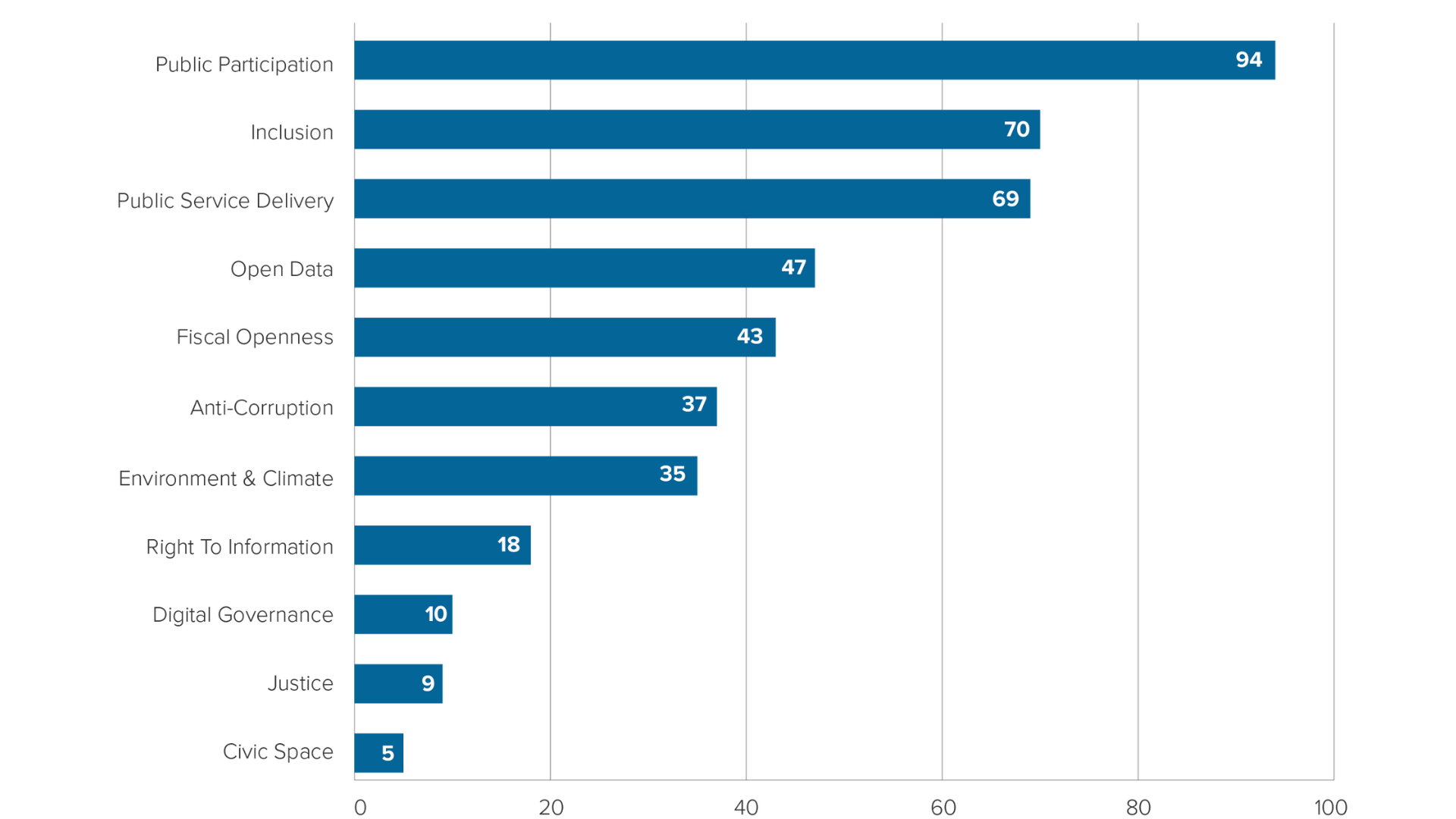
Between 2017 and 2024, 107 locals made 541 OGP commitments. Half of these commitments relate to public participation, emerging from 94 different locals. Public service delivery, inclusion, and open data have also been particularly popular policy areas. There were far fewer commitments on topics related to civic space, justice, and digital governance, with no more than ten local governments making commitments in these areas (see Box 1). As well as reflecting the priorities from co-creation, the popularity of some thematic areas over others reflects the specific responsibilities of local governments.
Popular Policy Areas in 2017-2024 Action Plans
OGP local members and other local governments also pursued reforms through the Open Gov Challenge, an initiative launched in 2024 to raise reforms’ ambition in ten thematic areas identified in OGP’s 2023–2028 Strategy. There were 89 local level commitments submitted by June 2025, the cut-off date for the 2025 Open Gov Challenge Awards. To learn about the newest commitments, please explore the Open Gov Challenge Tracker.
Box 1. Rising to the Challenge: Civic Space, Justice, and Digital Governance
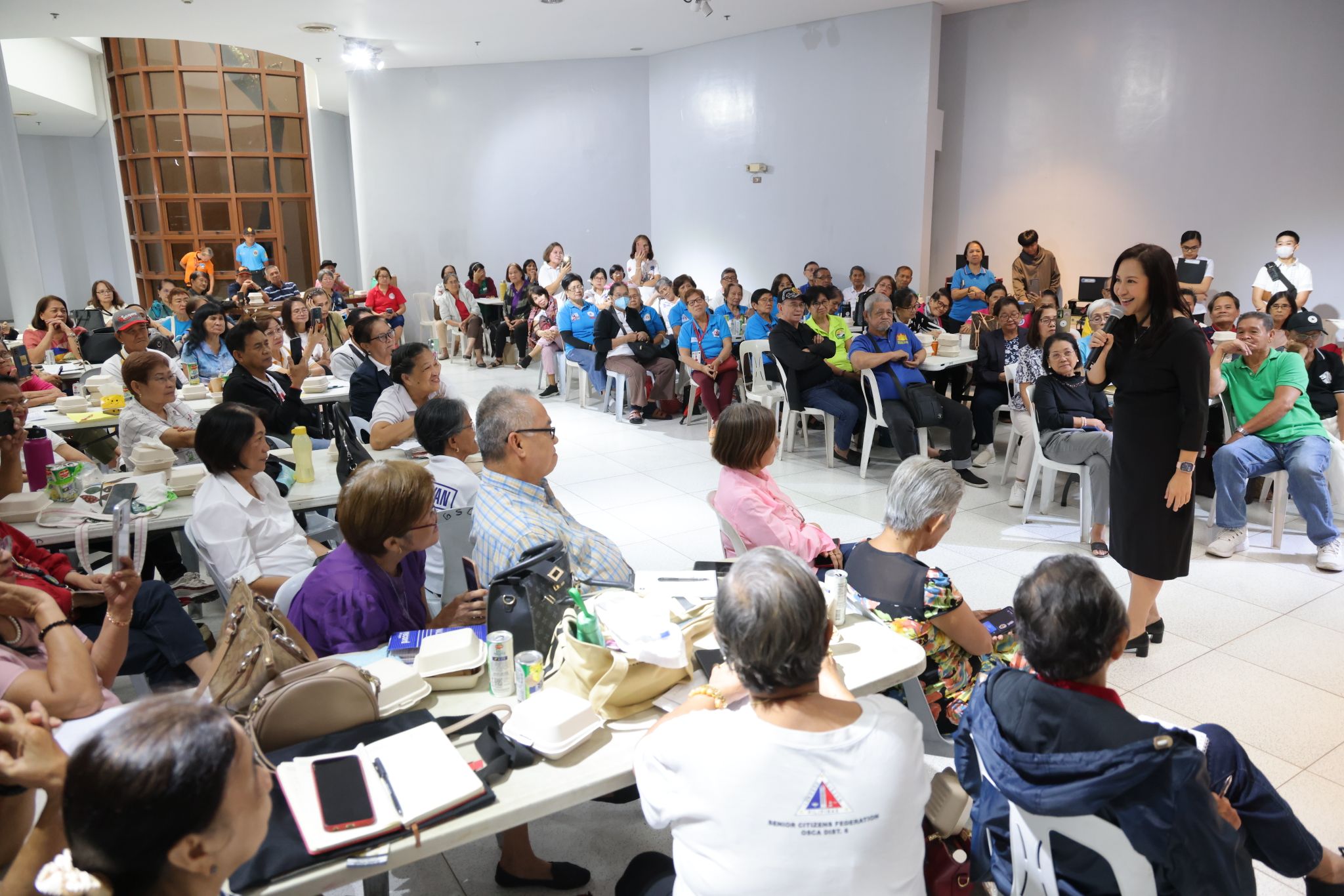
While few OGP local members have focused on civic space, justice, or digital governance, some are taking on new opportunities for reform through the Open Gov Challenge. Quezon City (the Philippines) is planning to allocate more funding to the People’s Council that provides a role for civil society organizations (CSOs) in city decision-making, as well as involving the body in the accreditation of new CSOs and creating a CSO training program. Kaduna State (Nigeria) committed to reactivate a committee that monitors the justice system and train justice officials and CSOs on the rights of detainees. Austin (United States) aims to co-create a city framework on Artificial Intelligence (AI). This framework would allow the government to assess AI tools it considers using and provide a channel for city officials and residents to report errors, bias, and abuse resulting from these tools.