
Since the launch of OGP in 2011, most national members have included reforms that affect local jurisdictions in their national OGP action plans. By 2024, this constituted more than 500 local commitments in national action plans, of which 126 were directly led and implemented by local governments. These reforms established national-local networks of open government, piloted open government reforms in local jurisdictions, and passed legislation to advance open government at the local level.
Local Commitments in National Action Plans
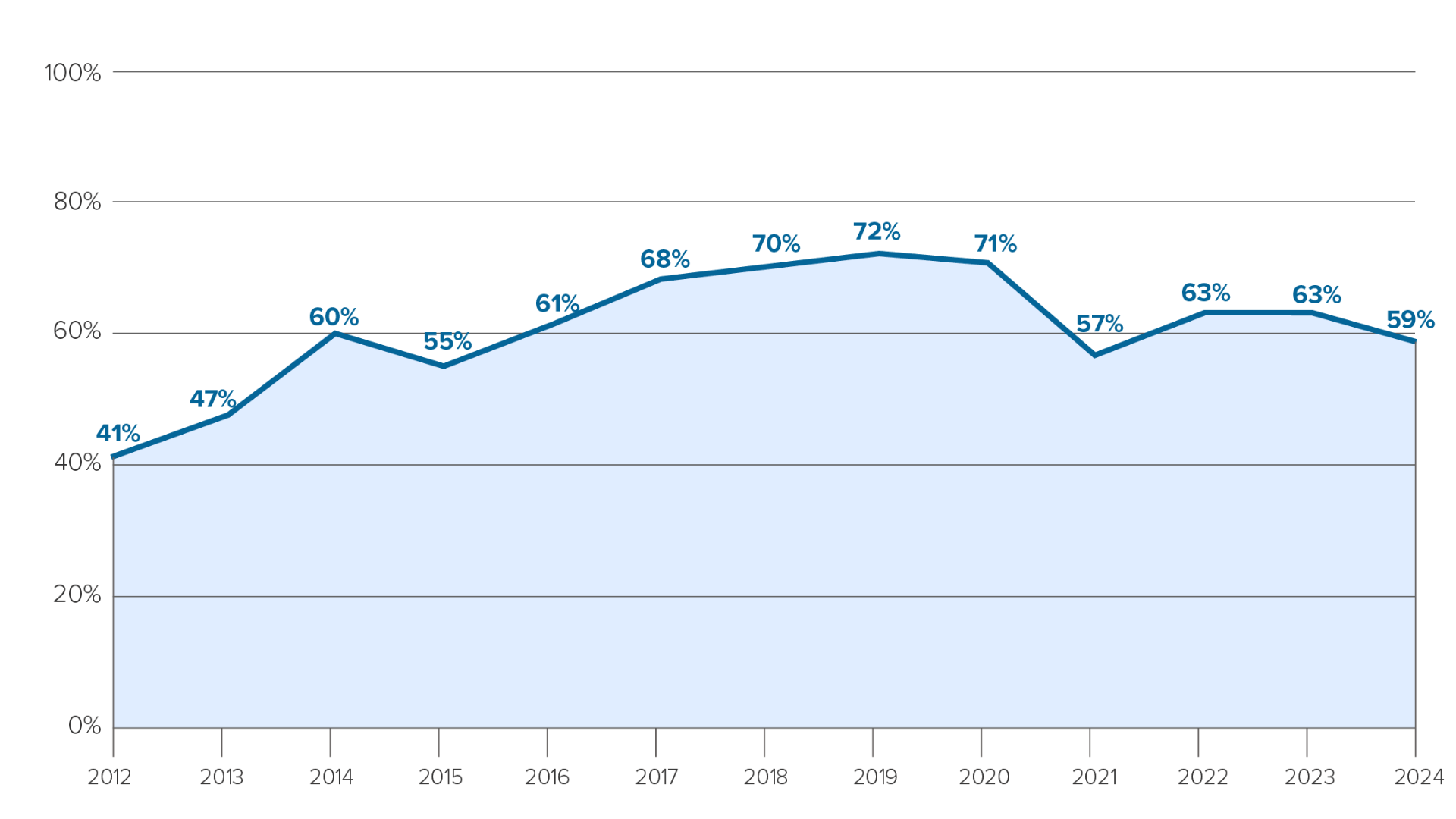
Commitments in national action plans that were implemented at the local level have made positive developments in recent years. In Armenia, participatory budgeting expanded to 21 communities, with national budget support to encourage citizen-initiated community projects. Romania shed light on how approximately $22 billions of local development funds were being allocated. In Morocco, 1,590 local governments joined the national access to information platform, while 84 local governments in the Philippines adopted their own freedom of information ordinances. Costa Rica significantly increased the amount of information available on its cantons’ actions to prevent crime. Meanwhile, Argentina and Mexico developed national programs to systematically scale up the number of local governments pursuing their own open government reforms.
The 126 commitments in national action plans that were led and implemented directly by local governments also made positive progress in recent years. Castile and León (Spain) launched a user-friendly online tool that allows the public to track the development of laws and standards, and trace how public feedback influenced the final text. In Germany, the Länder of Berlin and Schleswig-Holstein began publishing government information in a format that can be quickly found and linked to other open data.
In fact, local governments are particularly well-positioned to lead commitments that affect their jurisdictions. Commitments in national action plans that were led by local governments had higher levels of ambition than nationally led commitments affecting the local level (51% versus 41%). Commitments in national action plans that were locally led were also more likely to show early results by the end of the action plan cycle (23% versus 14%).
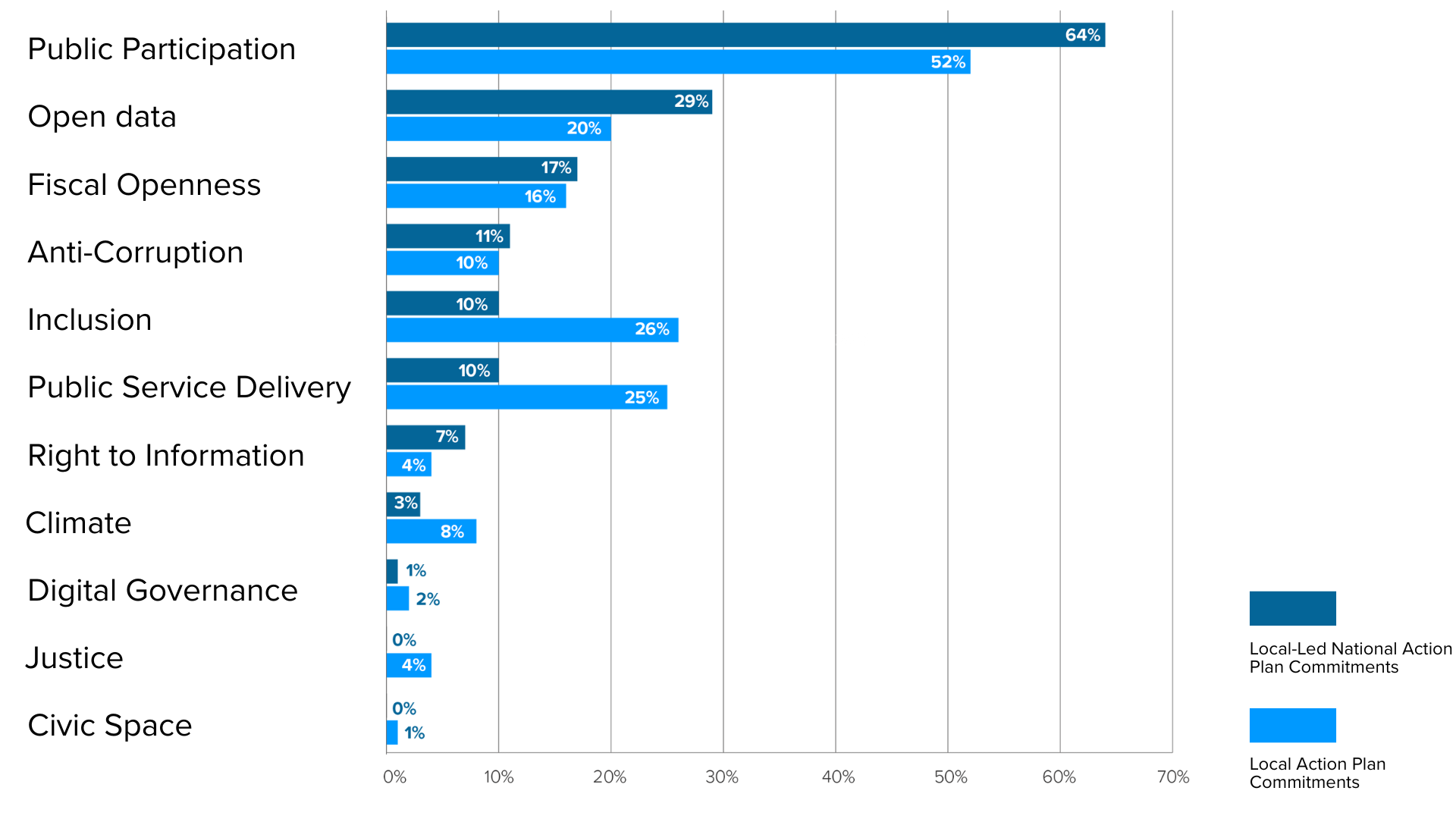
Commitments in national action plans that were led by local governments shared policy focus with commitments in OGP local action plans, but the emphasis varied. As with OGP local members, public 19 while commitments on public services and inclusion were much less common.20 This suggests that priorities in national action plans are influenced by the national government, even if the implementation of commitments is directly led by a local government—sometimes making progress in areas where nationwide reforms have faced greater challenges (see Box 10).
Popular Policy Areas in Comparison
In practice, five countries have made over two-thirds of the national commitments directly led by local governments—Colombia, Georgia, Spain, the United Kingdom, and Uruguay. For some, this approach was a strategic response to systems of government that are simultaneously very centralized and devolved. Spain’s 2020–2024 action plan included 53 commitments from Spain’s 19 autonomous communities and cities and one from the Spanish Federation of Municipalities and Provinces, addressing thematic areas established at the national level. OGP action plans from the United Kingdom government have also included reforms for Scotland, Wales, and Northern Ireland—each of which has a set of devolved powers. For others, local civil society have pushed for inclusion in national action plans. In Colombia and Uruguay, CSOs with local reach had positions of leadership in the national OGP platforms. These five countries have also included local governments in their national OGP multistakeholder forums, with some also bringing in different branches of government and adopting practices that fit with open state approaches.
To learn more, please explore OGP’s report “Progress through Partnership: National-Local Collaboration to Advance Open Government.” The report provides resources on the objectives of this collaboration, institutional arrangements that bring together national and local OGP stakeholders, and approaches and design choices for coordinated reforms.
Box 10. Implementing National
Policy Objectives in Kenya
When implementing national priorities, local efforts have sometimes made progress where national efforts have stalled. In Kenya, through national and local OGP action plans, Elgeyo Marakwet, Makueni, and Nandi each undertook open contracting and public participation reforms. They sought to implement priorities from the 2010 Constitution and a presidential executive order. While the national government faced obstacles, these counties made progress, passing public participation acts and developing comprehensive procurement transparency.