Spain’s President Sanchez Convenes Global Leaders, Calls on Reformers to Defend Democracy Amid Rising Threats
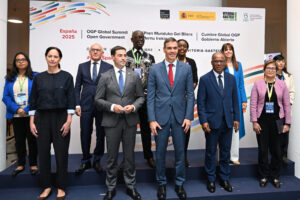
Vitoria-Gasteiz, Spain – The 2025 Open Government Partnership (OGP) Summit in Vitoria-Gasteiz, Spain, brought together more than 2,000 people including heads of state, ministers, mayors, civil society leaders, and government reformers from more than 70 countries at a time of profound global challenges to democracy.
“Open government, responsible, participatory, and transparent government, is our best tool for defending democracy, and this reflection is especially necessary today, when our democracies are under attack. Not only from outside, but also from within.” Spanish President Pedro Sánchez welcomed delegations from around the world to reaffirm Spain’s commitment to strengthening democracy through openness, accountability, and citizen participation.
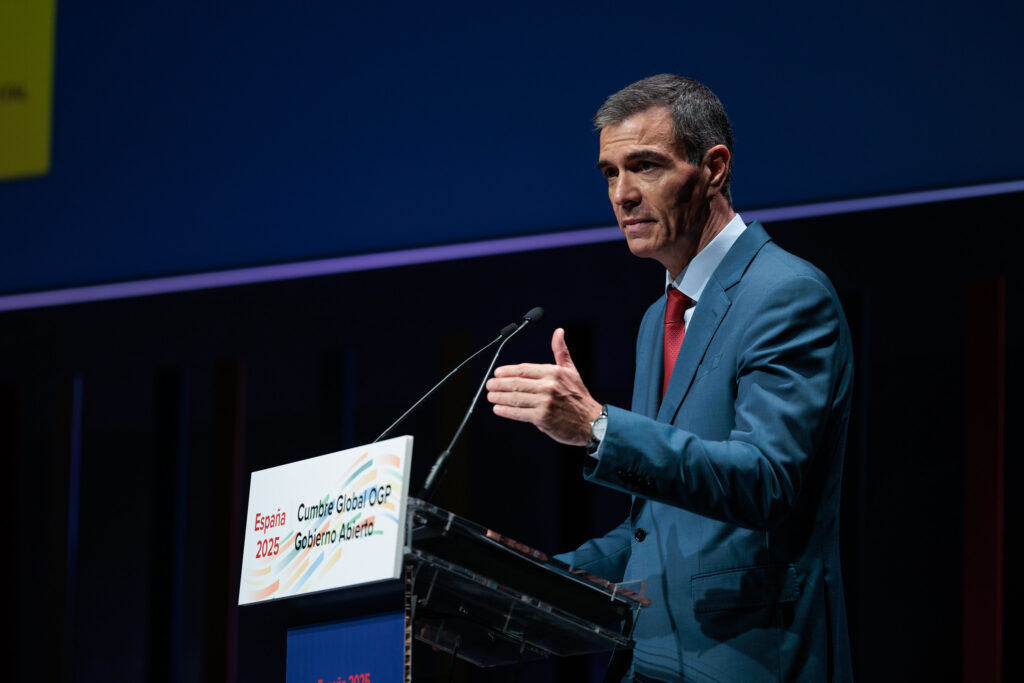
He was joined by Heads of State and Government from Cabo Verde, Albania, Norway and the United Kingdom who delivered in-person addresses and video remarks, echoing a shared call to defend democratic values, expand civic space, and deliver more ambitious reforms.
From Norway, Prime Minister Jonas Gahr Støre described Norway’s desire to take on “renewed responsibility” as a member of the OGP Steering Committee, building on its commitment to open government principles as one of the founding members of OGP.
David Lammy, Deputy Prime Minister Lord Chancellor, and Secretary of State for Justice in the United Kingdom, spoke about the country’s long commitment to openness, accountability, and inclusivity as another founding member of OGP. For him, these open government principles are necessary to tackle today’s pressing challenges and seize new opportunities for greater democratic renewal.
Albania’s Prime Minister, Edvin Rama, described the first-ever Western Balkans Summit hosted by the country last year as an opportunity to talk about transparency and trust in a historically divided region. Drawing on Albania’s own journey, he said that opening up is the bravest politics of all. For him, “Reforms are never painless and they require real spine.”
“Openness is resilience in action,” said Aidan Eyakuze, CEO of OGP. “It is democracy’s renewal plan. Not for it’s own sake but for the dignity and security it delivers to people and to our shared planet alike. […] Let us be open together so future generations inherit governments they can trust, communities they can believe in, and a planet with dignity.”
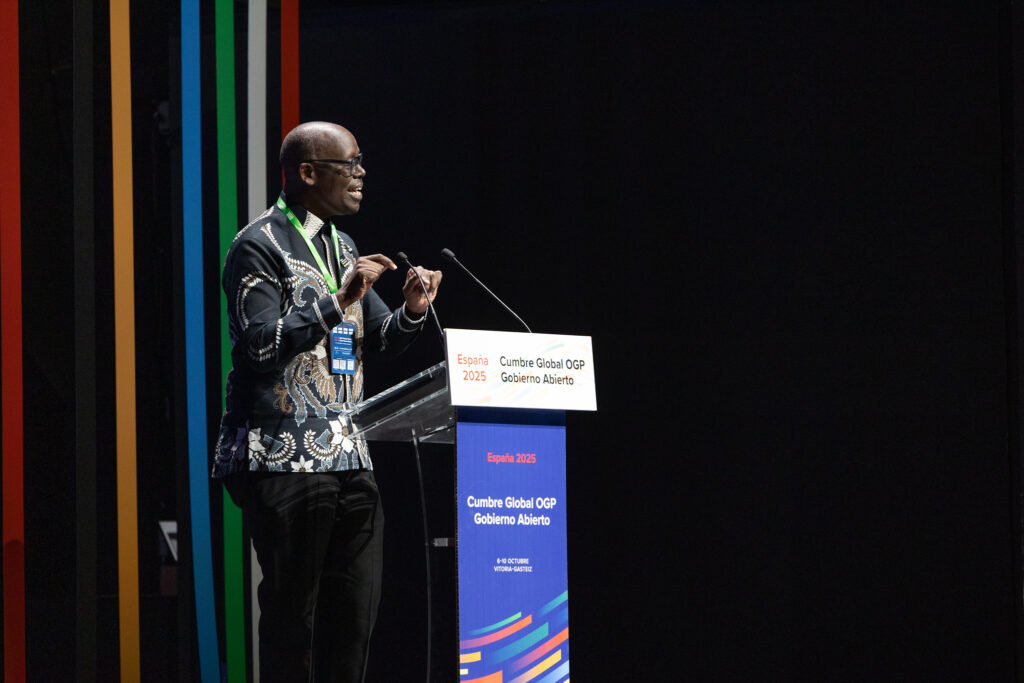
The Summit prioritized three pillars: People (placing citizens, rights, and civic space at the center), Institutions (strengthening transparency, accountability, and integrity), and Technology & Open Data (leveraging digital tools for innovation and better governance). Throughout the Summit, delegates engaged with 384 speakers in four high level plenaries, eight high level panels, five global dialogues, 40 breakout sessions, and more than 30 side events on pressing themes including the Open State, digital governance, public participation, integrity and anti-corruption, access to justice, and civic space.
The 2025 Open Government Partnership (OGP) Global Summit concluded with a powerful call from His Majesty the King of Spain, who underscored the importance of open government as a cornerstone of democracy and trust in institutions. Addressing hundreds of reformers in government and civil society leaders, the King highlighted Spain’s role as a founding member of OGP and reaffirmed the country’s commitment to advancing transparency, accountability, and citizen participation worldwide.
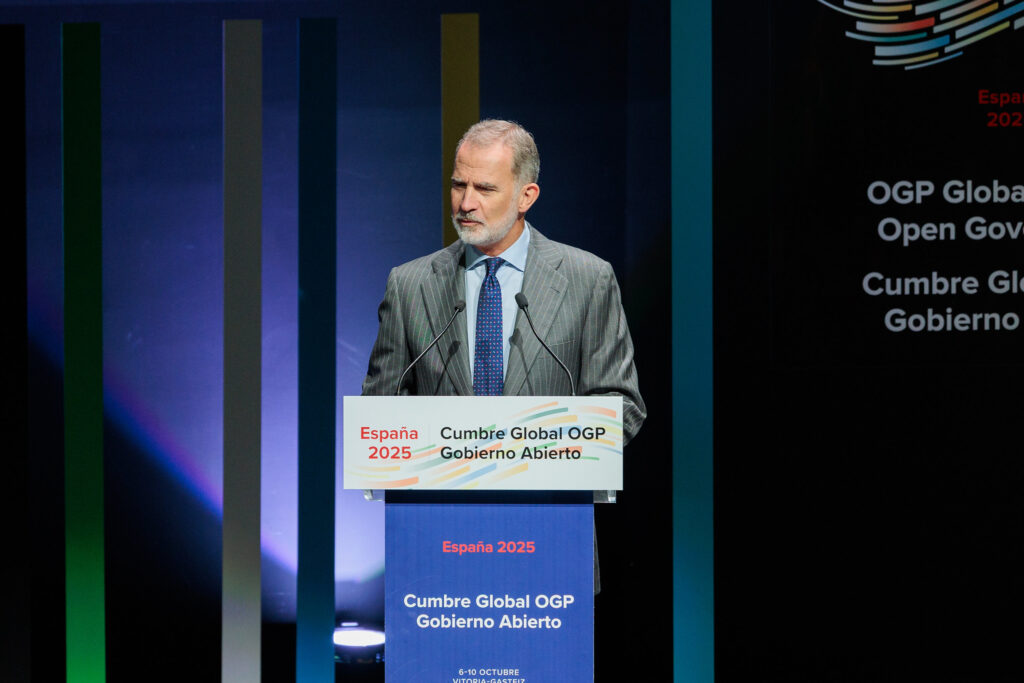
As the global community gathers in Spain, the message is clear: openness must deliver not just transparency, but fairer, better government for all.
Vitoria-Gasteiz Declaration
Following the Opening Ceremony, the OGP Steering Committee met to formally endorse the Vitoria-Gasteiz Declaration, a collective call to action for governments and civil society to work together to protect democracy and build more resilient, inclusive societies in the face of eroding trust and growing global challenges.
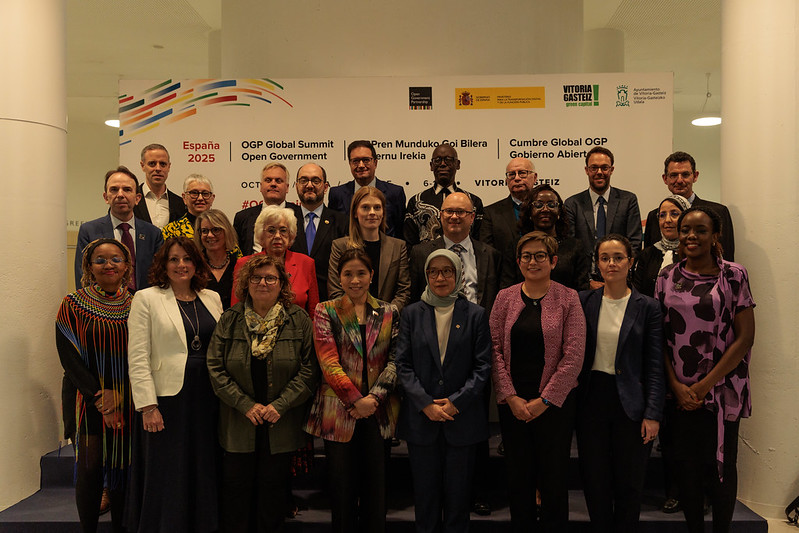
The OGP Steering Committee called on the open government community worldwide to endorse the Vitoria-Gasteiz Declaration. Almost 160 parties including national and local governments, civil society, multilateral organizations and more have already signed in support of the Declaration
The Closing Plenary also marked the transition of leadership of the OGP Steering Committee. Outgoing Co-Chairs, Cielo Magno and the Government of Spain, passed the mantle to the Government of Brazil and civil society leader Steph Muchai, who will serve as Co-Chairs for the 2025–2026 term starting in early October. This handover symbolizes the continued joint leadership of governments and civil society in OGP, ensuring that reformers from both sectors guide the Partnership’s future.
Open Gov Challenge Awards
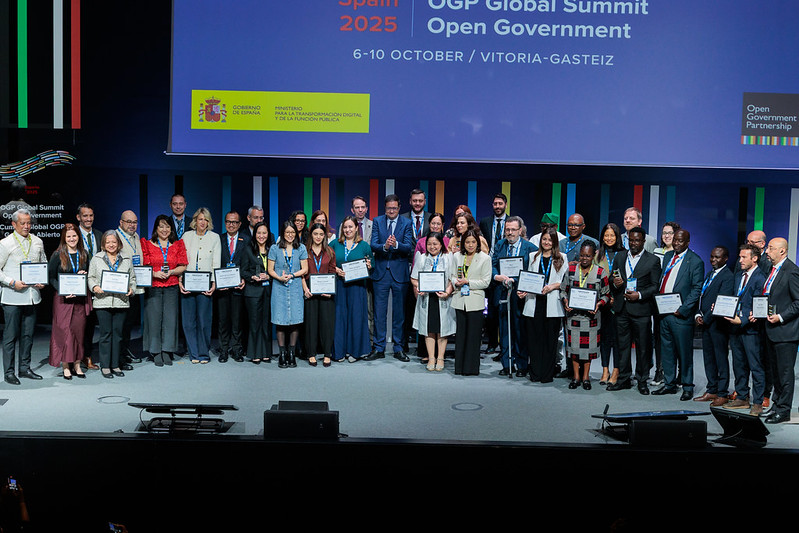
At the OGP Global Summit, the Open Government Partnership (OGP) celebrated the first-ever Open Gov Challenge Awards, recognizing reformers who are raising the ambition of open government around the world.
Launched earlier this year, the Open Gov Challenge calls on governments and civil society to submit ambitious commitments across ten priority themes: from anti-corruption and civic space to digital governance, fiscal openness, justice, and climate. More than 160 commitments have already been submitted, representing a wave of ambition and collaboration across the Partnership.
This year’s Awards honored commitments in three categories: Regional Awards, Thematic Awards, and Honorable Mentions. Check all winners and honorable mentions here.
New Partnerships
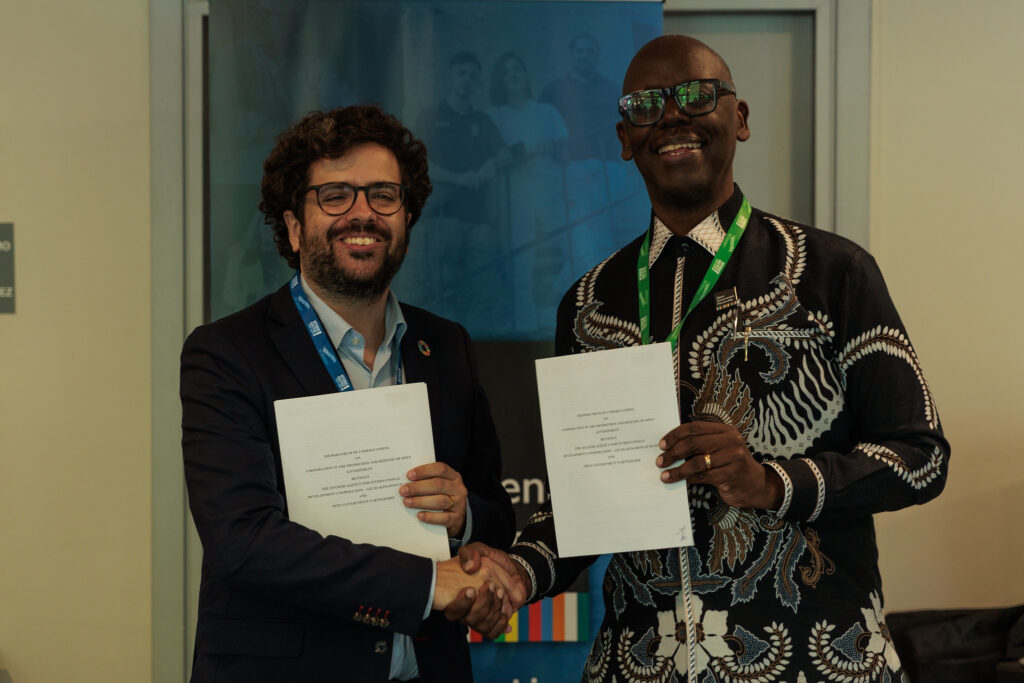
OGP and the Spanish Agency for International Development Cooperation (AECID) have committed to building a deeper partnership, ultimately improving the environment for democratic accountability and human rights and strengthening both AECID’s and OGP’s efforts. Implementing open government reforms directly aligns with Spain’s development aid and foreign policy priorities, including deepening open government connections to public participation, justice, gender and inclusion, anti-corruption, civic space, climate, digital governance, reduction of poverty and inequalities and other shared priority areas.
Co-Develop has pledged resources to support the Open Government Partnership’s policy advocacy and country engagement capabilities to integrate digital public infrastructure (DPI) governance as a priority thematic area. Despite a rapidly emerging DPI movement in many countries, citizens and other CSOs often have limited understanding or access to influence DPI governance frameworks, which can deepen existing inequalities, erode public trust, enable inappropriate surveillance, exclude vulnerable populations, and perpetuate biases that disadvantage already marginalised groups. Through Co-Develop’s grant, OGP will connect the open government and DPI agendas through global field building, multi-stakeholder peer learning, and supporting country reforms in a set of priority countries.
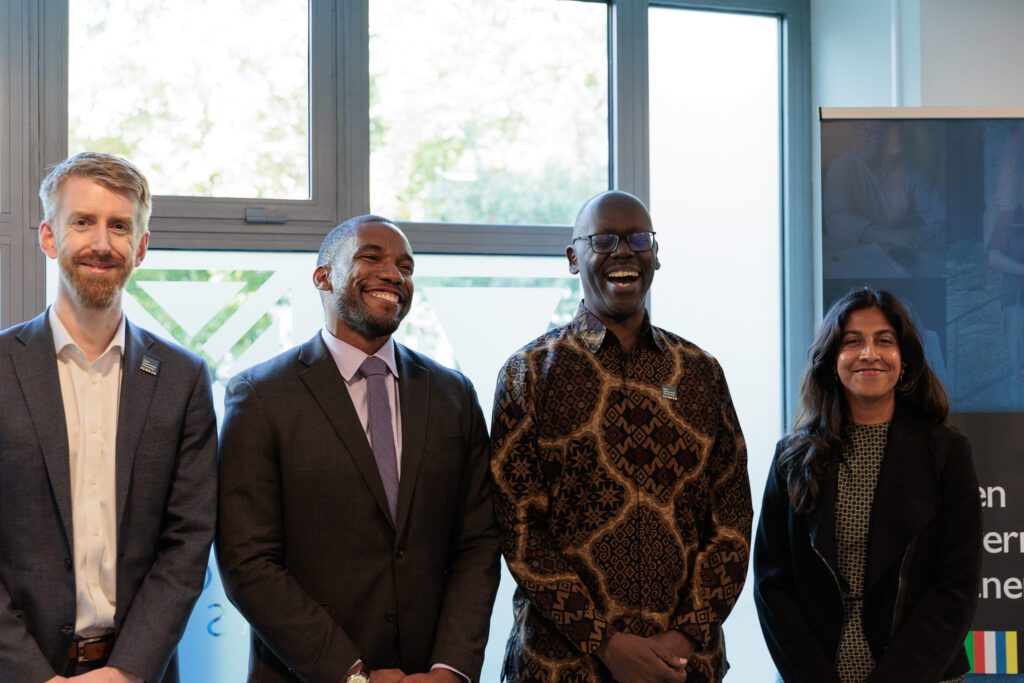
OGP also formally deepened partnerships with key partners, including the European Partnership for Democracy and the United Nations Development Programme. By renewing their corresponding Memorandums of Understanding, all signees committed to strengthen and formalize the ongoing cooperation between these organizations to advance democratic resilience and transparent, accountable, and participatory democratic governance worldwide.
Ignace DJI Reply
Bravo. Je souhaite que la Cote d’Ivoire y soit .