
OGP’s Strategic Policy Priorities
Today, the question is no longer whether open government works, but whether the world will move fast enough to adopt it at the scale the moment demands. Read more about OGP's focus for the future.
Ensuring universal access to sustainable, dependable, and affordable energy is critical to every aspect of prosperity. Increasing public oversight and transparency in the energy sector can help to ensure a fairer green transition and improve human health while also ending contributions to corruption and authoritarianism.
The Open Gov Guide is the go-to resource for open government reformers. The guide provides concrete recommendations for policy makers, civil society representatives, and more on how to apply open government principles to real-world challenges. Readers can also use the guide to learn more about how governments at the national and local level are putting these values into practice through OGP action plans and beyond.
Learn more about this policy area in the “Energy Transition” chapter of the Open Gov Guide.
As part of the Open Gov Challenge, the OGP Support Unit would like to recognize some of the most inspiring commitments made by participants to date. Read more about these exciting reforms on climate and environment below.
For a full list of Challenge commitments submitted by members, visit our Open Gov Challenge Commitment Tracker.
Local Plans for Climate and Sustainable Energy Strategies
As a participant in the global Covenant of Mayors for Climate and Energy, the province of Navarra (Spain) has coordinated the creation of municipal-level plans to better mitigate and adapt to the effects of climate change as well as address energy poverty. The province is publicly monitoring municipalities’ progress in implementing these plans and aims to continue this work after the project period ends.
Co-Create an Environmental Governance Plan
Quintana Roo does not currently have territorial or ecological planning programs, which make it more difficult to implement a plan for sustainable development in the state. To fill this gap, the government will co-create an environmental governance plan with citizens as part of its long-term sustainable development strategy.
Regional Climate Strategy for Water, Food Security, and Energy
The Tangier, Tétouan, and al Hoceima region of Morocco is experiencing water scarcity and the need to switch to renewable energy sources, both of which impact food security. To address this, the regional government committed to creating a consultative body with civil society to monitor the implementation of a regional climate strategy. It will also organize training sessions for local farmers on sustainable agricultural practices.
Explore all climate and environment commitments from OGP members.
The following list reflects commitments submitted through national or local action plans. For more details, visit OGP’s Data Dashboard.
Filter the commitments according to three categories evaluated by the Independent Reporting Mechanism (IRM): ambition, completion, and early results.
| Country/Locality | Year | Commitment Title | More |
|---|---|---|---|
| Nigeria | 2026 | Strengthening the Implementation of the Climate Change Act through MSF Participation | + |
| Khmelnytskyi, Ukraine | 2026 | Fostering environmental responsibility within the community through open initiatives on sustainable consumption | |
| Indonesia | 2025 | Inclusive and Just Energy Transition Policies in South Sumatra | + |
| Indonesia | 2025 | Transparency and Public Participation in Green Financing and Just Energy Transition Policies | + |
| Ecuador | 2025 | Fortalecimiento de la gestión de información ambiental y de energía | + |
This table shows all commitments that match the filters selected at the top of the page. At least one filter must be selected to populate this table. Use the tags above the table to further filter by commitment quality (e.g. ambitious, complete). Click on commitment titles to learn more about each commitment. Click on “Featured” icons to access stories, where available.
This table enables finding existing commitments in specific policy areas, regions, and years, as well as top-performing commitments by using the built-in table filters.
The commitment performance metrics (e.g. ambitious, complete) are derived directly from IRM reports. See the terms below for details. The Year field shows the year in which the commitment was first submitted. Icons in the Featured field indicate that a story is available on the OGP website.
With support from the KR Foundation, OGP is examining opportunities for the multi-stakeholder platform to level the playing field of influence towards a just, inclusive, and transparent energy transition.
This program addresses two key issues. Opaque political influences, such as processes that go undeclared, are unregulated, or hide under layers of complexity, lead to unequal decision-making favoring the fossil fuel industry. Unequal access to policy-making for climate advocates compounds this issue, and their exclusion removes the potential for a voice to balance the influence of the fossil fuel industry.
OGP is working to build connections between reformers inside and outside of government in select countries that are concerned about undue influence in the energy transition. Through networking and actionable information resources, OGP’s objective is to motivate reformers to use the domestic process of dialogue and co-creation for the formulation of policies for a just, inclusive and transparent energy transition.
Read more in OGP’s latest publication on this topic, titled “Countering Obstruction and Policy Capture in the Energy Transition.”
For a shorter summary, check out theeffects of industry influence and incentives on the green transition and how to combat political capture by the fossil fuel industry in the OGP Horizons blog series.
For more information, you can contact Adna Karamehic-Oates, Lead, Policy & Partnerships ([email protected]) and Dieter Zinnbauer, OGP’s Consultant for this project ([email protected].)
Today, the question is no longer whether open government works, but whether the world will move fast enough to adopt it at the scale the moment demands. Read more about OGP's focus for the future.

The OGP Local Circle on Climate Action is a working group uniting reformers from government, civil society, and organizations committed to advancing digital governance through open government principles.

The past fifteen years were about proving that positive change is possible. The next fifteen are about making that change inevitable. Read an Open Letter from OGP's CEO.
Carta abierta de Aidan Eyakuze, Director Ejecutivo de la Alianza para el Gobierno Abierto,con motivo del 15.º aniversario de OGP En septiembre de 2011, la Alianza para el Gobierno Abierto (OGP por sus siglas en inglés) fue lanzada bajo una…
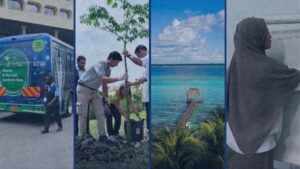
Cities and communities around the world face mounting pressure to accelerate climate action. Learn how OGP Local members are creating collaborative solutions to these challenges through the People Powered Climate Democracy Accelerator program.

The OGP Local Circle on the 2030 Agenda and SDGs is a community of practice that gathers local and national governments, civil society, and other organizations working to advance sustainable development.
The Open Gov Challenge is a call to action for all members of OGP to raise ambition in ten areas of open government to help strengthen our democracies.
Join hundreds of reformers around the world – in government and civil society – who are working to make their communities stronger, more open, participatory, inclusive, and accountable.