Local Roundup | November 2025
Here’s our monthly roundup of updates from the OGP Local community for November 2025. Check out previous Roundups here!
Hear from Local Leaders
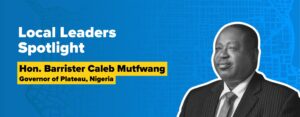
Hon. Barrister Caleb Mutfwang, Governor of Plateau (Nigeria)
“If governance is going to be for the people, it must have their input.”
Featured Story
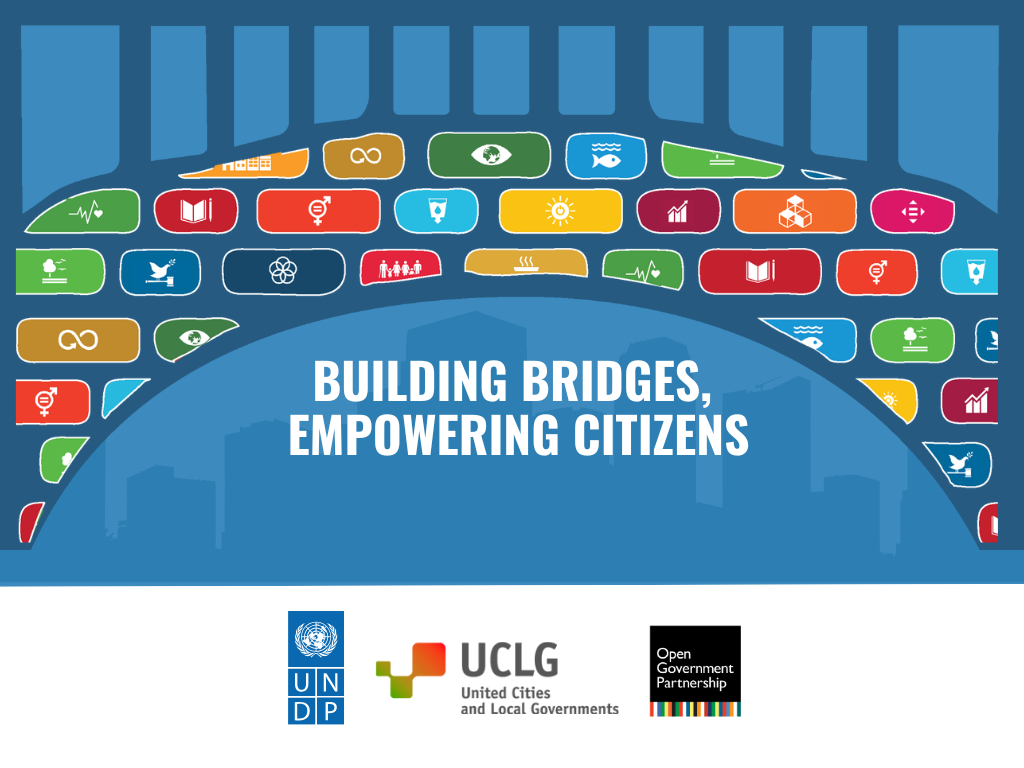
Local open governments are driving SDG impact—this is the core of our Building Bridges, Empowering Cities campaign with UNDP and UCLG. Our CEO, Aidan Eyakuze, explains why the campaign matters. More here.
From Promises to Action
NEW ACTION PLANS, NEW AMBITIONS
Rosario’s (Argentina) second action plan strengthens civil society and citizen participation through: promoting institutional training, expanding digital engagement, fostering community-driven health initiatives, using participatory evaluation techniques for neighborhood projects, and ensuring clear, accessible communication. More here and More herehere.
CHANGE IN MOTION
Oriental (Morocco) has opened a call for civil society organizations to join the Regional Council for Environment and Climate, advancing their OGP commitment to embed citizen participation in climate and environmental decision-making. More here and here.
Zagreb (Croatia) launched a public consultation on the 2026 price list for water services. This will ensure equal pricing across all service areas and allow residents to review, comment, and shape decisions before approval. More here.
Semarang (Indonesia) is turning collaboration into cleaner rivers. Through the Joint Clean Up Action initiative, government agencies, police, and local residents joined forces to remove trash, improve water quality, and restore the local ecosystem. The initiative demonstrates how citizen engagement and multi-stakeholder action can drive sustainable environmental outcomes. More here.
Minas Gerais’ (Brazil) Court of Justice presented its “Transparency for All” Open Gov Challenge commitment. The project is a comprehensive effort to make public information more accessible and understandable. More here and here.
Buenos Aires (Argentina) is advancing on algorithmic transparency. Officials and experts jointly reviewed the state of automated decision-making systems, identified gaps, proposed transparency safeguards, and introduced the City’s AI Plan as part of a broader effort to ensure an open and accountable use of technology. More here.
Scotland (United Kingdom) has committed to developing a new anti-corruption strategy, including stronger transparency rules for trust structures, and strengthening safeguards against illicit wealth entering the country. More here.
Vitória da Conquista (Brazil) reaffirms its commitment to public integrity by joining the Time Brasil Program. With technical support from the Controller-General of the Union, the city is accessing training, tools, and resources to strengthen transparency, ethics, and accountable governance across municipal administration. More here.
Kakamega County (Kenya) has joined CoST to strengthen accountability in infrastructure delivery. It has convened a multi-sector forum of government, civil society, and private-sector partners, committing to stronger data disclosure, citizen oversight, and cross-sector collaboration. More here and here.
Sekondi Takoradi, Shama, Wassa Amenfi East, and Tarkwa Nsuaem (Ghana) were recognized in the 1st National Infrastructure Transparency Index (ITI) survey report, for their contribution to advancing infrastructure transparency at the local level through proactive disclosure, improved institutional capacities, and greater citizen engagement. More here and here.
West Nusa Tenggara (Indonesia) saw government, civil society, and private sector representatives come together to share knowledge and strengthen infrastructure accountability, leveraging open data and CoST standards to improve planning, oversight, and collaboration. More here.
Ouellé (Côte d’Ivoire) held its third municipal council meeting off-site in the village of Balekokro, conducted in both French and local languages to bring the administration closer to the population and encourage more direct dialogue and citizen involvement in local development. More here.
Chihuahua (Mexico) is organizing monthly working sessions with citizens to discuss topics like infrastructure and service delivery, entrepreneurship, and anti-corruption policies as part of the co-creation of their second OGP action plan. More here.
Santiago (Chile) launched its new Multi-Stakeholder Council, bringing together academia, civil society, the private sector, students, and the municipalities of San Joaquín, Peñalolén, and Renca to jointly advance transparency, participation, and public accountability. More here.
Madrid (Spain) held its first Open Data Reuse Awards, bringing together universities, experts, and innovators to recognize 65 standout projects that use municipal open data, highlighting how open data is driving transparency, innovation, and stronger public-private collaboration. More here.
Local Lessons
EXCHANGING IDEAS
🌐 During the latest session of the OGP Local Circle on Climate, government and civil society reformers from Osasco (Brazil), Buenos Aires (Argentina), Nairobi (Kenya), Quintana Roo (México), and Navarra (Spain) shared practical examples of how local governments and civil society are boosting citizen participation in climate action. More here.
🌐 Medellín (Colombia), Bogotá (Colombia), Buenos Aires (Argentina), Navarra (Spain), Kaduna (Nigeria), and Sekondi-Takoradi (Ghana) exchanged strategies to strengthen multi-stakeholder forums, sustain engagement, and monitor commitments. More here.
🌐 In Dakar, local leaders from across African cities convened at the 6th International Forum on Participatory Democracy to advance citizen engagement, strengthen territorial resilience, and promote locally led governance that empowers communities to shape public priorities and sustainable development. More here.
🌐 Goiás (Brazil) hosted an event bringing together officials, civil society, and international participants, including a representative from the City of Buenos Aires, to review transparency and citizen participation programs, strengthen collaboration, and reinforce participatory governance. More here.
🌐 Melilla (Spain) hosted the 2025 Interregional Network for Citizen Participation, a two-day forum bringing together all Spanish autonomous communities to exchange concrete models of civic participation, public-policy innovation, and social-cohesion practices under the theme “Participation and Coexistence.” More here and here.
TAKEAWAYS
📘 Read how Kaduna State (Nigeria) engaged government, civil society, and youth through State Steering Committee and validation sessions, using the Open Gov Youth Innovation Hub and a public Google Drive to co-create milestones and ensure transparent, measurable commitments in budgeting, open contracting, and citizen engagement. More here.
📘 Discover how Yogyakarta (Indonesia) is advancing open governance through co-created poverty and disaster initiatives, supported by a WhatsApp forum, an accessible OGP Local webpage, and outreach sessions engaging citizens and civil society. More here.
📘 Learn how Vanadzor (Armenia) strengthened open governance with a unified community-resource register and its first participatory budgeting system, and expanded transparency and citizen participation, amid political instability and pandemic-related constraints. More here.
📘 Discover how Córdoba Province (Argentina) transformed its Open Management Portal into a strong transparency platform: publishing 41 new datasets, improving data quality and accessibility, centralizing previously scattered information, and establishing new multi-stakeholder forums and inter-ministerial coordination bodies that deepen accountability and long-term open data governance. More here.
RESOURCES
📘 Listen to Fuvahmulah’s Mayor (Maldives), Ismail Rafeeq, explain how the Maldives’ small city is boosting citizen participation through an online portal that engages residents, especially youth, in budgeting, planning, and decision-making, enhancing transparency and accountability. More here.
📘 Discover how Red Innovation Local is transforming local governance in Latin America with an AI platform integrating more than 2,500 documents to support AI-driven decision-making in public policy, city management, and local governance. More here.
📘 Explore how Navarra (Spain) is improving transparency and citizen engagement through a Clear Communication Guide that equips public servants with practical tools to write and design administrative information for the public clearly and understandably. More here.
Get Involved
EVENTS
🌐 Join Montevideo’s Innovation Department (Uruguay) from December 1–8 for the inLAB laboratories for civil servants, featuring talks on public innovation, service delivery impact, and transformative approaches. More here.
🌐 Join Bogotá (Colombia) on 9 December 2025 at 1:30 pm in Auditorio Huitaca for International Anti-Corruption Day, featuring the launch of the Bogotá Investment Map and the Transparency Index results with the District Oversight Office and Transparencia por Colombia. More here.
OPPORTUNITIES
🌐 Apply to ScaleDem’s Piloting Programme to test new ideas or the Twinning Programme to adapt proven models, gaining mentorship, peer learning, and support to strengthen your approach and deepen democratic culture. Apply by March 31st. More here.
🌐 People Powered is now accepting applications for its Climate Democracy Accelerator, Democratic Innovations Accelerator, and Rising Stars Mentorship—offering funding, training, and expert guidance to help governments and civil society design impactful climate and youth participation programs. Apply by December 8. More here.
🌐 Submit proposals for the International Anti-Corruption Conference (IACC) workshops by 23 February 2026. Professionals, civil society organizations, activists, journalists, and academics are invited to lead interactive sessions that inspire participants and help shape the global fight against corruption. More here.
Open Gov Challenge
Cyrus Calibo, Mayor of Larena, explains that improving the municipality’s public procurement process—by involving women, farmers, fisherfolk, and youth in oversight—will help prevent corruption, speed up project implementation, and benefit the whole community.
Leave a Reply