


Data Dashboard
Access data on OGP commitments. Filter commitments by location, policy area, and year. Search by keyword.

The evidence is clear: democratic societies are more peaceful societies. Yet they are also vulnerable to attacks via hybrid threats, which complement conventional military operations with cyberattacks, disinformation campaigns, economic coercion, and the use of proxy forces, among other tools. These efforts to destabilize democracies are not new, but NATO notes that the “speed, scale and intensity” of such attacks, exacerbated by rapid technological advancements, increases the danger of hybrid threats. Hybrid threats pose unique challenges to democratic societies, specifically because they are free and often have porous borders. Recent research identifies constant, multi-faceted hybrid attacks on NATO members in just the last few years. Such destabilizing attacks target civilian populations and democratic institutions, aiming to polarize societies and erode public trust. Open government approaches can build democratic resilience against hybrid threats by engaging citizens as partners in defense while still protecting civil liberties.
Definitions for key terms such as hybrid threats and democratic resilience.
Open government approaches strengthen societal resilience against hybrid threats by building trust and engaging citizens in defense.
The recommendations below represent reforms that national and local governments, representatives of civil society organizations, and others can consider for their action plans and the Open Gov Challenge. The reforms are categorized according to OGP’s principal values: transparency, civic participation, and public accountability. Reforms should be adapted to fit the domestic context, and involve and coordinate with other levels and branches of government.
Reforms across policy areas are also tagged by the estimated degree of difficulty in implementation. Though progress is often not linear, the recommendations have been categorized using these labels to give the reader a sense of how different reforms can work together to raise the ambition of open government approaches.
Transparency: Transparency empowers citizens to exercise their rights, hold the government accountable, and participate in decision-making processes. Examples of relevant activities include the proactive or reactive publication of government-held information, legal or institutional frameworks to strengthen the right to access information, and disclosing information using open data standards.
Civic Participation: When people are engaged, governments and public institutions are more responsive, innovative, and effective. Examples of relevant initiatives include new or improved processes and mechanisms for the public to contribute to decisions, participatory mechanisms to involve underrepresented groups in policy making, and a legal environment that guarantees civil and political rights.
Public Accountability: Public accountability occurs when public institutions must justify their actions, act upon requirements and criticisms, and take responsibility for failure to perform according to laws or commitments. Importantly, public accountability means that members of the public can also access and trigger accountability mechanisms. Examples of relevant activities include citizen audits of performance, new or improved mechanisms or institutions that respond to citizen-initiated appeals processes, and improved access to justice.
Inclusion: Inclusion is fundamental to achieving more equitable, representative, and accountable policies that truly serve all people. This includes increasing the voice, agency, and influence of historically discriminated or underrepresented groups. Depending on the context, traditionally underrepresented groups may experience discrimination based on gender, sexual identity, race, ethnicity, age, geography, differing ability, legal, or socioeconomic status.
Foundational: This tag is used for reforms that are the essential building blocks of a policy area. “Foundational” does not mean low ambition or low impact. These recommendations often establish basic legal frameworks and institutional structures.
Intermediate: This tag is used for reforms that are complex and often involve coordination and outreach between branches, institutions, and levels of government, with the public or between countries.
Advanced: This tag is used for reforms that close important loopholes to make existing work more effective and impactful. Specifically, “Advanced” reforms are particularly ambitious, innovative or close important loopholes to make existing work more effective, impactful or sustainable. They are often applied in mature environments where they seek to institutionalize a good practice that has already shown results.
Executive: The executive branch of government is responsible for designing, implementing, and enforcing laws, policies, and initiatives. It is typically led by the head of state or government, such as a president or prime minister, along with their appointed cabinet members. The executive branch’s functions also include overseeing the day-to-day operations of the government, managing foreign affairs, and directing the country’s armed forces. In democratic systems, the executive branch is accountable to the legislature and the electorate, with its powers and limitations outlined in the constitution or legal framework of the respective country.
Legislative: The legislative branch of government is responsible for making laws and regulations and overseeing the functioning of the government. It typically consists of a body of elected representatives, such as a parliament, congress, or assembly, which is tasked with proposing, debating, amending, and ultimately passing legislation. The legislative branch plays a crucial role in representing the interests of the people, as its members are elected to office by the public. In addition to law-making, this branch often holds the power to levy taxes, allocate funds, and conduct certain investigations into matters of public concern. The structure and powers of the legislative branch are usually outlined in a country’s constitution or legal framework, and it serves as a check on the executive and judicial branches to ensure a system of checks and balances within a state.
The following examples are commitments previously made within or beyond OGP that demonstrate elements of the recommendations made above.
While few OGP action plans directly address hybrid threats, several commitments on media literacy, election security, and digital governance contribute to democratic resilience. To learn more about these commitments made through the OGP process, explore the “Disinformation and Information Integrity” and the “Open Election Data” chapters of the Open Gov Guide.
 ESTONIA Cyber Defence League: Created a volunteer corps of IT professionals working alongside government officials to protect networks and respond to attacks. This work is supported by public cyber education and transparency in incident reporting, serving as a global model for civic-military cyber cooperation.
 EUROPEAN UNION Regulations for Transparency in Political Advertising: Passed a regulation on political advertising in 2024 that will take effect in October 2025, with several key provisions to make political advertisements more transparent. These include: adding a transparency label to clearly identify political ads and their sponsors, limiting targeted political advertising online, and banning the provision of advertising services to third-country sponsors three months before an election or referendum.
 LITHUANIA National Media Literacy Program: Launched comprehensive media literacy programs in response to Russian disinformation, which included partnering with civil society groups like Debunk.org to run school lessons, public events, and real-time fact-checking as part of broader total defense strategy.
 TAIWAN Election Protection Measures against Disinformation: Implemented comprehensive election protection measures including real-time social media monitoring, strict political advertising disclosure rules, and strong cooperation with civil society watchdogs like the Taiwan FactCheck Center to defend democratic processes.
 SWEDEN Public Participation in Total Defense: Includes municipalities, businesses, and civil society in defense planning, with regular nationwide emergency preparedness campaigns and civic drills that build public understanding of their role in crisis response and strengthen social cohesion. Sweden also established a Psychological Defence Agency to identify, analyze, and counter foreign malign influence on information integrity.
 UKRAINE Strategic Communications for Fact Checking: The Centre for Strategic Communications works with fact checkers like StopFake and Detector Media to respond to Russian disinformation, using rapid, multilingual public messaging coordinated with civil society organizations to sustain public morale and counter false narratives.
Local governments play essential roles in hybrid threat resilience. They are often the front line of building social cohesion to resist divisive disinformation campaigns, maintaining trusted communication channels with residents during crises, protecting local election infrastructure, and protecting targets of cyber attacks. Many local governments have been leaders in addressing hybrid threats, often moving faster than national governments.
 Argentina
 Australia
 Brazil
 Canada
 Costa Rica
 Croatia
 Ecuador
 France
 Georgia (Withdrawn)
 Germany
 Ghana
Ghana Guatemala
 Indonesia
 Ireland
 Jordan
 Latvia Lithuania
 Malawi
 Mongolia
 Netherlands
 North Macedonia
 Panama
 Philippines
 Romania
 Sierra Leone
 Spain
Spain United Kingdom
 Uruguay
This list reflects members with commitments in the “Elections” policy area of the Data Dashboard, which can include hybrid threat-related initiatives.
The following organizations have recently worked on this issue in the context of OGP at the national or international level. They may have additional insights on the topic. Please note that this list is not exhaustive. If you are interested in national-level initiatives, please contact [email protected].
The OGP 2023-2028 Strategy sets out the Open Gov Challenge and aims to provide clear benchmarks for performance through reliable data. At the current time, it is unclear if there is third-party data to match this challenge across OGP membership.
While the list below is not exhaustive, it aims to provide a range of recommendations, standards, and analysis to guide reform in this policy area.
Access data on OGP commitments. Filter commitments by location, policy area, and year. Search by keyword.

How can open data help shine a light on political corruption and make political systems fairer and more inclusive? How can we further link people and data to create a chain of accountability? Explore our new report.
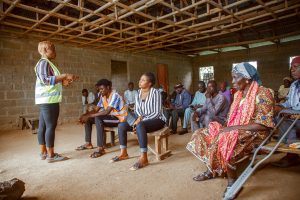
Evidence continues to show that open government affects people’s lives. But there are still skeptics who are not aware of all the benefits associated with this approach. Use this guide to convince them to take an open government approach when implementing reforms.