



Data Dashboard
Access data on OGP commitments. Filter commitments by location, policy area, and year. Search by keyword.

Political polarization threatens democratic stability and government effectiveness. Longstanding polarization, or “pernicious polarization,” erodes trust in institutions, increases conflict, and makes it harder to reach consensus. To counter this, open government can build bridges across divides and strengthen democratic culture through inclusive dialogue, transparency that counters misinformation, and accountability mechanisms that prevent political capture. In some cases, it can also help disincentivize profiteering from dividing societies.
Definitions for key terms such as social cohesion, elite polarization, and affective polarization.
Research shows that elite polarization typically drives affective polarization among citizens. Political leaders who use divisive rhetoric, undermine democratic norms, or vilify those who disagree with them consistently drive increased polarization among their citizens. Polarizers may specifically target perceived political enemies, minorities, and women.
To break this pattern, depolarization requires deliberate intervention during windows of political opportunity.
The recommendations below represent reforms that national and local governments, representatives of civil society organizations, and others can consider for their action plans and the Open Gov Challenge. The reforms are categorized according to OGP’s principal values: transparency, civic participation, and public accountability. Reforms should be adapted to fit the domestic context, and involve and coordinate with other levels and branches of government.
Reforms across policy areas are also tagged by the estimated degree of difficulty in implementation. Though progress is often not linear, the recommendations have been categorized using these labels to give the reader a sense of how different reforms can work together to raise the ambition of open government approaches.
Transparency: Transparency empowers citizens to exercise their rights, hold the government accountable, and participate in decision-making processes. Examples of relevant activities include the proactive or reactive publication of government-held information, legal or institutional frameworks to strengthen the right to access information, and disclosing information using open data standards.
Civic Participation: When people are engaged, governments and public institutions are more responsive, innovative, and effective. Examples of relevant initiatives include new or improved processes and mechanisms for the public to contribute to decisions, participatory mechanisms to involve underrepresented groups in policy making, and a legal environment that guarantees civil and political rights.
Public Accountability: Public accountability occurs when public institutions must justify their actions, act upon requirements and criticisms, and take responsibility for failure to perform according to laws or commitments. Importantly, public accountability means that members of the public can also access and trigger accountability mechanisms. Examples of relevant activities include citizen audits of performance, new or improved mechanisms or institutions that respond to citizen-initiated appeals processes, and improved access to justice.
Inclusion: Inclusion is fundamental to achieving more equitable, representative, and accountable policies that truly serve all people. This includes increasing the voice, agency, and influence of historically discriminated or underrepresented groups. Depending on the context, traditionally underrepresented groups may experience discrimination based on gender, sexual identity, race, ethnicity, age, geography, differing ability, legal, or socioeconomic status.
Foundational: This tag is used for reforms that are the essential building blocks of a policy area. “Foundational” does not mean low ambition or low impact. These recommendations often establish basic legal frameworks and institutional structures.
Intermediate: This tag is used for reforms that are complex and often involve coordination and outreach between branches, institutions, and levels of government, with the public or between countries.
Advanced: This tag is used for reforms that close important loopholes to make existing work more effective and impactful. Specifically, “Advanced” reforms are particularly ambitious, innovative or close important loopholes to make existing work more effective, impactful or sustainable. They are often applied in mature environments where they seek to institutionalize a good practice that has already shown results.
Executive: The executive branch of government is responsible for designing, implementing, and enforcing laws, policies, and initiatives. It is typically led by the head of state or government, such as a president or prime minister, along with their appointed cabinet members. The executive branch’s functions also include overseeing the day-to-day operations of the government, managing foreign affairs, and directing the country’s armed forces. In democratic systems, the executive branch is accountable to the legislature and the electorate, with its powers and limitations outlined in the constitution or legal framework of the respective country.
Legislative: The legislative branch of government is responsible for making laws and regulations and overseeing the functioning of the government. It typically consists of a body of elected representatives, such as a parliament, congress, or assembly, which is tasked with proposing, debating, amending, and ultimately passing legislation. The legislative branch plays a crucial role in representing the interests of the people, as its members are elected to office by the public. In addition to law-making, this branch often holds the power to levy taxes, allocate funds, and conduct certain investigations into matters of public concern. The structure and powers of the legislative branch are usually outlined in a country’s constitution or legal framework, and it serves as a check on the executive and judicial branches to ensure a system of checks and balances within a state.
The following examples are commitments previously made within or beyond OGP that demonstrate elements of the recommendations made above. Social cohesion and depolarization commitments are relatively rare in OGP action plans, as polarization is often addressed through other thematic areas like civic participation, anti-corruption, access to justice, and open parliament. However, some OGP Local members have expressly named social cohesion as a goal in their action plans.
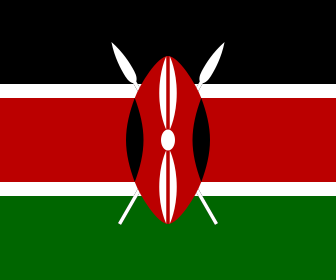 ELGEYO MARAKWET, KENYA Broaden Public Participation for Inclusive Decision-Making: Committed to creating structured engagement mechanisms and a CSO liaison office. The stated aim of this commitment is to design better policies, allocate resources more fairly, and improve social cohesion, especially for people with disabilities.
 FINLAND National Dialogues to Increase Cohesion and Public Participation: Committed to collaborating with civil society to increase participation in national dialogues and make it easier to shape policies based on public input, building on past initiatives. The aim of the commitment is to strengthen trust in society by giving citizens the chance to meet people from diverse sectors and discuss issues.
 KYIV, UKRAINE Government Platform to Support Civil Society: Committed to expanding the Vcentri HUB as a participatory platform for the local government, businesses, and the community. The goal of the Vcentri HUB is to engage different social groups in dialogue and partnership as a way to promote “social cohesion and the development of civil society.”ZVIAHEL, UKRAINE Action Plan to Enhance Social Cohesion: Committed to creating a Youth Council, supporting veterans, and piloting an inclusive participatory budgeting process as part of its first OGP action plan. The action plan as a whole aims to improve social cohesion, civic activity, and public trust, with all commitments supporting this goal.
The following examples illustrate conscious efforts at depolarization, mostly through dialogue outside of OGP action plans.
 COLOMBIA Territorial Peace Building and Community Dialogues: Established Development Programs with a Territorial Focus (PDET) in conflict-affected regions after the 2016 peace process. These programs created participatory planning processes that brought together former combatants, victims, and local residents to design Action Plans for Regional Transformation.KENYA National Cohesion and Integration Commission: Established an independent National Cohesion and Integration Commission with powers to monitor hate speech, audit diversity in public institutions, and facilitate inter-ethnic dialogue. This effort took place after post-election violence in 2007-2008 killed over 1,000 people along ethnic lines.
 NORTH MACEDONIA Inter-Community Dialogue on Education: Implemented confidence-building programs including integrated schools of Macedonian and Albanian students, multi‑ethnic municipal councils with power‑sharing arrangements, and participatory processes for local service delivery following ethnic conflict in 2001. There are also requirements for monitoring ethnic representation in public institutions and creating multi-ethnic municipal councils with power-sharing arrangements to address Albanian minority grievances. (See Nansen Dialogue Centre Skopje for details.)
 RWANDA Umuganda and Ingando Programs for Social Cohesion: Institutionalized monthly community work days known as Umuganda, where citizens from all backgrounds work together to upgrade local infrastructure and discuss issues, following the 1994 genocide. The government also established “solidarity camps” called Ingando that brought together diverse groups such as returning refugees, demobilized soldiers, former combatants, and students for intensive programs on national history, unity and reconciliation, reintegration, and government policies.
 SIERRA LEONE Inter-Religious Council and Community Peace-Building: Created the Inter-Religious Council of Sierra Leone (IRCSL) of Christian and Muslim leaders following the 1991–2002 civil war. The council became a widely trusted mediator in peace and reconciliation initiatives at the national and local levels by working alongside traditional authorities, civil society, and transitional justice mechanisms. These initiatives convened chiefs, youth, women’s groups, and ex‑combatants to address local tensions and support post‑war reintegration. Later, during the 2014–2016 Ebola crisis and subsequent electoral cycles, including the 2018 elections, the IRCSL and other faith actors led joint public outreach and peace messaging that emphasized shared moral values, encouraged compliance with public‑health measures, and sought to discourage the use of ethnic or religious identities to fuel mistrust or political violence.
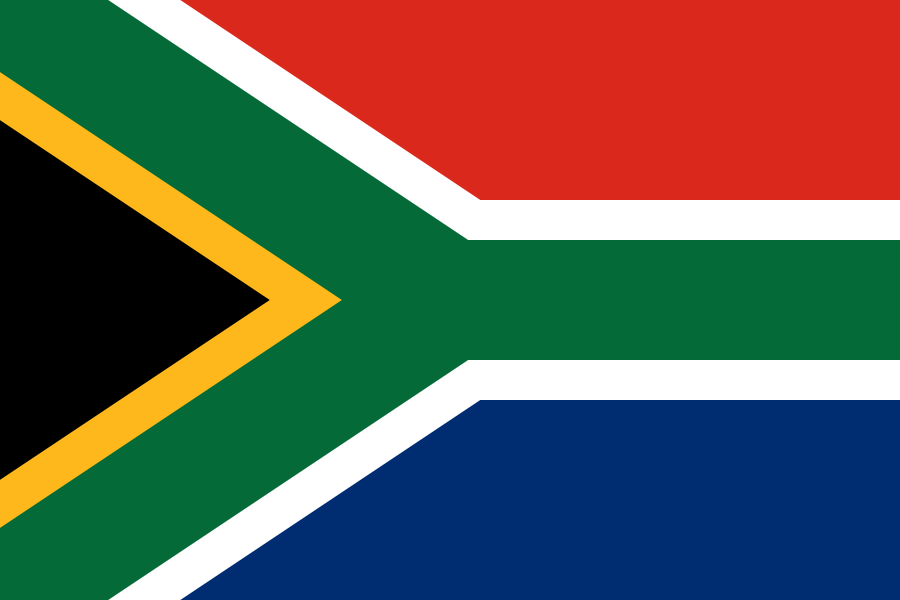 SOUTH AFRICA District Development Model and Community Dialogues: Developed the District Development Model through post-apartheid structures to create spaces (notably through Operation Sukuma Sakhe in Kwazulu-Natal) where national, provincial, and local government officials often meet with community representatives to collaboratively plan public service delivery and address local challenges. The model explicitly aims to bring people together through shared problem-solving on practical issues like water, electricity, and public safety.
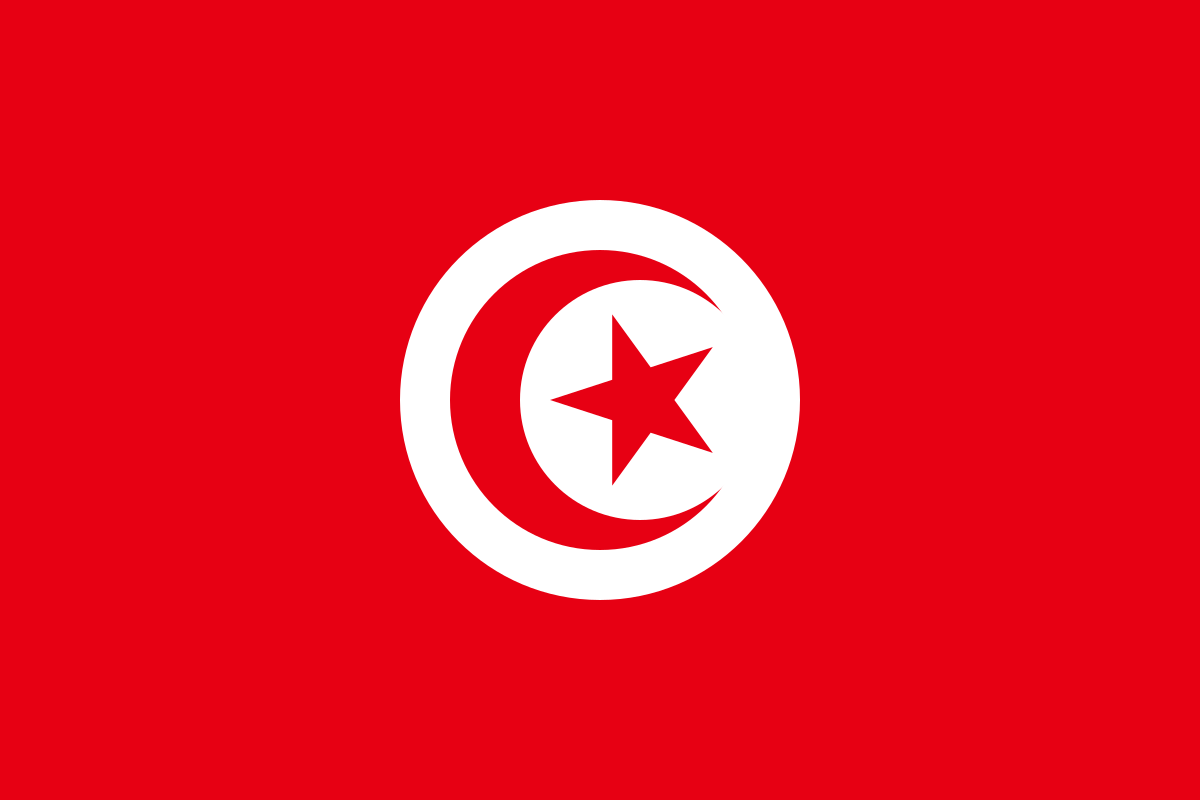 TUNISIA National Dialogue and Transitional Justice: Facilitated negotiations among polarized secular and Islamist political forces during the country’s democratic transition (2011–2014) through the Nobel Peace Prize-winning National Dialogue Quartet. This group has since helped prevent violence during constitutional crises. Tunisia also established the Truth and Dignity Commission with transparent public hearings to document abuses under the dictatorship and create a shared historical narrative.
 UNITED KINGDOM Strategy to Improve Social Cohesion: Launched the “Pride in Place” strategy in 2025, which includes a focus on improving social cohesion. One part of this multipronged strategy is the government’s commitment to deliver £20 million over the next decade in 75 locations around the country. Each locality will create multi-stakeholder decision-making boards to identify and fund projects that are important to their respective communities. Other initiatives, such as the Waltham Forest Citizens’ Assembly to end hate and foster social cohesion run by the CSO Involve, used a deliberative model to create recommendations that the Council Cabinet allocated £150,000 to fund.
Reducing polarization is an ongoing process that requires continuous reflection and adaptation. Local governments can play an important role in this process, especially when national politics are deeply divided. Provinces and municipalities can test and adapt practical ways to bring people together, create opportunities for face-to-face dialogue, and adopt inclusion policies that build social cohesion. They often focus on everyday issues that unite residents across political, demographic, and attitudinal lines, like local services, neighborhood development, or the environment. Local governments can also build depolarization into a specific goal by using participatory budgeting, citizens’ assemblies, and community planning mechanisms that require people with different views to work together.
When opportunities for national depolarization emerge, often after elections or political transitions, local governments with experience in these approaches can help scale successful models and share lessons at the national level. Where polarization follows geographic lines, such as between urban and rural areas, cooperation among local governments across jurisdictions can also help bridge divides.
Local governments are also well-positioned to implement gender-responsive participatory practices. These include publishing disaggregated consultation data and setting inclusion targets in community planning processes. These may serve as models for national-level reform.
 Albania
 Argentina
 Armenia
 Australia
 Brazil
 Bulgaria
 Burkina Faso
 Canada
 Chile Colombia
 Costa Rica
 Côte D'ivoire
 Croatia
 Czech Republic
 Dominican Republic
 Ecuador Finland
 France
 Georgia (Withdrawn)
 Germany
 Ghana
Ghana Guatemala
 Honduras
 Indonesia
 Ireland
 Italy
Italy Jamaica
 Jordan
 Kenya
Kenya Latvia
 Liberia
 Malawi
 Malta
Malta Mexico
 Mongolia
 Montenegro
 Morocco
 Netherlands
 New Zealand
 Nigeria North Macedonia
 Panama
 Paraguay
 Peru
Peru Philippines
 Portugal Quintana Roo, Mexico
 Republic Of Korea
 Republic Of Moldova
 Romania
 Senegal
 Seychelles Sierra Leone
 Slovak Republic South Africa
 Spain Tunisia
 Ukraine
 United Kingdom
 Uruguay
This list reflects members with commitments in the “Inclusion” policy area of the Data Dashboard.
The OGP 2023-2028 Strategy sets out the Open Gov Challenge and aims to provide clear benchmarks for performance through reliable data.
Good data helps track polarization trends, identify drivers, and measure the effectiveness of interventions. Most of these resources are tracked at the general level and are perception or expert-based, not based on presentation of specific policies or governance practices.
While benchmarks for individual countries and Open Gov Guide recommendations are not yet integrated, for this chapter, interested individuals may rely on the following data sets:
While the list below is not exhaustive, it aims to provide a range of recommendations, standards, and analysis to guide reform in this policy area.
Access data on OGP commitments. Filter commitments by location, policy area, and year. Search by keyword.

How can open data help shine a light on political corruption and make political systems fairer and more inclusive? How can we further link people and data to create a chain of accountability? Explore our new report.
Evidence continues to show that open government affects people’s lives. But there are still skeptics who are not aware of all the benefits associated with this approach. Use this guide to convince them to take an open government approach when implementing reforms.