Open Government Journey
Introduction
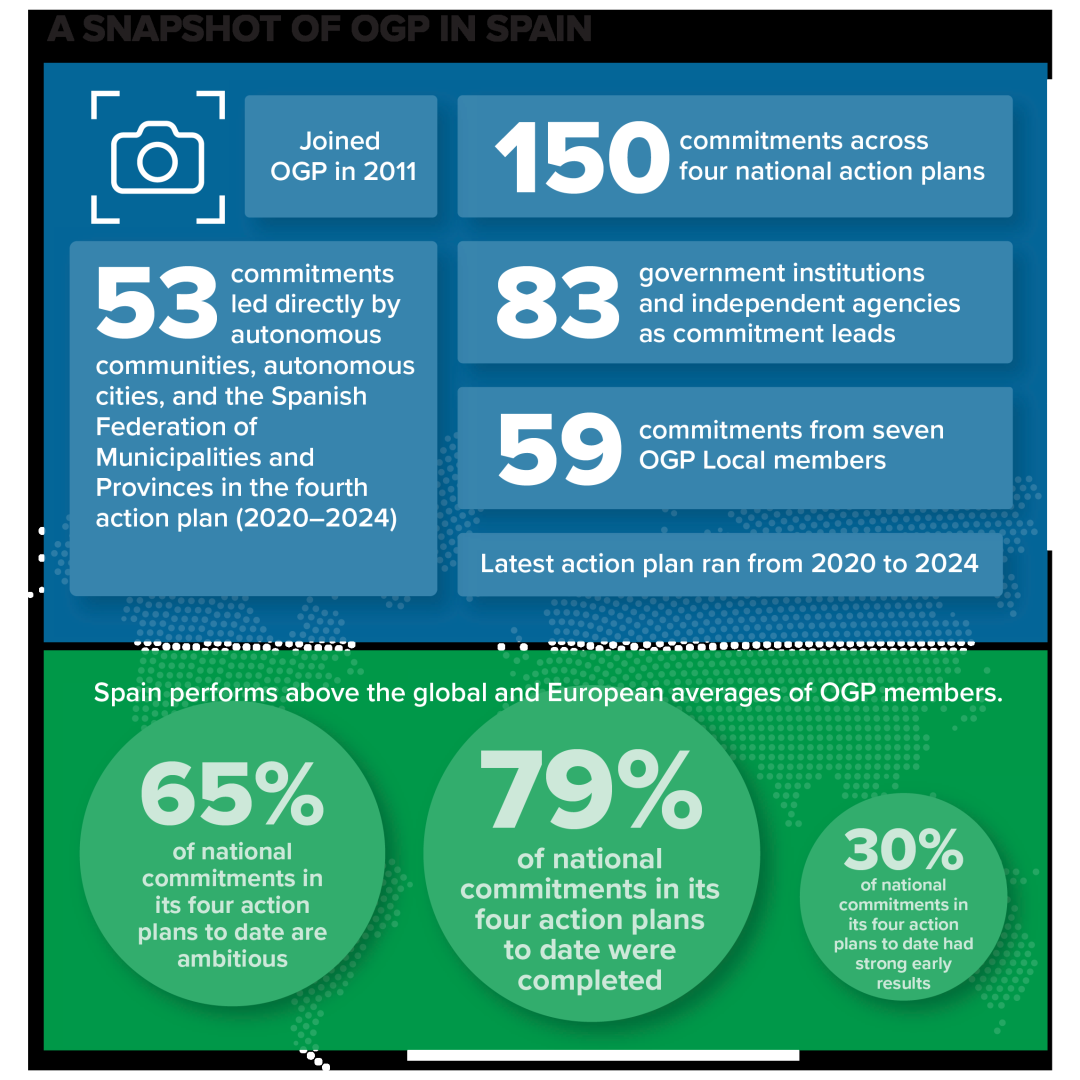
Spain joined the Open Government Partnership (OGP) at its founding in 2011. Since then, its participation has expanded to include seven OGP Local members, and the engagement of all autonomous communities in its latest national action plan. To date, Spain has made 105 open government commitments. Many of these have had higher levels of ambition and early results compared to Spain’s global and European peers in the partnership. Having completed its first four-year action plan in 2024, Spain will soon submit its fifth action plan. As co-chair of the OGP Steering Committee, the country will host the 9th OGP Global Summit in October 2025.
Through its OGP action plans, Spain has proactively fostered a culture of open government in the public sector. Open government principles have been incorporated into the syllabus for civil service entrance examinations, and thousands of civil servants have been trained in open government values and procedures, such as responding to access to information requests, managing public information, evaluating citizen participation in public policies, and navigating ethics and conflicts of interest. During the annual Open Gov Week, Spain’s national, regional, and local administrations organize thousands of activities across the country to raise awareness of open government values.
The establishment of the Open Government Forum in 2018 marked a key milestone in strengthening Spain’s open government ecosystem. This multi-stakeholder forum brought together the 17 autonomous communities through the Sectoral Commission on Open Government, the Spanish Federation of Municipalities and Provinces (FEMP), multiple ministries through the interministerial commission all in the same space with civil society organizations and representatives from organizations working with marginalized communities. This ensured that open government could reach all corners of the country. At the same time, it brought with it legal grounding which provided greater consistency of the open government efforts and stability to the OGP process. Over time, these improvements have increased civil society expectations about the quality of dialogue with the government. However, there remains an opportunity to further diversify the forum by including organizations focused on a broader range of policy areas beyond transparency and access to information.
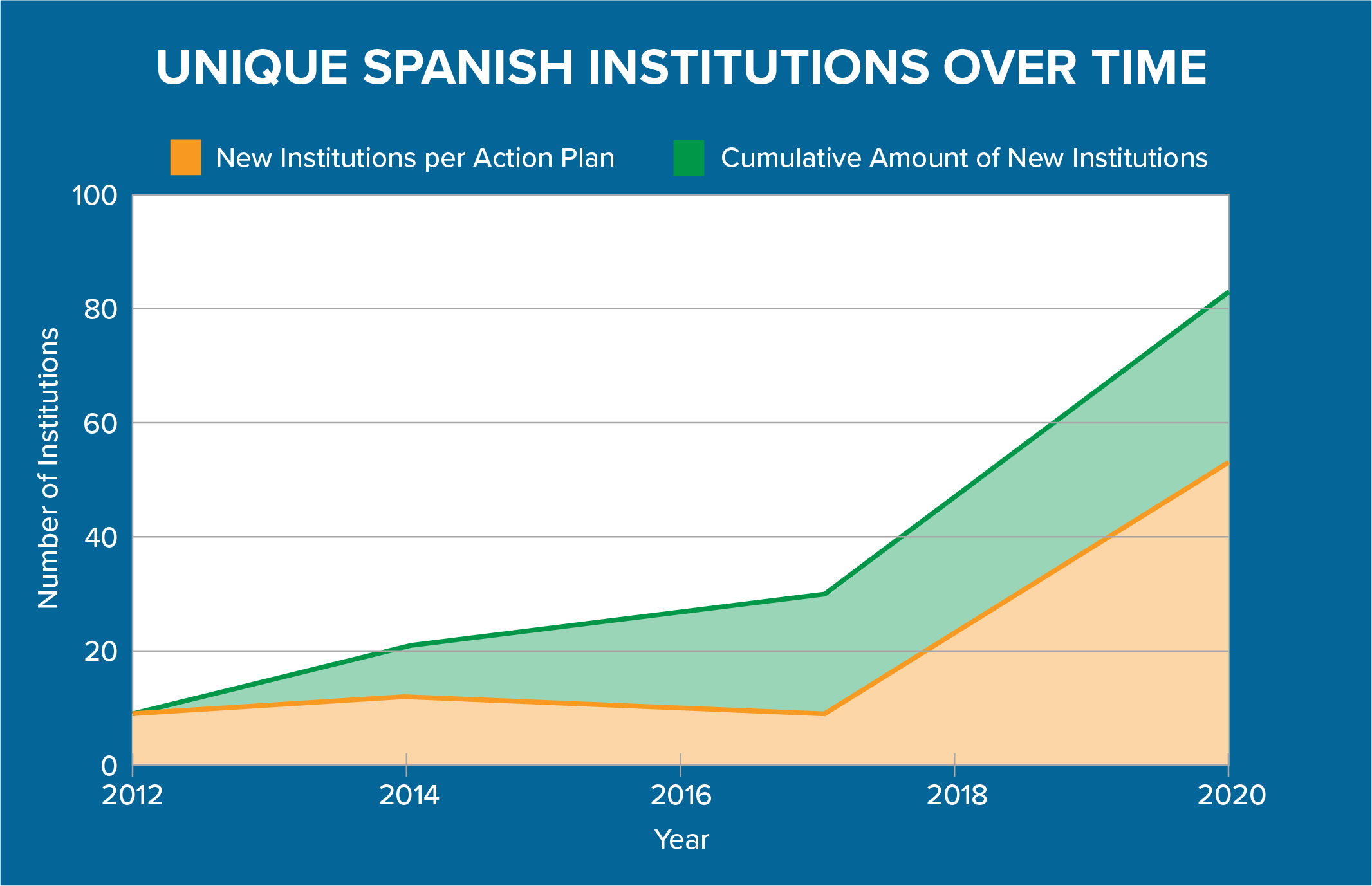
Since 2016, Spain has significantly broadened institutional engagement in the OGP process, with more and diversified public actors and government bodies becoming involved. In total, 83 unique institutions have participated in Spain’s four action plans. Recently, Spain extended its open government efforts to the legislative branch, with the Congress of Deputies launching its first Open Parliament action plan for 2025–2027.
Madrid City, the Basque Country, Aragon, Catalonia, Asturias, the Valencian Community, and Navarre are members of the OGP Local program. Collectively, they have adopted 59 commitments across 14 action plans. The enthusiasm and expansion of open government initiatives at the autonomous community and local levels has advanced reform across all levels of public administration in Spain. In some cases, ambitious local reforms have preceded similar initiatives at the national level, such as Madrid’s mandatory lobbying register from the first action plan (2016–2017). Spain’s fourth national action plan included commitments from all autonomous communities as a way to further advance open government reforms at different levels and jurisdictions of governance through OGP.
A primary focus of Spain within the OGP framework has been enhancing public access to information. Its first action plan (2012–2013) led to the adoption of Spain’s first Transparency Law, establishing a legal framework for access to information. Most recently, in 2023, Spain ratified the Council of Europe’s Convention on Access to Official Documents (Tromsø Convention)—the first legally binding international instrument recognizing a general right of access to official documents held by public authorities. Progress has been incremental, and civil society continues to advocate for strengthening the purview of the Transparency Law and aligning it to international standards like the Tromsø Convention.
Spain’s fourth action plan (2020–2024) introduced legislative reforms to strengthen anti-corruption efforts and integrity, such as whistleblower protection and lobbying regulations. Persistent allegations of corruption across government administrations underscore the need to close the legal gaps, particularly in public procurement, which has been notably missing from previous OGP action plans.
This Open Government Journey spotlights Spain’s efforts to institutionalize the OGP process through the Open Government Forum and other institutions. It also focuses on how Spain has used OGP to advance access to information and foster a culture of open government in the public sector and broader society. Lastly, it discusses the diffusion of open government practices to the local level, both through the OGP Local program and through the inclusion of autonomous communities in the fourth national action plan.
Building an Open Government Ecosystem
Spain’s national open government ecosystem has expanded significantly in recent years, marked by a growing and more diverse set of stakeholders. Over time, relationships between government and civil society have evolved from initial distrust towards a more constructive and open dialogue. While the first two action plans were developed without meaningful participation of civil society, the third action plan marked a turning point, with structural and personnel changes in government as well as the establishment of a multi-stakeholder forum. Maintaining an agile, participatory, and outcome-oriented process remains a challenge as stakeholders adapt to the evolving needs of the open government agenda in Spain.
Gradual start to civil society engagement in OGP process
While the Spanish Constitution of 1978 recognizes the right to participate in public affairs, participation mechanisms in Spain prior to joining OGP were usually limited to traditional, formal consultative bodies—such as constitutional institutions—or entities like trade unions, business associations, and directly affected communities. In recent decades, and in line with these democratic values, citizens have increasingly expressed their demands for greater participation, transparency, integrity, and collaboration in public decisions. In response to these aspirations, Spain joined OGP in 2011.
Spain’s OGP membership coincided with the emergence of anti-austerity social movements in Spain, such as 15-M, alongside a growing public demand for government transparency and multiple corruption scandals. At that time, Spain already had active civil society organizations (CSOs) working in the areas of access to information and government transparency. For example, the ProAcceso Coalition, led by Access Info Europe, included journalists, academics, and CSOs from social and international development fields. Civio Foundation, founded in 2012, has also been actively advocating for government transparency and access to information legislation. Other specialist organizations working on open government topics began to emerge around the time of joining OGP, like XNet, Openkratio, and Political Watch. Since 2015, an active chapter of the International Open Government Academic Network in Spain has brought together academic professionals from Spanish-speaking countries working in open government, public accountability, and political integrity.
Against this backdrop, the relationship between government and civil society in Spain’s early OGP years lacked dialogue and collaboration. Rather than engaging civil society to address broader political or social issues through OGP, the Spanish government at the time largely understood open government in a more limited way, in terms of public administration reform, e-government, and administrative efficiency. The development of the first (2012–2013) and second (2014–2016) action plans had few opportunities for CSOs to give feedback on commitments. During the second action plan cycle, Access Info submitted an access to information request to obtain an update from the government on the status of the action plan, highlighting to the government the importance of independent monitoring and paving the way for a more participatory and collaborative model in subsequent action plans.
Open Government Forum: Laying a foundation for active participation
Meaningful inclusion of CSOs in developing the OGP process accelerated during the third action plan (2017–2019). Following the delayed formation of a newly elected government in 2016, the OGP portfolio moved from the Presidency to the Ministry of Finances and Public Administration. The arrival of a new point of contact also brought renewed energy, focus, and capacity for coordinating the OGP process, and a willingness to involve civil society in developing the third action plan. Engagement with the international community through events such as the 2016 OGP Global Summit in Paris also energized those involved in Spain’s national process. These factors resulted in three major advancements in Spain’s open government framework:
1. Establishment of the General Sub-directorate for Open Government (OGS) under the General Directorate of Public Governance, to oversee Spain’s OGP process.
2. Formation of the Sectoral Commission on Open Government to formalize collaboration between and among territorial administrations on open government reforms.
3. Creation of Spain’s multi-stakeholder forum (the Open Government Forum).
The inspiration for Spain’s multi-stakeholder forum came when the Spanish point of contact attended the 2016 OGP Global Summit in Paris, in which they heard about similar forums in other countries. Upon returning to Spain, their team began establishing a forum. IRM recommendations were taken into account, and by bringing together key CSOs and the network of autonomous communities, Spain co-created its third action plan and included a commitment to establish a formal multi-stakeholder forum.
The Open Government Forum established clear rules of engagement and provided a space for civil society to propose commitments and take part in dialogue with the government about the co-creation of commitments. Through the forum, CSOs were formally recognized as relevant actors in the OGP process for the first time. One civil society member said that the forum is beneficial for channeling efforts and connecting with people working in open government. Most government and civil society representatives acknowledge the forum’s usefulness in raising awareness about open government reforms. The government order that established the forum also provided the first legal basis for the OGP process. The forum has been a major success for the General Directorate of Public Governance as it endures personnel, administrative, and political changes.
Current open government structure within Spain’s General State Administration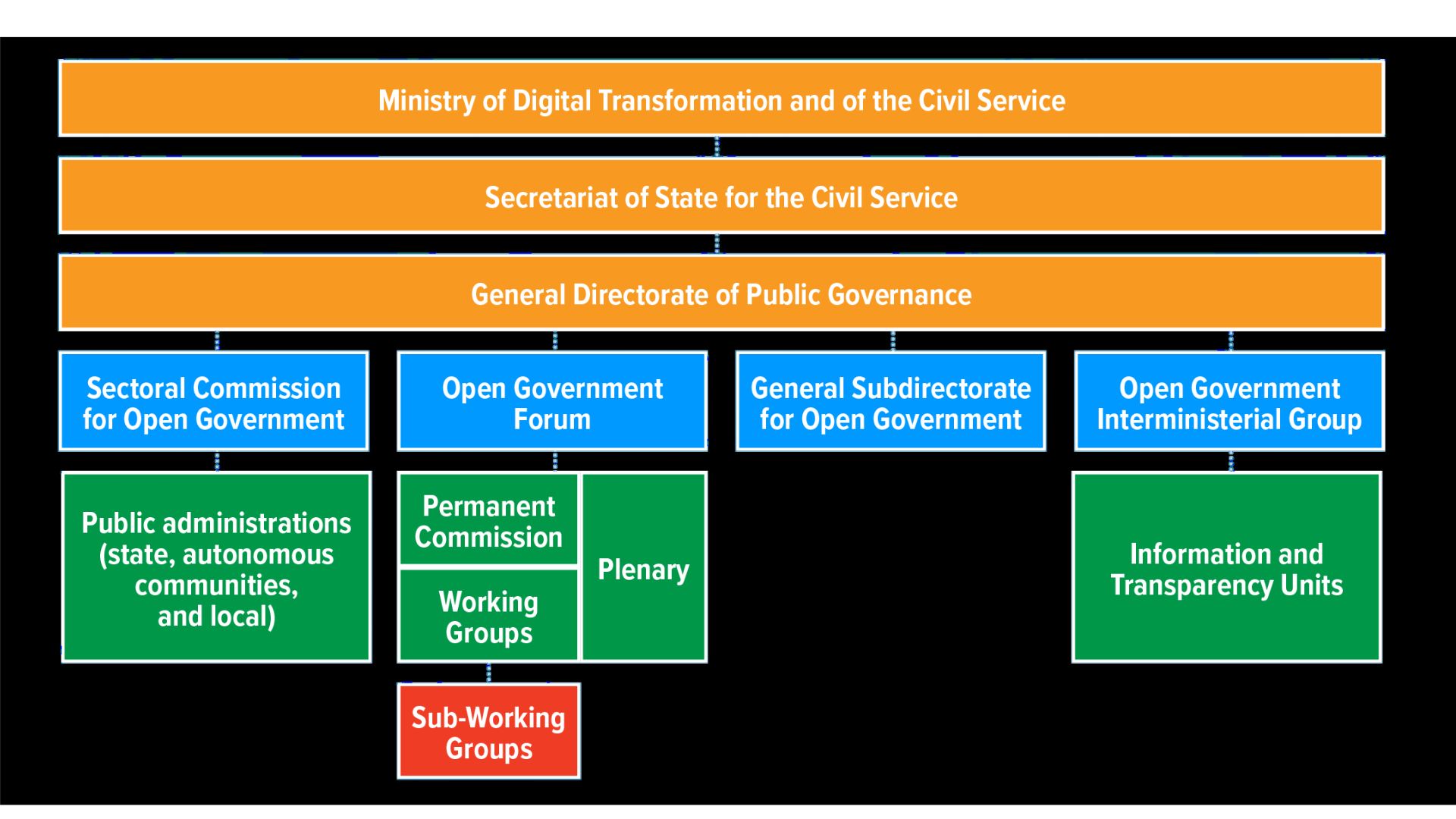 Spain’s OGP governance structure consists of multiple levels. |
Broadening institutional participation in OGP
Spain has significantly broadened institutional engagement in the OGP process since 2016, with more and diverse public actors and government bodies being involved. This can be attributed to the creation of the Open Government Forum during the third action plan and the inclusion of commitments from Spain’s autonomous communities and local entities in the fourth action plan.
These changes have contributed to shifts in the perception of open government from being considered a political party agenda to something more technical, institutionalized, and recognized for its practical values across the political spectrum. While nine unique institutions led 13 commitments in Spain’s first action plan, its fourth action plan saw 57 institutions (of which 53 had never participated before) implementing 62 commitments. In total, 83 unique institutions have participated in Spain’s four OGP action plans to date.
The Congress of Deputies recently approved Spain’s first Open Parliament action plan for 2025–2027, comprising 31 commitments aimed at improving transparency, promoting citizen participation, ensuring integrity and accountability, and promoting training and awareness in parliamentary processes.
Dedicated civil servants have built and strengthened the open government ecosystem within Spain’s public administration. Institutionalization of the multi-stakeholder forum has not only guaranteed its legitimacy in the longer term, but also helped safeguard the open government agenda during political volatility and polarization.
The Open Government Forum has been key to institutionalizing the dialogue between government and civil society. Commitments in recent action plans have sought to strengthen representation and effective collaboration in the forum. However, with growing expectations, some civil society members believe the formalized format and the lack of high-level political engagement now limits the utility of the forum as a space for dialogue and collaboration with the government. For example, during action plan implementation, the working groups and plenary meetings mostly entail sharing updates on the commitments. One civil society member noted that direct lobbying of political parties and members of the Congress has led to more success in achieving some of their strategic objectives.
Looking ahead, high-level ministerial engagement could open the door to more ambitious commitments. As the number of institutions involved in the OGP ecosystem continues to increase, Spain’s multi-stakeholder forum would also benefit from diversifying its membership beyond transparency and anti-corruption to include CSOs working on topics such as the environment, gender equality, and artificial intelligence. The OGS has taken steps in this direction by bringing in associations that support women and young people into the OGP process for the fifth action plan.
Advancing the Right of Access to Information
During its first OGP action plan in 2013, Spain adopted the Law on Transparency, Access to Information, and Good Governance (‘Transparency Law’). In the 12 years since the law passed, Spain has used OGP action plans to continue improving access to information, notably through the Transparency Portal. However, civil society’s push for strengthening the mandate of the Transparency Law and aligning the legislative framework law with the Tromsø Convention have yet to be addressed.
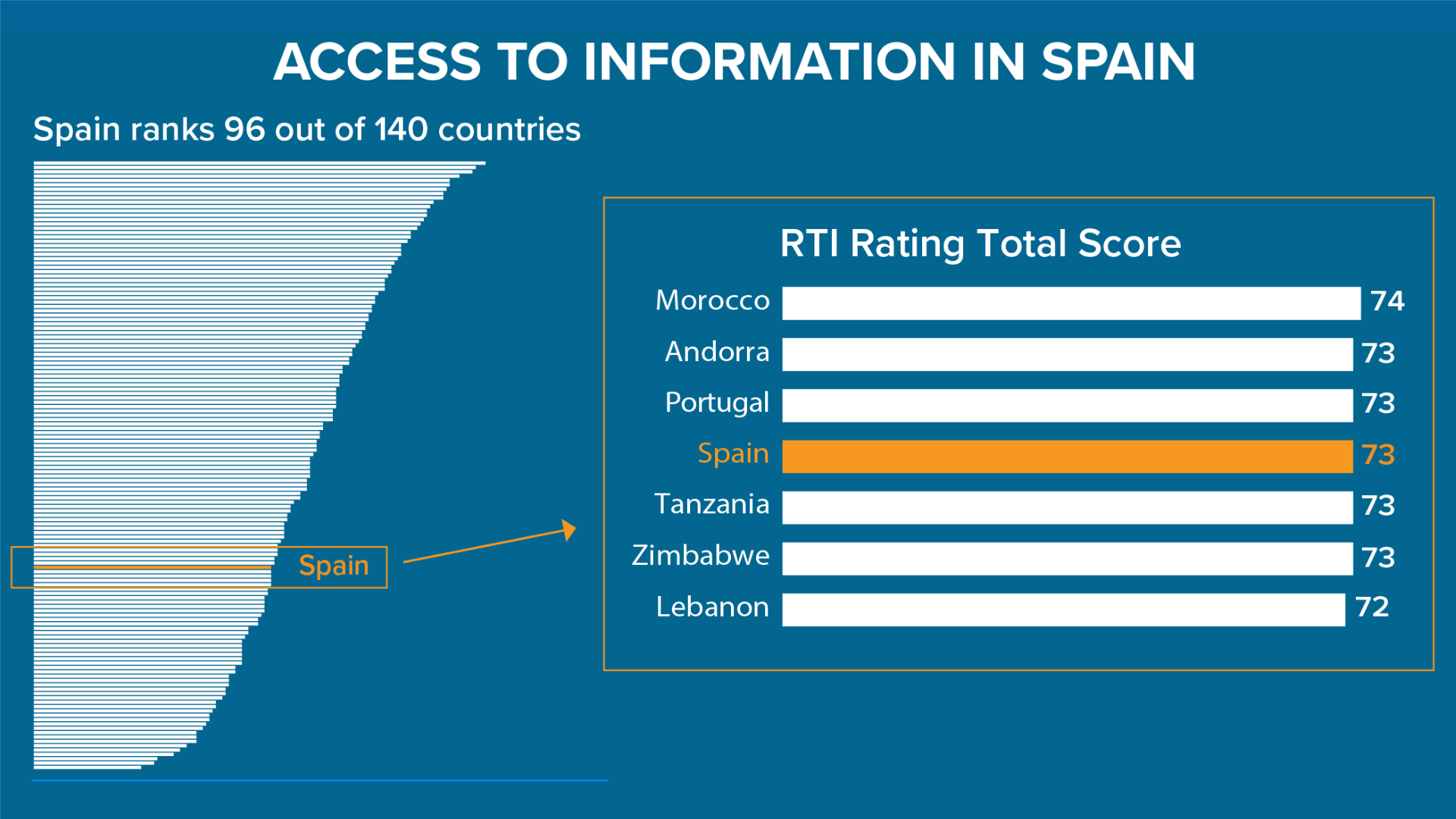 Source: RTI Rating |
Passing the Transparency Law
Spain was one of the last countries in Europe to adopt access to information legislation. The Spanish Constitution of 1978 recognized the right of citizens to access administrative records. However, its constitutional recognition had limited practical effect since no specific law fully developed this right. Instead, there were other laws that specifically governed access to archival information (Article 37 of Law 30/1992), environmental matters (Law 27/2006), and reuse of public sector information (Law 37/2007).
Passing legislation on access to information was a major priority for civil society and the government when Spain joined OGP in 2011. Addressing access to information was high on the government’s agenda due to reports of the Group of States Against Corruption about corruption in Spain, awareness raising by CSOs, and high-profile corruption cases. While OGP did not place access to information on the government’s agenda, since a draft law was already in development at this point, it was one of the conditions for OGP membership and so incentivized the government to bring the legislation to parliament.
The external visibility of being an OGP member served as a lever to accelerate adoption of the law, helping overcome political hesitation and institutional inertia. Both government and civil society considered the Transparency Law the most important reform in the first action plan. According to a representative of Access Info, it was an obvious and high-priority issue. However, the drafting was largely done within the government with minimal civil society involvement. In July 2011, a draft transparency bill was presented to the Parliament, just days before the government announced early elections in November.
Under a new government and with a new draft bill, the Parliament passed the Transparency Law (Law 19/2013) on 28 November 2013, taking effect in December 2014 for the State Administration and in December 2015 for autonomous communities and local entities. The final law was weaker than civil society demands, particularly the ProAcceso Coalition. A civil society representative believes that the scope of the law resulted from negotiations between Spain’s largest political parties at the time. Nonetheless, the law finally created a legal framework for the right to information and was key to laying the groundwork for a culture of transparency within the Spanish public administration. It formalized the process for requesting information, defined the channel for exercising the right to access of information, and defined the categories of information and datasets that have to be disclosed. It also created a Council of Transparency and Good Governance (‘Transparency Council’) as the oversight and enforcement body as well as Information and Transparency Units in every ministry of the General State Administration to manage the right of access to information.
Furthermore, the law allowed for litigation when the government failed to comply with legal requirements. Access Info and Civio Foundation have used this litigation mechanism to advance access to information. Implementation of the law has also clarified what is considered “information” and what was protected under data protection provisions. The Transparency Council’s role as guardian of the law was crucial, as was the leadership of its first president who was convinced of the need to create a culture of transparency in the public sector. Overall, the council often ruled in favor of citizens over public administrations in its resolutions on information requests.
Following its adoption, Access Info identified several shortcomings in the Transparency Law compared to international standards. For example, requesters cannot request drafts of documents and are required to provide a national identification number to request information from the government. Other laws such as the archives, secrecy, or personal data protection laws can also take precedence, whereas the Transparency Council has no binding power and cannot sanction administrations for non-compliance with its rulings. Finally, the law only applies to the executive branch and the public administration. The Congress, the judiciary, and other constitutional bodies like the Royal House are excluded, except with regard to their administrative activities.
Access to information at the autonomous community and local levelsApproval of the 2013 Transparency Law led to the passage of similar laws on transparency and access to public information in Spain’s autonomous communities. Fifteen of the 17 autonomous communities have their own laws regulating access to information and transparency, with the Balearic Islands and the Basque Country applying the national law. Furthermore, municipalities such as in Madrid, Seville, Valencia, and Zaragoza have ordinances regulating the principle of transparency. Some of these local regulations even exceed the provisions of the Transparency Law. For example, Madrid’s transparency ordinance does not require inputting a national identification for submitting information requests and Catalonia’s law provides for a mediation mechanism when the government denies access. One civil society representative said they would like such innovations to be available nationwide so that information requesters do not have to engage in costly and lengthy litigation while also engaging in dialogue. |
Advancing improvements and implementation of the Transparency Law
Spain has used its OGP process to advance the implementation of the Transparency Law. However, meaningful improvements to the legal framework on access to information have progressed rather slowly. The regulation to manage the implementation of the law has also yet to be adopted, despite it being a commitment in the third action plan (2017–2019). Recommendations to strengthen the Transparency Law were drafted with civil society in the Open Government Forum during the fourth action plan (2020–2024), but the government has not sent them to Parliament for debate and adoption.
Spain’s Transparency Portal is the central point through which access to information requests are submitted. It was launched in December 2014 during Spain’s second action plan (2014–2016). Following an IRM recommendation, a commitment in the third action plan simplified information requests by only requiring an identification number and access code generated by the portal itself, as opposed to a more complicated and uncommon digital certificate. Since its launch, the number of information requests has grown from just 3,151 in 2015 to 14,096 in 2024.
The portal also provides for the proactive publication of government information, including in reusable formats. The third action plan involved publishing more statistical information on access to information as well as salaries and resumes of senior officials, which were frequently requested by civil society. In the fourth action plan, the Ministry for Digital Transformation and of the Civil Service made further improvements to the portal to support the transposition of EU’s 2019 Directive on public sector information reuse by updating the economic and financial section to include annual accounts, real estate, budget execution, senior officers (such as curricula vitae, remuneration, and activities after leaving office), legislation (pending approval and in force), public contracts, and subsidies. The portal also publishes accepted information requests, most frequently requested information, a space to monitor OGP commitments, and offers the option to subscribe to the portal in order to access new publications related to transparency.
Notwithstanding those advancements, civil society experts believe the Transparency Portal has room for improvement. One civil society representative mentioned that the portal is geared toward compliance (making sure each department uploads its information) rather than helping users find what they need. Access Info, for instance, mainly uses the portal to submit requests, not to find information that is already published. They mentioned that the digital verification process and the need for a Spanish ID could be updated, as the organization has been contacted by people outside of Spain to submit information requests on their behalf. The evolution toward a more interactive and accessible portal is underway, with the goal of making the user experience easier.
The Tromsø ConventionIn the fourth action plan, Spain ratified the Council of Europe’s Convention on Access to Official Documents (Tromsø Convention) on 27 September 2023, which entered into force on 1 January 2024. The ratification of the Tromsø Convention is an important step forward in Spain’s commitment to access to public documents. It is the first legally binding international agreement ratified by Spain that recognizes a general right of access to public documents held by public authorities. Countries that adhere to the Tromsø Convention must ensure that every person has the right to access such documents. However, Access Info noted the Transparency Law is not in line with the Tromsø Convention because the law does not extend to all information held by all public bodies. For example, the Tromsø Convention includes the judicial branch, which is not covered under the Transparency Law. It also limits the possibilities for requesting “internal communications” and other documents regulated by other laws on public access to information, such as those held in public archives. |
Throughout its OGP membership, Spain has enabled the right of access to information and proactively published various pieces of information via the Transparency Portal. The approval of the Transparency Law in 2013 was a major leap in bringing Spain closer to international standards for access to information, consolidating a fundamental right that has since been strengthened. While improved implementation and legal reform would further enhance access to information in Spain, the right of access is used by a growing number of organizations and citizens. Although OGP may not have been the starting point for the adoption of the Transparency Law, the consistent inclusion of access to information-related commitments in OGP action plans has ensured steady, albeit gradual, progress in an important policy area that underpins the core value of open government.
Spearheading Education and Training on Open Government
Spain’s OGP stakeholders recognize the importance of creating a culture of open government in society and the public sector. Through its OGP action plans, Spain has been a pioneer in raising awareness of open government principles through targeted training and courses for civil servants. The incorporation of open government themes into the training and selection of civil servants demonstrates a strong commitment to embed these principles in public administration. Moreover, a growing number of Spanish institutions use the annual Open Gov Week as a key moment for public outreach, education, and raising awareness.
“(…) having an educated and trained civil society is critical; without it, governments will hardly be open. If we are unable to break out of this space of specialized CSOs, it will be difficult for us to open up governments.” — Comment by an academic stakeholder
Integrating open government principles in the civil service
It was not until Spain’s third action plan that it sought to actively promote the concept of open government within the civil service. Spain introduced content on open government and equality in the official curriculum for the civil service entrance exams. One employee of the OGS recalled that they had no knowledge of open government before studying for the examination. Being exposed to the content inspired them to request to work there.
The National Institute of Public Administration (INAP)—an agency of the Ministry of Digital Transformation and of the Civil Service—organized open government training for public sector employees during the third and fourth action plans. The training covers topics such as access to information requests, information management, evaluation of citizen participation in public policies, ethics, and conflicts of interest. The first training (2018–2019) involved 3,354 participants, whereas 9,189 people applied for admission to the second training (2021–2024)—of which only 3,612 were admitted. While an Open Government Forum member said that the effectiveness of the training depends on the enthusiasm of the instructors, surveys of training participants have shown high levels of satisfaction with the training and instructors. The number of spots offered increased in subsequent years due to high demand.
According to the OGS, the training and introduction of the topic in the civil service examination have led to greater awareness among public employees for open government principles, noting that more civil servants now see open government as a tool that can support their work, not as an additional administrative task. These efforts have standardized the understanding of open government. Ministries continue to request training, not only on open government from the OGS but also from the Sub-directorate of Transparency (under the Public Governance Directorate) which provides proactive transparency courses.
A growing number of Spanish institutions use the annual Open Gov Week (OGW) as a key moment for public outreach, education, and raising awareness. National, autonomous community, and local public administrations have institutionalized OGW as Open Administration Week (held concurrently each year with OGW). In 2025, over 1,700 events were hosted in Spain—the highest among all OGP countries. At the national level, Open Administration Week spreads the use and knowledge of open government concepts and values among civil servants.
Open Administration WeekOpen Gov Week (OGW), known as Open Administration Week in Spain, has become a major event among Spanish public administrations for raising public awareness of open government. During the first OGW in 2018, 347 events were organized across Spain—the most of any OGP member countries—and it has continued to grow since. Over 1,300 events took place during 2024, while over 1,700 were hosted in 2025. The events include a wide range of training, workshops, webinars, and conferences. Some of the 2025 events included a learning session by INAP about its citizen participation laboratories—Public Innovation Laboratory (LIP) and HazLab—as well as a showcase of the Ministry of Culture’s Spain is Culture portal, and “Café with data” training session in Navarre on data quality and the benefits of metadata for publication in portals. An OGS civil servant said, “Thanks to Open Gov Week, we carry out tons of activities every year. It helps citizens learn about the administration. This likely would not happen without OGP.” |
One challenge moving forward to ensuring the success of these initiatives is to give political support for motivated individuals in the civil service so that they do not face institutional barriers when implementing what they learned. Other civil servants also need to be open to integrating open government norms into their work. However, the groundwork for this long-term cultural change demonstrates a departure from the situation over ten years ago, when open government was largely understood as publishing government information, open data, and e-government.
Advancing Open Government in Municipalities and Autonomous Communities
Spain’s municipalities and autonomous communities play an increasingly active role in advancing open government reforms, with many initiatives pursued through OGP. In 2016, Madrid became the first Spanish local government to join the OGP Local program. Since then, membership has expanded to the Basque Country (2018), Aragon (2020), Catalonia (2020), Asturias (2022), the Valencian Community (2022), and Navarre (2024). Together, these seven members have adopted 14 OGP action plans and made 59 commitments. Notably, Spain’s fourth action plan was the first to include commitments from all 17 autonomous communities, the autonomous cities Ceuta and Melilla, and the Spanish Federation of Municipalities and Provinces (FEMP).
Spain is a highly decentralized country comprising 17 autonomous communities, each administered by its own legal framework and governing bodies. Numerous regional networks support transparency and public participation, reinforcing local accountability. Most autonomous communities such as the Basque Country, Navarre, and Aragon maintain their own open data portals, as well as Valencia with its own public participation portal. Despite political changes, the open government agenda has remained alive, consolidating practices that more administrations are incorporating structurally.
Early enthusiasm to advance open government through OGP Local
As the largest city and capital, Madrid has led Spanish local governments in pursuing and promoting open government through OGP, becoming the first Spanish member of OGP Local in 2016. Elected among a wave of “mayors of change” in Spain in 2015, Madrid’s new mayor made a clear political commitment to open government, during which the Madrid City Council joined the International Open Data Charter in November 2015 and approved a Transparency Ordinance in July 2016, earning Madrid the recognition as “one of the most progressive sub-national transparency regimes in Europe”. Notably, its “Decide Madrid” online platform (launched in 2015) has become a benchmark for innovation in citizen participation internationally and won the UN Public Service Award.
Madrid has used its membership in OGP Local to root open government principles in its local administrative culture. The first action plan (2016–2017) produced important reforms, including participatory budgeting through Decide Madrid and a mandatory lobbying register for the Madrid City Council, eight years before the national government’s own proposals for a lobbying register. The number of registered lobbyists has increased from 50 in January 2018 to 1,120 by July 2025, showing a consolidation of the process. Successive plans have included measures such as the creation of a complaints mailbox, “Madrid in Data”, the creation of a dashboard for open government commitments, the improvement of Decide Madrid, and the promotion of community actions for a healthier city.
Ambitious reforms in Madrid’s first action plan created a sense of healthy competition and incentives to adopt innovative democratic reforms, enhance transparency, and strengthen citizen participation, including at the national level. Madrid quickly gained international recognition as a leader in open government through its OGP reforms. This helped generate momentum and exert pressure on the national government to advance its own open government agenda. This momentum is reflected today in the significant number of autonomous and local governments in Spain that participate in OGP.
Advances to open government in municipalities and autonomous communities
Many Spanish autonomous communities had strong foundations in open government before they joined OGP Local. The Basque Country joined OGP Local in 2018 having developed the Irekia portal in 2010 as an information channel for citizens. Before joining OGP Local in 2020, Catalonia already had strong institutional support for open government, having created the Secretariat of Transparency and Open Government in 2016 as well as the Network of Transparent Governments of Catalonia. Navarre too had already implemented an open government action plan for 2021–2023 with 25 commitments, prior to joining OGP Local in 2024.
Through joining OGP Local, Spanish members have established frameworks for sustaining open government reform. The Basque Country, Catalonia, Aragon, Asturias, and Navarre have established multi-stakeholder forums for their OGP processes, whereas others use pre-existing bodies. For example, Madrid engaged existing deliberative councils and used Decide Madrid to invite the public to participate in the development of its action plans. In its fourth plan, Madrid created an open government steering group with equal composition of civil society and city council members. Navarre and Valencia leveraged existing participation networks and government-CSO consultative bodies such as the Navarrese Civic Participation and Civic Participation Council of the Valencian Community. Elsewhere, the Aragon Open Government Lab (LAAAB) brought a highly motivated network of local governments, CSOs, and projects to the OGP process, providing reinforcement and visibility for OGP while motivating different departments to learn about how open government innovations can help them in their work.
Spain’s OGP Local members have sought to advance public participation with a focus on innovative practices. For example, the Basque government established the Innovation Lab for Citizen Engagement (iLab) to stimulate innovation in citizen participation. Over time, understanding of open government among Spain’s OGP Local members has shifted from broader normative to targeted reforms by including specific groups like young people, the elderly, and people with disabilities in participatory processes. For example, Madrid is creating a dedicated space on Decide Madrid for supporting the direct participation of young people and has launched THIVIC, a social innovation laboratory. Aragon’s OGP participation has influenced LAAAB’s thinking about how to enhance opportunities for participation and innovation for underrepresented groups and rural areas in Aragon. Navarre is working towards an administration where clear communication is the norm, bringing public services closer to the town squares with a new mobile office.
There are various networks in Spain of autonomous communities and municipalities dedicated to learning and sharing experiences on open government. Established in 2016, the Inter Autonomic Network on Citizen Participation, autonomous communities meet annually to exchange experience and make declarations on advancing open government norms. Autonomous communities take turns hosting the network each year. In addition, the FEMP’s Network of Local Entities for Transparency and Citizen Participation plays an important role in coordinating and disseminating citizen participation and open government initiatives at the local level. Created in 2015, this network currently comprises over 400 local entities. Its working groups produce guides, support the implementation of local initiatives, draft model regulations, and sit in Spain’s Open Government Forum. The FEMP has used Spain’s OGP action plans to consolidate and strengthen this network, for example by publishing two sample municipal regulations to facilitate their adoption by smaller municipalities in the fourth action plan on public transparency and data governance. Likewise, in 2021, Madrid launched the community of practices called “The Participatory Group”, which has grown to 74 local and regional governments from around the world and other institutions, and more than 135 practices (workshops and working groups, as well as a massive open online course (MOOC) called “the ABCs of participation”).
OGP Local exposes municipalities and autonomous communities to current global debates on open government topics as well as encourages collaboration with other autonomous communities and territories of other countries. A Basque Country official emphasized that OGP Local helps inspire stakeholders with what is going on globally and then implement initiatives closer to home. They underscored that OGP Local legitimizes the push for an open government agenda both internally and across different levels of government and political parties.
Maintaining momentum during political transitions
Municipal and autonomous community elections have impacted the continuity of reforms among OGP Local members across action plans. In Catalonia, several changes in government and restructuring of management teams and departments negatively impacted the 2021–2023 action plan. In Aragon, the 2023 regional elections led to the transfer of some government officials who had been working on the first action plan (2021–2023). Civil society in Aragon contributed to the co-design of the second action plan (2024–2026) during a period of government transition, leading to continuities in open government reforms. After elections in 2019, Madrid’s new coalition government updated the regulations for participatory budgeting, reducing the budget in line with implementation capacity, while strengthening the feasibility for projects. The number of projects being implemented has grown from 191 projects between 2016 and 2019 to 615 since June 2019. On the other hand, the new government modified the City Observatory—a citizen monitoring body which makes recommendations on municipal policies, created during Madrid’s second action plan for (2018–2020). In 2020, it returned the observatory to its original purpose as an evaluation tool and pursued participation objectives through other bodies such as the City’s Social Council. Moreover, Madrid successfully developed its fourth plan (2024–2027) with a new steering group involving three General Directorates and a diverse range of stakeholders.
To ensure momentum during political transitions, the Basque Country’s OGP model involves three levels of government—autonomous community, three provincial councils, and three capital city councils. This co-leadership makes each OGP commitment multi-level and multi-territorial. However, managing seven institutions with different agendas and electoral cycles also comes with its own challenges, which the Basque Country has managed to navigate through successive local governments and councils. The multi-level and multi-territorial structure has allowed the Basque government to successfully maintain the OGP process despite capacity constraints and emerging challenges, for instance by designating a new lead at different levels when several municipalities are undergoing election cycles simultaneously.
Advancing autonomous community and local reforms in national OGP process
The creation of the Sectoral Commission on Open Government in 2018 was pivotal in including autonomous and local reforms in Spain’s fourth action plan. Apart from a commitment in the third plan that introduced participatory budgeting in the autonomous community of Murcia, the first three action plans only included national-level reforms. For the fourth plan, the General Directorate of Public Governance and the General Sub-directorate of Open Government worked with the Sectoral Commission to gather 53 commitments covering all 17 autonomous communities, the autonomous cities Ceuta and Melilla, and FEMP. Spanish reformers said that the inclusion of commitments from the autonomous communities greatly enriched the fourth action plan.
These commitments resulted in improvements across a wide range of policy areas, including open data, open government training for civil servants, developing online citizen participation platforms, and promoting the participation of young people in developing public policies. Notably, Castile and León developed a ‘normative footprint’ that allows the public to trace how public feedback influenced the text of laws throughout the legislative process. A similar commitment in the fourth action plan at the national level was not implemented. However, in some autonomous communities, changes in leadership resulted in new legislative priorities and the discontinuation of open government reforms. For example, the minority government of Cantabria approved the draft Law of Citizen Participation in December 2024 but it has been unable to secure sufficient opposition support in the Parliament of Cantabria to pass the law.
The future of local open government
Spain’s fifth action plan is expected to continue including commitments from local and autonomous community administrations. Spanish local and autonomous community governments are also keen to remain active members of OGP Local. Beyond current actions, a coordinator of a working group of FEMP believes that inclusion of another layer of government—the provincial councils—in the OGP process would be important to further institutionalizing local open government reforms.
Spanish OGP Local Members have been at the forefront of citizen participation through their local initiatives, such as Decide Madrid. The future success of local reforms lies in these jurisdictions’ ability to ensure sustained results that transcend political changes in Spain’s OGP journey. It is therefore important to continue embedding these reforms into the daily activities of local and autonomic public administrations.
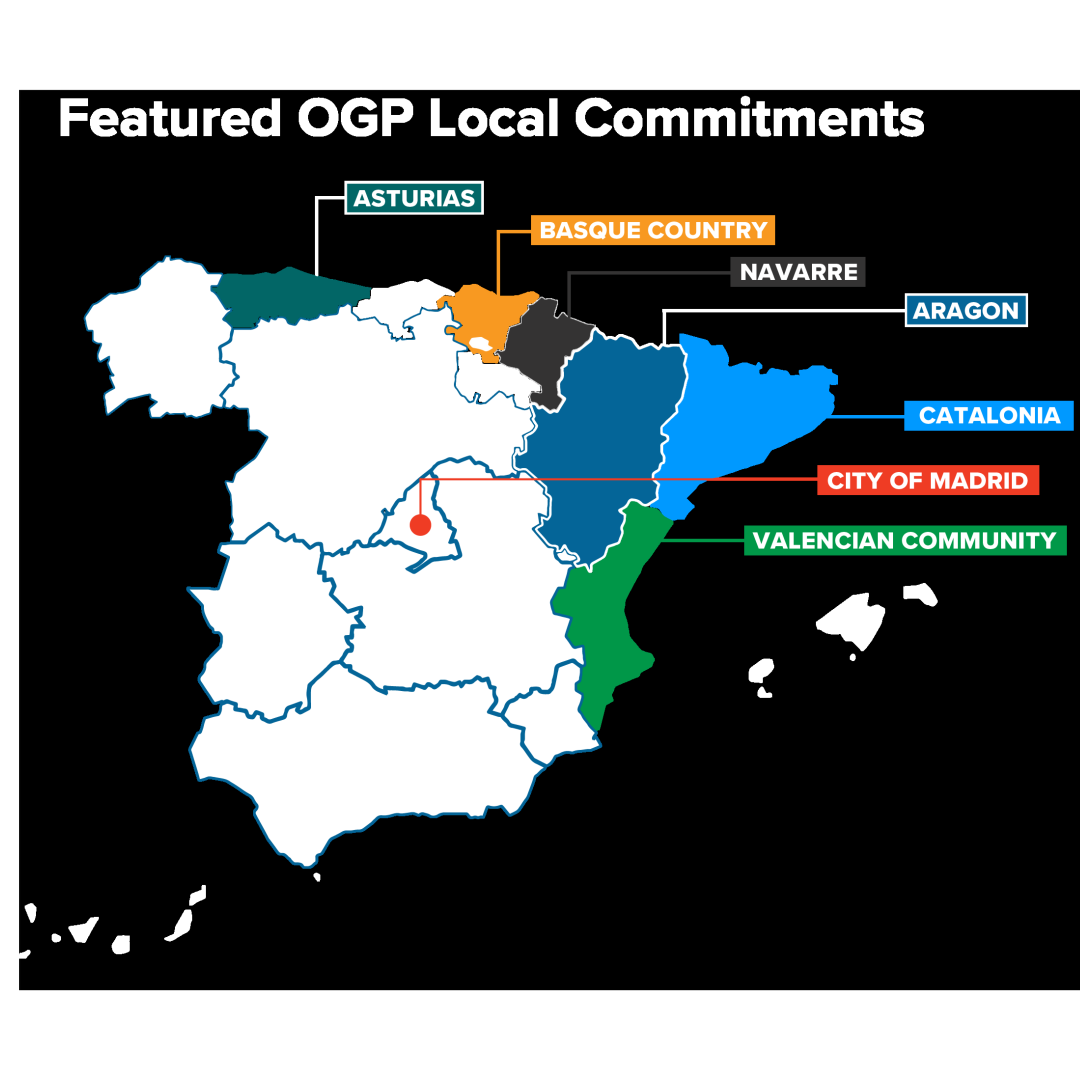 ARAGON: Aragon joined OGP Local in 2020 and has made six commitments through its two action plans. In its 2021–2023 action plan, Aragon improved its Easy Government program by inviting people with intellectual or developmental disabilities to redesign legal and administrative texts. The initiative received an Open Government Award in 2023 and was highlighted as a good practice by the OECD. By 2023, the Easy Government page had more than 23,500 visits and led to a similar initiative in Castile and León. Aragon continues to deepen its commitment to Easy Government and introduced a commitment in its 2024–2026 action plan dedicated to the elderly. |
Path Forward for Open Government in Spain
Spain’s OGP journey has embedded open government processes and frameworks into its public administration. The creation of the Open Government Forum during Spain’s third action plan kick-started a period of improved engagement and dialogue between government and civil society. Over time, some civil society members believe the forum should be reformed to give civil society greater influence over decision-making and implementation of action plans.
The consistent inclusion of access to information commitments in OGP action plans has ensured steady progress in enhancing an important policy area that underpins open government. Throughout its OGP membership, Spain has enabled the right of access to information and proactively published a wide variety of government data and documents via the Transparency Portal. While the long-standing civil society priority of reforming the Transparency Law has yet to be fulfilled, the debate on the reform of the Transparency Law remains open, reflecting a commitment to continuously adapt the legal framework to new social demands and to international standards.
Spain has used OGP to integrate open government values in the public sector and society. The incorporation of open government themes into the entrance examinations and training of civil servants demonstrates a strong commitment to embed a culture of open government in the public sector. The popularity of the Open Gov Week in Spain provides further evidence of the resonance of Spain’s open government activities within the state administration and among citizens who engage in these activities.
The growth of OGP Local membership to six autonomous communities and the city of Madrid is particularly noteworthy in the context of Spain’s highly decentralized structure. Participation in OGP Local has supported a wide range of open government reforms—from participatory budgeting and lobbying transparency in Madrid to the dissemination of an easy language program in the government in Aragon. Meanwhile, the Sectoral Commission on Open Government has facilitated cooperation between the national government and autonomous and local governments in the OGP process. In addition, the Congress of Deputies approved its first Open Parliament Plan (2025-2027) with 31 commitments, demonstrating the growing maturity and cross-cutting nature of the Spanish open government agenda across all three branches of government.
There is still a comparatively high public perception of corruption in Spain. The OGP platform provides an opportunity to implement the government’s recently announced State Plan to Combat Corruption, which could address several recommendations from CSOs for the Action Plan for Democracy.
The draft of Spain’s fifth action plan (2025–2029) pursues anti-corruption reforms, such as the rollout of mandatory lobbying register and the adoption of the Integrity System of the General State Administration (SAIGE) across the public administration at all levels. New and cutting-edge policy areas include media freedom (including transposing the EU’s Directive on Anti-Strategic Lawsuit against Public Participation), promoting ethical use of artificial intelligence in the justice sector, collaborating with CSOs against disinformation, and enhancing the legal right of children to participate through associations. Future action plans could also consider stronger public integrity measures, such as commitments towards the proactive publication of asset declarations by senior officials, civil servants, and parliamentarians, and the creation of an independent office to oversee compliance with conflict of interest regulations.
Spain is one of the EU countries most affected by the climate crisis, posing serious risks to its economy’s leading sectors. As such, future OGP commitments could generate spaces for participatory dialogue and accountability on climate issues. Other important policy areas for Spain include migration, asylum management, child and energy poverty, and gender-based violence. Following the Congress of Deputies’ first Open Parliament action plan (2025–2027), Spain could expand its future open parliament reforms to include the Senate. The judicial branch could also develop its own open justice action plan.
Spain’s journey of open government reform has seen ongoing success and results in specific areas. Continuing these reforms and expanding its coverage into other thematic areas to address pertinent social and political issues will require broadening the agenda as well as participation of new CSOs into the OGP process and beyond. However, Spain’s institutional setup for open government already has the building blocks to ensure that this can happen. As Spain hosts the OGP Global Summit in Vitoria-Gasteiz in October 2025, it is well placed to launch its leadership in defending open government and democratic renewal at home, in Europe, and globally.
 Sunrise through orange trees in Valencia, Spain (Photo credit: Jonny James via Unsplash)
Appendix
About this report
As the Open Government Partnership implements its 2023–2028 Strategy, changes in approaches, ways of working, and learning are key in achieving the organization’s strategic goals. The Independent Reporting Mechanism (IRM) continues to contribute towards this through its vital role in producing and disseminating evidence-based research.
The scope of IRM reports have focused on the activities during an action plan cycle. This research creates useful data and provides valuable information to the partnership and open government community. However, since the analysis is largely restricted to developments within an action plan cycle, IRM reports are less able to answer some of the longer-term questions which OGP wishes to learn from, as part of this new strategy.
In 2025, the IRM committed to producing a report reflecting on Spain’s 14 years of participation in OGP. This Open Government Journey report explores Spain’s open government evolution and achievements across action plans, government, and civil society to distill learnings from the work of reformers, OGP Support Unit, and partners.
Methodology
This report was written by Matthew Tramonti with interviews conducted by Pedro Espaillat.
It was reviewed by Andreas Pavlou, Paul Braithwaite, Shreya Basu, Tinatin Ninua, José María Marín, Munyema Hasan, Ana Revuelta, Alba Gutiérrez, and César Cruz-Rubio. It was also reviewed by key stakeholders in government and civil society in Spain. Many thanks go out to others who have contributed towards the report.
To produce this report, the IRM interviewed and received written feedback from individuals from government and civil society working in Spain. These included:
Pablo Garcia Arcos (OGP Point of Contact of Government of Catalonia), David Cabo (Civio Foundation and Member of Open Government Forum), Rachel Hanna (Access Info Europe and Member of Open Government Forum), María Pía Junquera Temprano (Former National OGP Point of Contact, and Director-General of Citizen Participation of Madrid City Council), Joaquín Meseguer (Executive Secretary of the Spanish chapter of the Open Government Academic Network, and Member of Open Government Forum), Gema Ratón (General Subdirectorate for Open Government), Silvia Sancho (Sub-directorate of General Inspection of Services of General Administration of the State), Lázaro Tuñón Sastre (Directorate General of Public Governance of Ministry of Digital Transformation and of the Civil Service & National OGP Point of Contact), Elena Sedeño Zarco (General Subdirectorate for Open Government), Ana Aguirre Uriz (OGP Point of Contact of Basque Country), Mariana Cancela (General Directorate for Institutional Relations, External Action and Transparency of the Government of Aragon, OGP Point of Contact of Aragon), and Susana Barriga Corregidor (Head of the Citizen Participation and Social Innovation Service, Government of Aragon)
The authors also consulted previous IRM products and reports covering all four of Spain’s action plans as well as information sourced from desk research.