End of Commitment Report – Promote the management of urban tree planting and strengthen the city nurseries through citizen participation.
Overview
Name of Evaluator
Agustin Zoni
Member Name
Corrientes (City), Argentina
Action PlanAction plans are at the core of a government’s participation in OGP. They are the product of a co-creation process in which government and civil society jointly develop commitments to open government ... Title
Action plan – Corrientes (City), Argentina, 2022 – 2025
CommitmentOGP commitments are promises for reform co-created by governments and civil society and submitted as part of an action plan. Commitments typically include a description of the problem, concrete action...
Promote the management of urban tree planting and strengthen the city nurseries through citizen participationAccording to OGP’s Articles of Governance, citizen participation occurs when “governments seek to mobilize citizens to engage in public debate, provide input, and make contributions that lead to more ... More.
Title
Promote the management of urban tree planting and strengthen the city nurseries through citizen participation.
Action
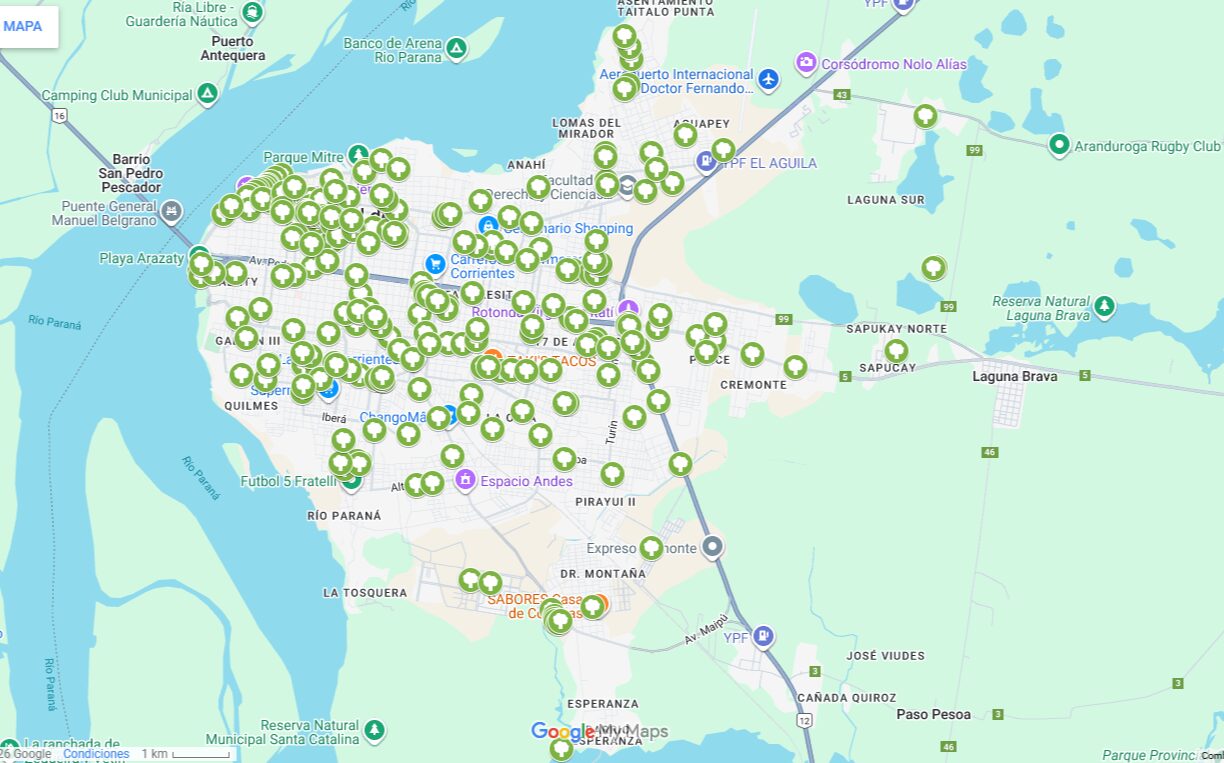
Within the framework of the Reforestation Plan and the Strengthening of the city’s nurseries Program, the commitment will seek to: a) Increase the quality and quantity of trees in the city in 6500 units, in public spaces and sidewalks; b) Carry out periodic meetings with responsible government areas for Urban Tree Planting to coordinate courses of action; c) Disseminate and make visible the Plans and Programs; d) Publish a dynamic record of the existing trees in the city, of the extractions and their replacements, as well as of the nurseries; e) Incorporate instances of participation with stakeholders involved in the development of milestones.
Problem
According to records from the Citizen Attention Service, so far in 2022, there has been a high rate of requests for tree removal and pruning (89%), compared to a low percentage of planting requests (11% ). This is due to the advance of disorganized and unbalanced constructions between green and gray spaces, where it is decided to remove them instead of preserving them. This problem of excessive pruning that urban trees are currently suffering must be made visible.During the co-creation processCollaboration between government, civil society and other stakeholders (e.g., citizens, academics, private sector) is at the heart of the OGP process. Participating governments must ensure that a dive..., the neighbors expressed their disagreement about the lack of awareness, the importance of planting more trees and about the maintenance of the existing ones to reduce the temperature, the overheating of the pavement and especially during the summer as a way to provide shade. At the same time, there is a lack of knowledge of autochthonous species, suitable for sidewalks, green spaces, pruning seasons, among others.
Section 1.
Commitment completion
1.1 What was the overall level of progress in the commitment implementation at the time of this assessment?
complete
Provide a brief explanation of your answer:
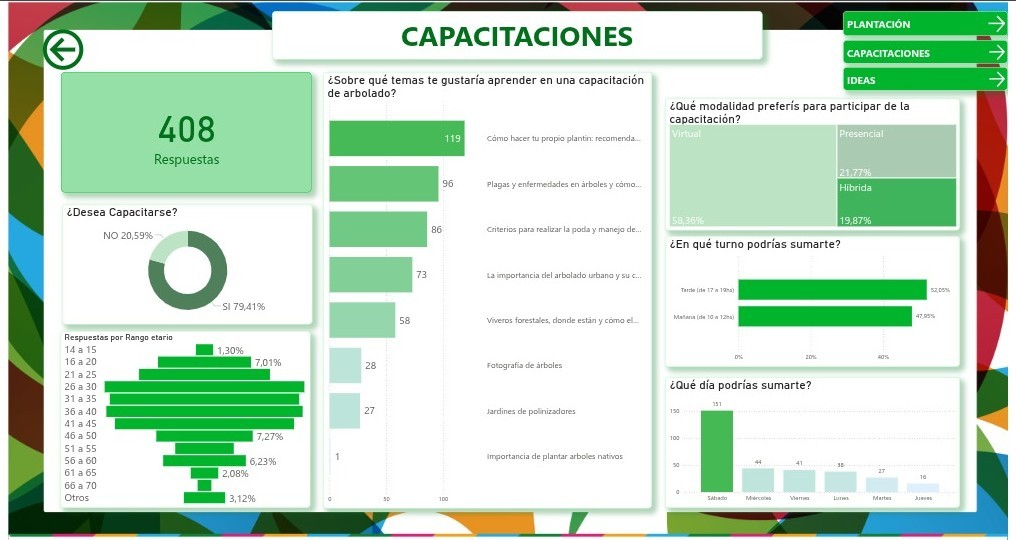
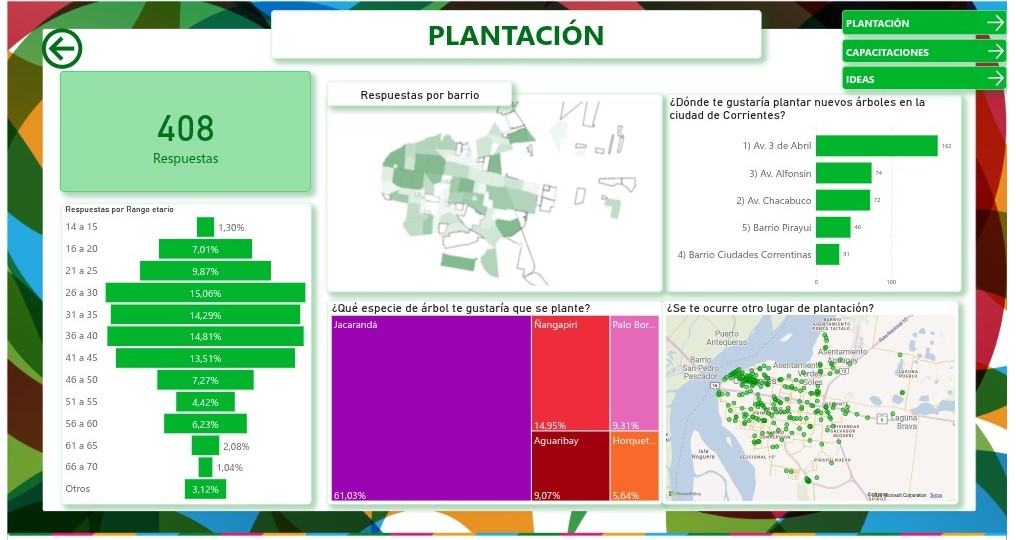
The commitment “To enhance urban tree management and strengthen city nurseries through citizen participation” has been fully implemented, as the activities planned in its planning phase have been completed. The project was developed in six stages, which included co-creation tables for gathering ideas, spaces for citizen deliberation, a symbolic planting, training sessions, voting on the finalist ideas, and, finally, the implementation of the selected proposal. Throughout the process, follow-up meetings were held with the Local Innovation Network (RIL), ensuring coordination and continuity of actions.
In addition, a digital platform was created to document the different stages of the commitment, allowing public access to progress reports and final reports, which strengthened transparencyAccording to OGP’s Articles of Governance, transparency occurs when “government-held information (including on activities and decisions) is open, comprehensive, timely, freely available to the public,... More and citizen participation in each phase of the project.
Provide evidence that supports and justifies your answer:
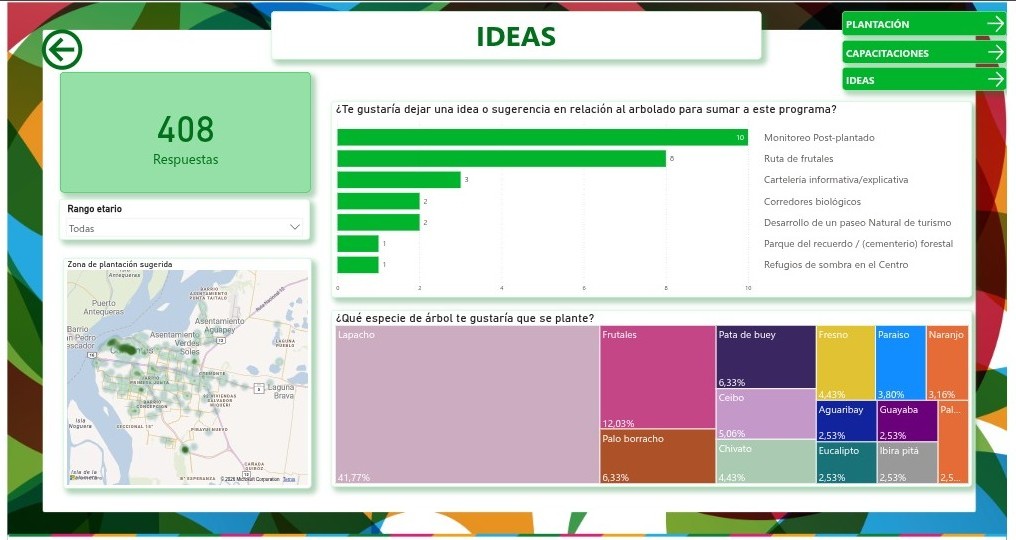
Spaces for Deliberation and Capacity Building
1.2 Describe the main external or internal factors that impacted implementation of this commitment and how they were addressed (or not).
One of the internal factors that hindered decision-making during the development of the commitment was the change in management that occurred halfway through the process, which involved the replacement of area managers and the need to adapt to new ways of working. This situation caused delays in coordination and continuity of planned actions, although efforts were made to maintain progress through coordination meetings and the transfer of information to the new team, continuing with the plan.
A lack of comprehensive and sustained planning among the responsible areas was also identified, which affected the coordination and follow-up of actions.
To address these challenges, it was necessary to establish shared strategic planning among the areas involved, with specific goals, timelines, and responsibilities. The implementation of regular follow-up and inter-institutional coordination meetings facilitated joint decision-making and progress monitoring.
Finally, it is suggested that digital management and monitoring tools (such as dashboards or online reports) be incorporated to promote transparency in the development of activities, access to information, and the traceability of each action, ensuring that the objectives of the commitment remain in force regardless of administrative or political changes.
1.3 Was the commitment implemented as originally planned?
Most of the commitment milestones were implemented as planned
Provide a brief explanation of your answer:
The first commitment was not implemented exactly as initially planned. During its development, it was necessary to make adjustments to the deadlines and planned activities, mainly due to management changes and the reorganization of work teams. Even so, the central objective of promoting citizen participation and transparency in management was maintained, with significant progress made in implementation and results.
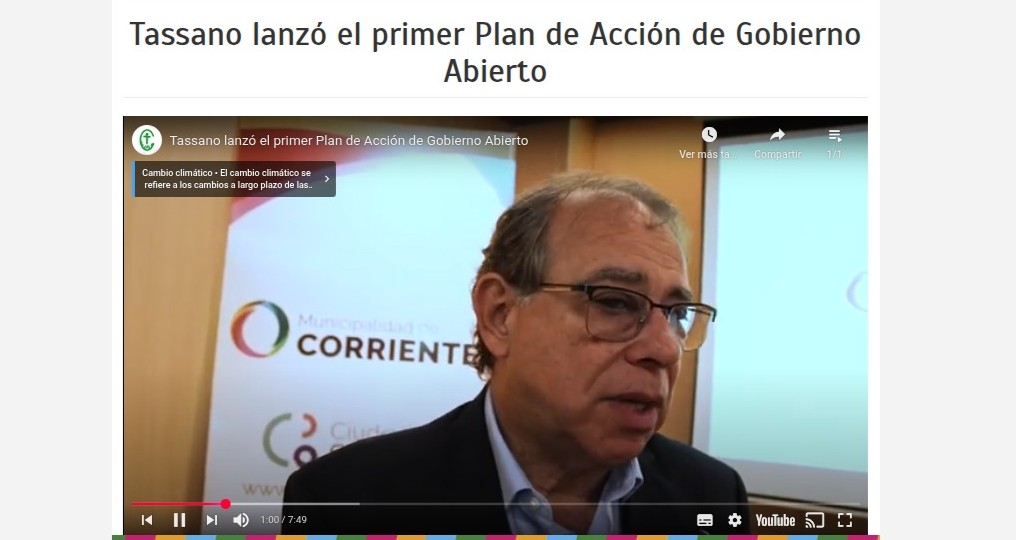
Co-creation of the commitment: The plan was developed after six months of joint work, using face-to-face co-creation workshops, forms, and online voting so that citizens could select the ideas to be developed.
Environmental commitment: The chosen commitment focuses on improving urban tree management and strengthening the city’s nurseries, thus contributing to a more sustainable and participatory city.
Launch and implementation: The 1st Action Plan was launched in September 2022, and the commitment is now nearing completionImplementers must follow through on their commitments for them to achieve impact. For each commitment, OGP’s Independent Reporting Mechanism (IRM) evaluates the degree to which the activities outlined... More.
Monitoring: The plan is monitored by RIL.
Provide evidence for your answer:
Section 2.
Did it open government?
2.1.1. – Did the government disclose more information; improve the quality of the information (new or existing); improve the value of the information; improve the channels to disclose or request information or improve accessibility to information?
Yes
Degree of result:
Major
Explanation: In narrative form, what has been the impact on people or practice.
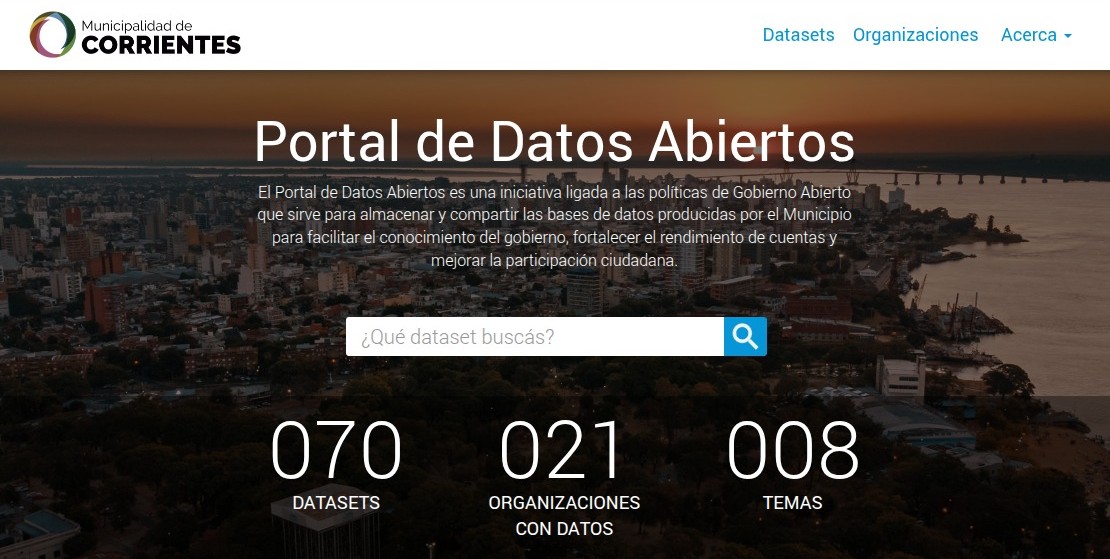
The implementation of the commitment contributed substantially to achieving a more open government in the city of Corrientes. Through the Open DataBy opening up data and making it sharable and reusable, governments can enable informed debate, better decision making, and the development of innovative new services. Technical specifications: Polici... portal, the accessibility and value of municipal public information was significantly improved, allowing citizens to consult up-to-date data on various areas of management. This tool strengthened active transparency, as residents can clearly and easily find out how public resources are managed, which projects are being funded, and what progress is being made in environmental and urban infrastructure matters.
In addition, strategies for disseminating and visualizing data were implemented, with the aim of making the information understandable and useful to citizens. This had a positive impact on trust between the government and the community, encouraging citizen interest and participation in public affairs. In short, the commitment improved the channels for disseminating information and consolidated concrete progress toward more transparent, accessible, and participatory management.
Provide evidence for your answer:
2.1.2. – Did the government create new opportunities to seek feedback from citizens/enable participation inform or influence decisions; improve existing channels or spaces to seek feedback from citizens/enable participation/ inform or influence decisions; create or improve capabilities in the government or the public aimed to improve how the government seeks feedback from citizens/enables participation/ or allows for the public to inform or influence decisions?
Yes
Degree of result:
Major
Explanation: In narrative form, what has been the impact on people or practice.
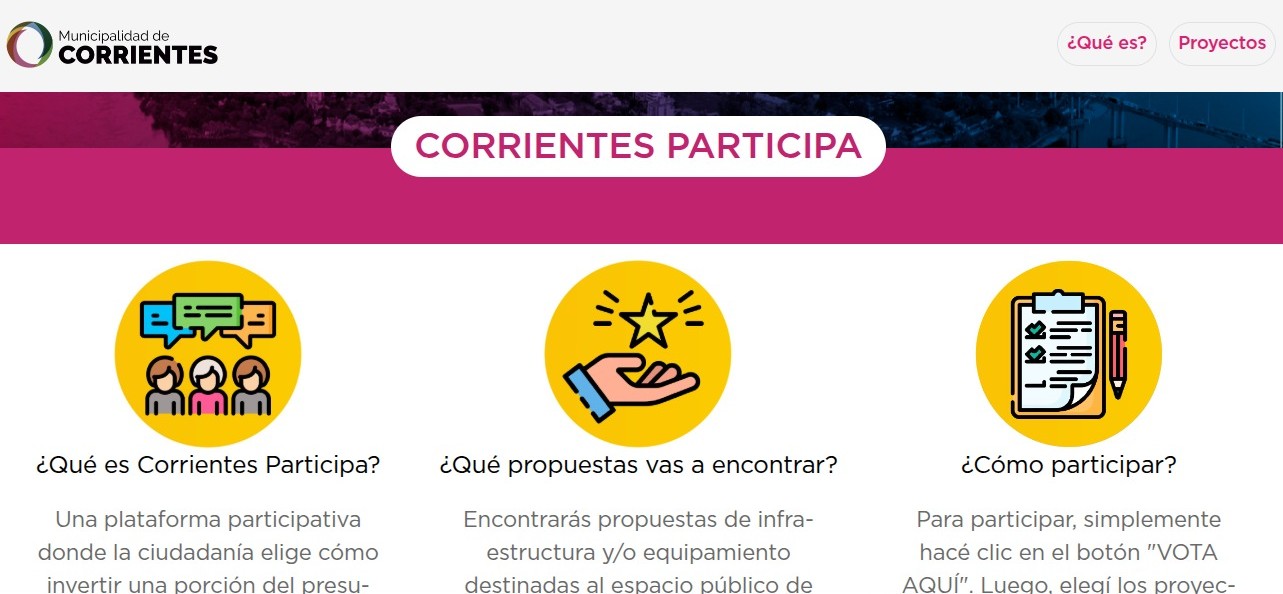
The Municipality of Corrientes strengthened opportunities for citizen participation through digital tools such as “Corrientes Participa” and the “Consulta Ciudadana” platform, which allowed residents to express their opinions, vote on projects, and access public information about government management. These initiatives promoted active and transparent participation, consolidating a more open and collaborative model of government.
A notable milestone was the Open Government Day, which brought together representatives of the government, social organizations, and citizens in a space for dialogue and joint learning. There, the progress of the OGP Local Action Plan was presented, good practices were shared, and the exchange on participation and accountability was promoted.
The implementation of these actions generated a structural change in the relationship between the state and the community, institutionalizing mechanisms for direct participation and strengthening citizen trust. The possibility of deciding on the allocation of part of the municipal budget through “Corrientes Participa” marked a significant advance in the construction of more inclusive and sustainable public policies.
Provide evidence for your answer:
2.1.3 Did the government create or improve channels, opportunities or capabilities to hold officials answerable to their actions?
Yes
Degree of result:
Major
Explanation: In narrative form, what has been the impact on people or practice.
The Municipality of Corrientes consolidated innovative channels to promote accountability and citizen participation. Through the digital platform “Corrientes Participa,” residents accessed information about municipal projects, voted on priorities, and learned about the allocation of part of the public budget, strengthening transparency and citizen involvement in governance.
In addition, the Citizen Consultation page allowed for open monitoring of the OGP commitment, providing access to reports on progress and results, in coordination with different municipal areas and with the support of the Local Innovation Network (RIL). These channels facilitated clear, accessible, and real-time accountability.
In addition, the Open Government Day represented a key space for strengthening institutional capacities, with diverse participation and international presence. The exchange of experiences and good practices reaffirmed the commitment to more open, collaborative management oriented toward joint learning between officials and citizens.
2.2 Did the commitment address the public policy problem that it intended to address as described in the action plan?
Yes
Provide a brief explanation of your answer:
The commitment proposed by the Municipality of Corrientes sought to strengthen citizen participation and improve public management through transparency and collaboration between government and citizens. In this regard, the actions implemented—such as the creation and strengthening of digital platforms (“Corrientes Participa” and “Consulta Ciudadana”), the holding of co-creation roundtables, training sessions, and open government workshops—directly responded to the objective set out in the action plan.
These initiatives allowed citizens to get involved in decision-making, learn how public funds are invested, and contribute ideas to municipal projects, thus addressing the identified public policy problem: the need to improve channels of dialogue, participation, and accountability between local government and the community.
Provide evidence for your answer:
Section 3.
Lessons from
implementation
3. Provide at least one lesson or reflection relating to the implementation of this commitment. It can be the identification of key barriers to implementation, an unexpected help/hindrance, recommendations for future commitments, or if the commitment should be taken forward to the next action plan.
A key lesson learned from the implementation was the great work done by the municipal team, which enabled the commitment to move forward despite coordination and management challenges. The active participation of the community during the different stages of the project is also noteworthy, as residents were able to contribute ideas and feel part of the process, strengthening the bond between citizens and local government. Another relevant aspect was the progress made in terms of modernization, through the creation of platforms such as Corrientes Participa and Consulta Ciudadana, which provide convenience, transparency, and access to information digitally. These tools bring management closer to citizens and promote more inclusive and permanent participation.
Therefore, it is recommended that the commitment be continued in the next action plan, consolidating openness and participation as central pillars of management.
Leave a Reply