Inception Report – Action plan – Madiun, Indonesia, 2025 – 2028
- Action Plan: Action plan – Madiun, Indonesia, 2025 – 2028
Overview
Name of Evaluator
Maya Falia
Member Name
Madiun, Indonesia
Action PlanAction plans are at the core of a government’s participation in OGP. They are the product of a co-creation process in which government and civil society jointly develop commitments to open government ... Title
Action plan – Madiun, Indonesia, 2025 – 2028
Section 1.
Compliance with
co-creation requirements
1.1 Does a forum exist?
Yes
Provide a brief explanation of your answer:
The Madiun City Government has established a Multi‑Stakeholder Forum (MSF) as the primary mechanism for jointly managing the OGP Local cycle. This forum functions as an official platform that brings together local government agencies with non‑governmental stakeholders (civil society organizations, academia, and the private sectorGovernments are working to open private sector practices as well — including through beneficial ownership transparency, open contracting, and regulating environmental standards. Technical specificatio... More). The forum is responsible for the entire process, from co‑creation of the action plan to monitoring the implementation of commitments.
Provide references here (e.g. interviews):
The Mayor’s decision regarding the membership of the multi-sectoral OGP Team sets out the team’s duties, which include:
a. supporting the implementation of the Madiun City Local Open Government PartnershipThe Open Government Partnership (OGP) is a multi-stakeholder initiative focused on improving government transparency, ensuring opportunities for citizen participation in public matters, and strengthen... More;
b. drafting and ensuring the implementation of the Madiun City Local Open Government Partnership Action Plan;
c. collaborating with various parties to realize open government; and
d. reporting on the results of its work to the Mayor of Madiun
1.2 Is the forum multi-stakeholder?
Yes
Provide a brief explanation of your answer:
As set out in the DECISION OF THE MAYOR OF MADIUN NUMBER: 050-401.204//2024 CONCERNING THE LOCAL OPEN GOVERNMENT PARTNERSHIP TEAM FOR THE PERIOD 2024–2029, comprising the Local Government 67,4%, the University Forum 23,9%, vertical agencies 2,2%, community forum and the Corporate Social Responsibility Forum 6,5%
Provide references here (e.g. interviews):
According to the minutes of the meeting, the forum held a discussion regarding the preparation of the menu for the participatory development information system. This meeting served to assess the technical feasibility of the proposals that had emerged during the co-creation processCollaboration between government, civil society and other stakeholders (e.g., citizens, academics, private sector) is at the heart of the OGP process. Participating governments must ensure that a dive....
Zero Waste Meeting, 27 November 2025
There is evidence of a follow-up coordination meeting on the implementation of the zero waste and waste-to-energy programs, involving technical units to discuss community participation at the RT/RW level in supporting CommitmentOGP commitments are promises for reform co-created by governments and civil society and submitted as part of an action plan. Commitments typically include a description of the problem, concrete action... IDMDI0004 (zero waste).
1.3 Does the forum hold at least one meeting with civil society and non-governmental stakeholders during the co-creation of the action plan?
Yes
Provide a brief explanation of your answer:
MSF Madiun has organized a series of face-to-face meetings and technical coordination sessions involving civil society organizations and other non-governmental sector entities during the drafting and follow-up phases of the action plan. These meetings aim to align community needs with the technical capabilities of the bureaucracy so that the resulting commitments produce tangible impacts
Provide references here (e.g. interviews):
The following is a summary of the meetings held with the multi-stakeholder forumRegular dialogue between government and civil society is a core element of OGP participation. It builds trust, promotes joint problem-solving, and empowers civil society to influence the design, imple....
OGP RAD Meeting, 2 January 2025
According to the minutes of the meeting, the forum held a discussion regarding the preparation of the menu for the participatory development information system. This meeting served to assess the technical feasibility of the proposals that had emerged during the co-creation process.
Zero Waste Meeting, 27 November 2025
There is evidence of a follow-up coordination meeting on the implementation of the zero waste and waste-to-energy programs, involving technical units to discuss community participation at the RT/RW level in supporting Commitment IDMDI0004 (zero waste).
1.4 Has the action plan been endorsed by the stakeholders of the forum or steering committeeThe Steering Committee is OGP’s executive decision-making body. Its role is to develop, promote and safeguard OGP’s values, principles and interests; establish OGP’s core ideas, policies, and rules; a.../group?
Yes
Provide a brief explanation of your answer:
MSF first endorsed the commitments contained in the Madiun City OGP Action Plan prior to its submission to OGP Global. The Action Plan therefore underwent a collective endorsement process and was approved by consensus between representatives of the Madiun City Government and civil society members of MSF. The final Action Plan document was then registered with the OGP Global Secretariat as an official local‑government commitment.
Provide references here (e.g. interviews):
Coordination Meeting to Launch the OGP Action Plan (Establishment of Community‑Based Tourism Groups [Pokdarwis] in Each Sub‑district) — 3 December 2024
A meeting was convened to discuss the Action Plan with relevant Madiun City government departments, community organizations at the kelurahan level, and tourism practitioners. Participants agreed to establish tourism groups at the kelurahan level and to launch the Action Plan in 2025.
Coordination Meeting for the Launch of the OGP Action Plan (Improving Public Compliance with Waste Management Regulations [Zero Waste]) — 3 September 2025
A coordination meeting was held with civil society organizations, including the Bambu Nusantara Foundation, Wilis, Wahana Kedaulatan Rakyat, and LIRA, together with representatives of the Madiun City Government, to harmonize perspectives on the proposed waste management scheme.
Section 2.
Recommended practices
in co-creation
2.1 Does the government maintain a Local OGP website or webpage on a government website where information on the OGP Local process (co-creation and implementation) is proactively published?
Yes
Provide a brief explanation of your answer:
The Madiun City Council is currently developing a dedicated OGP domain for Madiun City. This website is intended to proactively provide local OGP information through the official portal. In addition to the development of this centralized documentation domain, the City Council is integrating the information transparencyAccording to OGP’s Articles of Governance, transparency occurs when “government-held information (including on activities and decisions) is open, comprehensive, timely, freely available to the public,... More system and the public complaints channel into the local government’s main website. This integration enables residents not only to monitor the progress of action plans but also to submit feedback or complaints directly.
Provide references here (e.g. interviews):
As part of its commitment to transparency and the sustainability of the OGP’s programs and action plans, the Madiun City Council has established a dedicated OGP domain at https://ogp.madiunkota.go.id containing the Action Plans, enabling the public to review them and monitor their progress. Members of the public may also submit feedback or complaints directly via the Madiun City Council’s official complaints channel on WhatsApp at +62 811-3577-800.
2.2 Did the government provide information to stakeholders in advance to facilitate informed and prepared participation in the co-creation process?
Yes
Provide a brief explanation of your answer:
The Madiun City Government ensures that every co‑creation meeting commences with the provision of sufficient information to stakeholders. This is achieved by issuing formal invitation letters accompanied by draft documents or discussion materials as attachments. In this manner, meeting participants—whether from government or civil society—have time to familiarise themselves with the materials, undertake internal coordination, and furnish higher‑quality, ready‑to‑use input during the meeting.
Provide references here (e.g. interviews):
Prior to drafting the action plan, awareness-raising sessions and discussions were conducted on topics relevant to the City of Madiun. These sessions were summarized in the meeting agenda as follows:
General awareness-raising on the Open Government Partnership (OGP)
Discussion of Action Plan 1: Realizing One Sub-District One Tourism Village By Forming Tourism Awareness Groups And Community Empowerment Ecosystem
Discussion of Action Plan 2: Improving The Quality Of Environmental Management Through The Zero Waste Program and Community-Based Monitoring
2.3 Did the government ensure that any interested member of the public could make inputs into the action plan and observe or have access to decision-making documentation?
Yes
Provide a brief explanation of your answer:
The Madiun City Government has opened access for the broader public to participate in every stage of the OGP Local initiative. This was facilitated by establishing two-way communication channels and making strategic documents relating to action plans and decision-making processes publicly available. Members of the public were afforded opportunities to submit direct feedback that shaped the details of program implementation on the ground. Reports submitted via the complaints channel were received and subsequently addressed by the relevant local government departments.
Provide references here (e.g. interviews):
The Madiun City Council has put in place a range of channels to enable the public to participate in the planning process, as well as in monitoring and decision-making. The public can access:
1. OGP Madiun
2. Portal Madiun
3. WhatsApp complaints channel: +62 811-3577-800.
2.4 Did the government proactively report back or provide written feedback to stakeholders on how their contributions were considered during the creation of the action plan?
Yes
Provide a brief explanation of your answer:
The Madiun City Government is committed to accountable processes by providing written responses to every submission received during the drafting of the action plan. Inputs from stakeholders, whether from civil society organizations or technical departments, are deliberated in formal forums, and the results are recorded in meeting minutes, which are then circulated to participants as confirmation of their contributions. Thereafter, progress reports on the drafting and implementation of the OGP action plan are submitted to the Mayor for his information.
Provide references here (e.g. interviews):
The report submitted to the Mayor outlines the results of meetings held with technical officials and civil society organizations. It presents the issues identified, the processes undertaken, and the schemes that have been implemented. The outputs, targets, and objectives to be achieved reflect the consensus reached during the Coordination Meeting. Several points of input are set out in the Conclusions and Recommendations section of the report.
2.5 Was there an iterative dialogue and shared ownership between government and non-governmental stakeholders during the decision making process, including setting the agenda?
Yes
Provide a brief explanation of your answer:
The decision-making process under OGP Local Madiun is grounded in the principle of equal partnership. The action plan agenda is not determined unilaterally by the government, but rather through interactive dialogue aimed at aligning the government’s vision with the aspirations of civil society. This approach fosters a sense of shared ownership, whereby the non-governmental sector plays an active role in shaping policy direction and shares responsibility for its implementation.
Provide references here (e.g. interviews):
In decision-making and policy formulation, all processes are conducted through diplomatic means. Participants in the coordination meeting are afforded the opportunity to submit their inputs or raise issues currently being faced, and to engage in dialogue with the entire forum.
2.6 Would you consider the forum to be inclusive and diverse?
Moderately
Provide a brief explanation of your answer:
The Multistakeholder Forum in Madiun has fulfilled the criteria for inclusivity by involving diverse institutional pillars and community groups. This forum serves as a platform for women leaders, academics, the private sector, and youthRecognizing that investing in youth means investing in a better future, OGP participating governments are creating meaningful opportunities for youth to participate in government processes. Technical ... More groups. The “moderately” rating was selected to indicate that, while the legal framework and sectoral representation are already robust, the government remains committed to further strengthening the formal involvement of other marginalized groups in the future.
Provide references here (e.g. interviews):
The Madiun City Government has established a Multi‑Stakeholder Forum (MSF) as the primary mechanism for jointly managing the OGP Local cycle. This forum functions as an official platform that brings together local government agencies with non‑governmental stakeholders (civil society organizations, academia, and the private sector). The forum is responsible for the entire process, from co‑creation of the action plan to monitoring the implementation of commitments
Section 3.
Initial evaluation
of commitments
1 Commitment :
Realizing One Sub-district One Tourism Village by Forming Tourism Awareness Groups in the Village
1.1 Is the commitment verifiable?
Yes
Provide a brief explanation of your answer:
This commitment has very specific success indicators that can be monitored directly by the public and by the Independent Monitoring Body (IMB) through the direct verification channels described in the ‘Evidence’ sub-section below.
These three are pioneering tourism village ecosystems. Fact-checking can be carried out at the sites that are already operating as model pioneers, namely Kawista Winongo, Kawista Ngegong, and Kawista Madiun Lor. Daily activities, infrastructure development, and community interactions at these sites are documented transparently and can be monitored by the public via their official accounts.
These three are pioneering tourism village ecosystems. Fact-checking can be carried out at the sites that are already operating as model pioneers, namely Kawista Winongo, Kawista Ngegong, and Kawista Madiun Lor. Daily activities, infrastructure development, and community interactions at these sites are documented transparently and can be monitored by the public via their official accounts.
Furthermore, these action plans have also been incorporated into the Regional Medium-Term Development Plan, along with their targets and implementation status. Each year, these will be broken down in the Regional Government Performance Plan, and at the end of each year, the achievements and implementation status of each action plan will be reported. As set out in the RPJMD:
– Page 336: regarding the Indicative Priority Program Plan of the RPJMD, accompanied by the funding requirements for the City of Madiun for the period 2025–2030.
– Page 224: regarding the evaluation of the results of regional planning implementation up to the current year for the City of Madiun
Provide evidence for your answer:
Regulation on the 2025 Regional Development Plan
Madiun City Medium-Term Development Plan
1.2 Does the commitment language/activities clearly justify relevanceAccording to the OGP Articles of Governance, OGP commitments should include a clear open government lens. Specifically, they should advance at least one of the OGP values: transparency, citizen partic... to OGP values?
Yes
Provide a brief explanation of your answer:
These commitments (IDMDI0001 and IDMDI0005) align explicitly with the Open Government Partnership (OGP) core values, as outlined below:
Public ParticipationGiving citizens opportunities to provide input into government decision-making leads to more effective governance, improved public service delivery, and more equitable outcomes. Technical specificatio...: The establishment of Pokdarwis under commitment IDMDI0001 directly fosters community engagement. Local residents actively lead the planning and management of tourism potential, thereby cultivating collective ownership.
Transparency: The initiative is anchored in open access to public information. Development progress and Kawista activities are made transparent and accessible to the public through social media and international platforms, including WorldPackers.
Public AccountabilityAccording to OGP’s Articles of Governance, public accountability occurs when ”rules, regulations, and mechanisms in place call upon government actors to justify their actions, act upon criticisms or r... More: The collaborative framework in IDMDI0005 establishes an empowerment ecosystem with a direct economic impact on local communities. The integration of MSMEs and systematic monitoring ensure full accountability to the public regarding commitment outcomes.
Technology and Innovation: The commitments leverage global platforms, utilize information management systems, and drive the expansion of a digital-based creative economy.
Provide evidence for your answer:
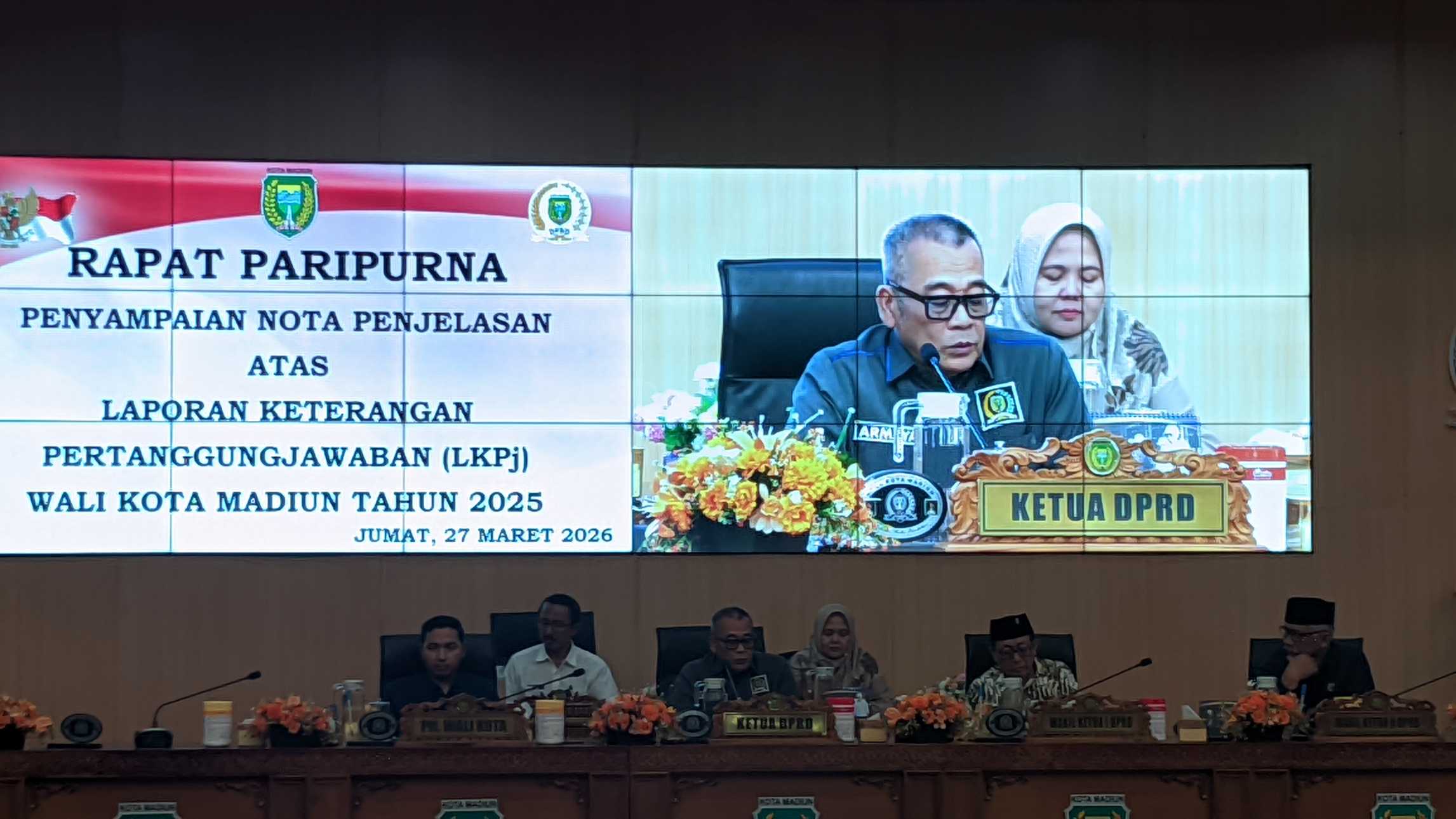
2025 Annual Work Report – Plenary Session
1.3 Please select one option that best describes the commitment:
A new regulationGovernment reformers are developing regulations that enshrine values of transparency, participation, and accountability in government practices. Technical specifications: Act of creating or reforming ..., policy, practice or requirement.
Provide a brief explanation of your answer:
This commitment entails not merely continuing existing practices, but introducing innovations in governance and expanding geographical coverage. Through the “One Subdistrict, One Tourism Village” approach, the government and stakeholders are scaling up the pilot models (Winongo, Ngegong, and Madiun Lor) into a systematic policy covering all subdistricts. In addition, new practices are being introduced through the integration of international platforms (Worldpackers) and new accountability mechanisms to oversee participation and funding.
Provide evidence for your answer:
1.4 Please select one option that best describes the commitment:
will result in a change of the rules, practices or policies that govern a policy area, public sector and/or relationship between citizens and is binding or institutionalized across government or specific institution(s).
Provide a brief explanation of your answer:
This commitment transcends a mere ceremonial exercise; it represents a structural transformation in governance that is now fully institutionalized. Through the ‘One Sub-district, One Tourism Village’ mandate, sub-district administrations have undergone a permanent shift in their operational dynamics and community engagement via Pokdarwis. Anchored by a binding regulatory framework, this initiative guarantees continuity across leadership transitions and secures its integration into the regional development system.
Provide evidence for your answer:
1.5 Are there any recommended changes to the design of the commitment to help improve its implementation?
To enhance the effectiveness of implementing this commitment, it is recommended that the government strengthen operational transparency standards at the community level. Although the establishment of Pokdarwis has already been planned, specific guidelines are needed to require every Tourism Village to publish simple financial reports or details of the use of grant/CSR funds on a regular basis to the local community via existing digital channels. The aim is to ensure that the principle of ‘Open Government’ truly reaches the grassroots level, rather than remaining confined to the government’s managerial echelons.
Challenges affecting implementation:
1. Sustaining voluntary participation. Given that Pokdarwis are community-based, the greatest challenge is maintaining residents’ motivation to remain active in the long term without relying entirely on government incentives.
2. Digital literacy gap. The implementation of a participatory development information system requires digital skills. The challenge is to ensure that Tourism Village managers across all sub-districts have equivalent capabilities in operating the system so that data remains up-to-date.
3. Disparities and scalability. With a total of 27 urban villages in Madiun City, the ‘One Sub-district, One Tourism Village’ target creates challenges in the form of social jealousy or economic inequality between regions. The challenge is to ensure that these three Tourism Villages do not become isolated ‘successful neighborhoods’, but rather act as economic drivers that harness the potential of MSME’s from the other 24 neighboring neighborhoods.
4. Transparency in site selection. The process of determining which neighborhoods will represent their sub-districts as ‘Tourism Villages’ must be conducted in a highly transparent and participatory manner to avoid conflicts of interestA key part of anti-corruption involves preventing or revealing conflicts of interest — when a public official is in a position to use public office for personal or private gain. Technical specificatio... between community groups.
5. Community capacity buildingEnhancing the skills, abilities, and processes of public servants, civil society, and citizens is essential to achieving long-lasting results in opening government. Technical specifications: Set of ac...: tourism management, event management, language skills, homestay management
6. SME capacity building: production processes, packaging, marketing, etc.
7. Support for local tourism development groups (Pokdarwis)
8. Amendments to the Ripparda Regional Regulation
9. Mayor’s Regulation on Implementation Guidelines for the Creative Economy Regional Regulation
2 Commitment :
Improving public compliance with the law on waste
2.1 Is the commitment verifiable?
Yes
Provide a brief explanation of your answer:
This commitment has success indicators that have been integrated into both the medium-term planning documents and the planning documents for the current year. An evaluation of the results achieved is carried out every year.
Provide evidence for your answer:
Regulation on the 2025 Regional Development Plan
Madiun City Medium-Term Development Plan
2.2 Does the commitment language/activities clearly justify relevance to OGP values?
Yes
Provide a brief explanation of your answer:
This commitment focuses on environmental sustainability and the deployment of digital innovations for waste management and monitoring. The planning of technological infrastructure—such as monitoring dashboards and digital applications—reflects both the strategic application of technology and an innovative milestone aimed at improving information accessibility, fostering public participation, and ensuring data transparency over the long term.
Alignment with Core OGP Values:
Transparency: This commitment incorporates plans to establish an open-access platform for publishing online data on waste generation and the operational effectiveness of waste banks, enabling citizens to independently monitor environmental metrics.
Public Participation: By establishing community-based monitoring frameworks, residents and the Multi-Stakeholder Forum (MSF) are empowered to actively engage in environmental oversight at the village and sub-district levels, positioning the community as a primary driver of the local environmental ecosystem.
Public Accountability: The planned implementation of an integrated electronic reporting system by relevant authorities—such as the Environmental Agency—ensures that waste management performance is systematically documented, verifiable, and publicly accountable once fully operational.
Technology and Innovation: Developing tailored technological solutions, including a centralized waste monitoring dashboard, is a key innovation designed to streamline public access to information and enable real-time citizen feedback mechanisms.
Provide evidence for your answer:
Minute of Neighborhood Community Meeting
2.3 Please select one option that best describes the commitment:
A new regulation, policy, practice, or requirement.
Provide a brief explanation of your answer:
This commitment goes beyond merely continuing conventional waste management practices, such as traditional waste bank operations; rather, it introduces a novel governance approach and framework. The primary innovation lies in the implementation of an integrated, community-based monitoring system, which empowers residents to track and report environmental management data in real time. Furthermore, the formulation of a collaborative governance roadmap serves as a new policy instrument that bridges the Environmental Agency (DLH) and the community.
Provide evidence for your answer:
Local Regulation on the Regional Tourism Development Master Plan
2.4 Please select one option that best describes the commitment:
will result in a change of the rules, practices or policies that govern a policy area, public sector and/or relationship between citizens and is binding or institutionalized across government or specific institution(s).
Provide a brief explanation of your answer:
In addition to driving positive change, this commitment institutionalizes a novel framework for government engagement—specifically for the Environmental Agency (DLH)—to interact with and involve citizens. Through the formulation of a structured governance roadmap and framework, community-based oversight is formally integrated into official government procedures. This ensures that public participation in environmental management is not merely a temporary voluntary activity, but rather a binding component of the governance system.
Provide evidence for your answer:
Decision on Waste Management Community Group-Ngegong Subdistrict.
2.5 Are there any recommended changes to the design of the commitment to help improve its implementation?
Yes.
To enhance implementation effectiveness, it is recommended that the Zero Waste program roadmap framework not only remain centralized but also decentralize oversight responsibilities to the sub-district level across all 27 sub-districts (kelurahan) in Madiun City. This can be achieved by establishing standardized operating procedures (SOPs) for uniform waste bank data reporting and environmental management at the RT/RW levels, integrated through an open digital platform or dashboard. The ultimate objective is to ensure that the benefits of the Zero Waste targets are felt equitably by all citizens.
Challenges Impacting Implementation:
Capacity Disparities Across Sub-districts: Not all of the 27 sub-districts possess equal operational readiness in terms of facilities (such as active waste banks) or civic participation levels in waste management.
Data Reporting Consistency: Ensuring that data and community feedback across all 27 sub-districts are periodically and punctually compiled by the Environmental Agency (DLH) without technical impediments.
Sustainability of Oversight Roles: Maintaining the enthusiasm and long-term commitment of community-level volunteers to remain actively engaged in monitoring and educating residents regarding waste segregation at the source.
Leave a Reply