

Opening Public Budgets
OGP members have made significant progress in applying the principles of transparency, participation, and public accountability to open up the budgeting process to the people they serve.
Every year, governments collect and spend billions of taxpayer funds to pay for public services like education and healthcare. The public has a right to know how that money is allocated and how it is spent. Making budgets open to public input and scrutiny can help ensure that government planning and spending align with public priorities. In particular, people should be able to see that money is spent equitably, addressing the needs of women, people with disabilities, youth, and low-income groups, among others. OGP members have made their budgets increasingly transparent, yet more work remains for governments to proactively increase civic participation and oversight.
Debt is also a critical component of a country’s public finances. When acquired and managed responsibly, debt plays an important role in a country’s economy and fiscal health. It helps finance the development of new infrastructure, emergency procurement, and economic stabilization. However, many governments do not publish sufficient debt information, leading to an increased risk of corruption, bad investment decisions, and undemocratic borrowing practices. Increasing debt integrity through greater transparency and public accountability helps ensure that debt levels are sustainable and that funds received through borrowing are efficiently allocated to meet public needs.
The Open Gov Guide is the go-to resource for open government reformers. The guide provides concrete recommendations for policy makers, civil society representatives, and more on how to apply open government principles to real-world challenges. Readers can also use the guide to learn more about how governments at the national and local level are putting these values into practice through OGP action plans and beyond.
Learn more about this policy area in the “Open Budgets” and “Public Debt” chapters of the Open Gov Guide.
As part of the Open Gov Challenge, the OGP Support Unit would like to recognize some of the most inspiring commitments made by participants to date. Read more about these exciting reforms on this topic below.
For a full list of Challenge commitments submitted by members, visit our Open Gov Challenge Commitment Tracker.
Improve the Monitoring and Evaluation of Public Funds
To increase its tax revenue and better allocate its public funds, Elgeyo Marakwet committed to improving its fiscal monitoring and evaluation processes. For example, it aims to formalize its existing multi-stakeholder Project Management Committees by embedding it in the country government and to provide increased training on monitoring and evaluation and clearer guidelines on public participation.
Improve Public Participation in the Annual Budgeting Process
Quezon City in the Philippines has been working to improve public participation in its annual budgeting process, especially to better engage with vulnerable communities. Through this commitment, the city committed to inviting civil society representatives to help shape the new budget, as well as hosting training sessions and workshops to allow participants to better understand how the process works.
Implement a Citywide Participatory Budgeting Process
Building on an initiative to pilot participatory budgeting in four districts, Zagreb (Croatia) is expanding this policy to include the entire city. The government committed to improving the existing digital platform, where residents can propose, vote on, and monitor local projects, giving them a direct role in shaping their communities. The commitment includes training for city staff in deliberative practices and community engagement.
Explore all fiscal openness commitments from OGP members.
The following list reflects commitments submitted through national or local action plans. For more details, visit OGP’s Data Dashboard.
Filter the commitments according to three categories evaluated by the Independent Reporting Mechanism (IRM): ambition, completion, and early results.
| Country/Locality | Year | Commitment Title | More |
|---|---|---|---|
| Nigeria | 2026 | Strengthening the Implementation of the Climate Change Act through MSF Participation | + |
| Nigeria | 2026 | Enchancing Transparency through Open Budgets | + |
| Kosovo | 2026 | Strengthening proactive publication and transparency at the Ministry of Finance | |
| Guatemala | 2026 | Leveraging and using open fiscal data. | + |
| Guatemala | 2026 | Redesign of the Non-Governmental Organizations (NGO) Portal of the Ministry of Public Finance (MINFIN) | + |
This table shows all commitments that match the filters selected at the top of the page. At least one filter must be selected to populate this table. Use the tags above the table to further filter by commitment quality (e.g. ambitious, complete). Click on commitment titles to learn more about each commitment. Click on “Featured” icons to access stories, where available.
This table enables finding existing commitments in specific policy areas, regions, and years, as well as top-performing commitments by using the built-in table filters.
The commitment performance metrics (e.g. ambitious, complete) are derived directly from IRM reports. See the terms below for details. The Year field shows the year in which the commitment was first submitted. Icons in the Featured field indicate that a story is available on the OGP website.
OGP members have made significant progress in applying the principles of transparency, participation, and public accountability to open up the budgeting process to the people they serve.

The past fifteen years were about proving that positive change is possible. The next fifteen are about making that change inevitable. Read an Open Letter from OGP's CEO.
Carta abierta de Aidan Eyakuze, Director Ejecutivo de la Alianza para el Gobierno Abierto,con motivo del 15.º aniversario de OGP En septiembre de 2011, la Alianza para el Gobierno Abierto (OGP por sus siglas en inglés) fue lanzada bajo una…

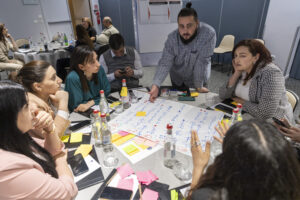
In Armenia, participatory budgeting is reshaping the relationship between citizens and local governments in the wake of COVID-19 and recent armed conflict.
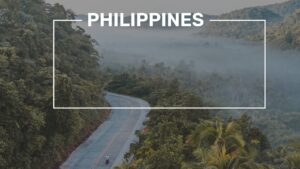
As a founding member of OGP, the Philippines has long been a leader in open government. In this report, learn how the national government and OGP Local members have advanced open government reform since 2011.
Click here for more information about the Open Government Partnership's terms of use.
Terms & Conditions Close