
End of Commitment Report – Provision of urban/public “green” transport
- Action Plan: Action plan – Vanadzor, Armenia, 2021 – 2026
Overview
Name of Evaluator
Arpine Hakobyan (“NGO Center” civil society development NGO)
[email protected]; [email protected]
Member Name
Vanadzor, Armenia
Action PlanAction plans are at the core of a government’s participation in OGP. They are the product of a co-creation process in which government and civil society jointly develop commitments to open government ... Title
Action plan – Vanadzor, Armenia, 2021 – 2026
CommitmentOGP commitments are promises for reform co-created by governments and civil society and submitted as part of an action plan. Commitments typically include a description of the problem, concrete action...
Provision of urban/public “green” transport
Title
Provision of urban/public “green” transport
Action
Within the framework of the EU “Alliance for Sustainable Green Governance Program”, the communities of Vanadzor and Gyumri will purchase five electric buses (for each community), which will serve the inner-city routes. Charging stations will be installed, and a ticket validation system will be introduced. In addition, the idea of Green Transport will be taught to the public through campaigns, training, and other programs. In order to complete the program and to adapt it to digital technologies, it is necessary to create a mobile application, which will contain both maps of the inner-city routes and roads, as well as the vehicles serving those routes and roads, information on their technical condition, drivers, and service. With the help of the application, it will be possible to see and follow where the vehicle with the given number is at the moment, and how long it will be at the stop. In addition, a vehicle information board – Tablo – will be installed at the bus stops, which will inform about the arrival of the vehicle through the countdown.
Problem
Urban transport routes, traffic frequency, and the technical condition of service vehicles do not meet modern service standards. In order to regulate the sector, it is necessary to carry out comprehensive monitoring to record the mentioned problems, to offer solutions, to hold transparent tenders with the involvement of civil society, and to install electronic information systems at bus stops.
Section 1.
Commitment completion
1.1 What was the overall level of progress in the commitment implementation at the time of this assessment?
Limited
Provide a brief explanation of your answer:
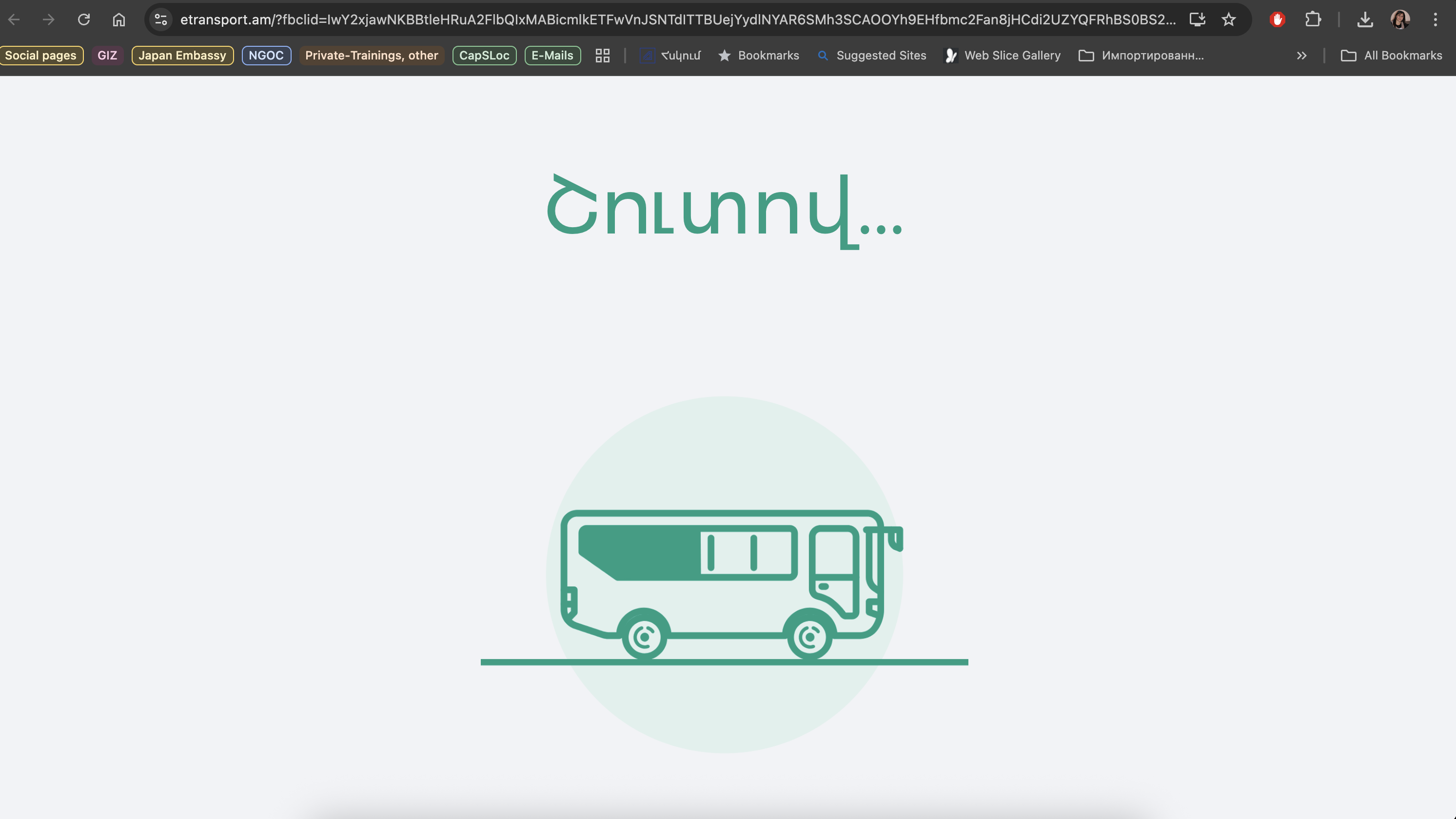
Within the framework of the EU program, five electric buses have been procured for Vanadzor, four of which are currently in operation. A charging station has been installed, and the e-transport.am mobile application has been developed, though it is not yet fully accessible to the public. However, the operation of the ticket validation system and the information boards installed at bus stops remains incomplete. Overall, while partial progress has been achieved, important components of the commitment are still pending.
Strategies of Green Transport were developed by the program for the Vanadzor municipality and presented to the LGBs.
Evidences:
- Focus group discussion with representatives of local government and CSOs in Vanadzor
- Green transport strategy
- Posts about the Green transport operation
Provide evidence that supports and justifies your answer:
Focus Group Vanadzor Participant List3.pdf
Announcements on the purchase and use of electric buses.docx
Transport Strategy.pdf
1.2 Describe the main external or internal factors that impacted implementation of this commitment and how they were addressed (or not).
In Vanadzor, the implementation of the commitment was hindered by several structural and organizational challenges. The city previously lacked municipal transport, which meant that operating electric buses required the establishment of a new organizational structure. To address this, “Autobus” CJSC was created. However, it has faced cost-efficiency challenges. Operating only five buses does not ensure financial sustainability, particularly since legislationCreating and passing legislation is one of the most effective ways of ensuring open government reforms have long-lasting effects on government practices. Technical specifications: Act of creating or r... requires maintaining a minimum staff level. Local government representatives noted that this placed an additional burden on the municipal budget, necessitating either co-financing or an expansion of the fleet. A subsequent subsidy program proposed the purchase of 50 new buses, but it was ultimately rejected by the government. Moreover, interviews revealed that the buses included in the subsidy proposal were not electric, indicating that the community has not fully embraced a comprehensive “green transport” policy.
Beyond financial and political constraints, Vanadzor also faced contractual disputes with private operators who had managed transport routes for many years. The introduction of community-owned buses created conflicts of interestA key part of anti-corruption involves preventing or revealing conflicts of interest — when a public official is in a position to use public office for personal or private gain. Technical specificatio... and legal uncertainties, further delaying the full operation of the new system. Overall, financial difficulties, managerial bottlenecks, and conflicts with existing service providers significantly slowed down the pace of implementation. Nevertheless, stakeholder pressure and civic engagement facilitated the initial steps toward operating electric buses in the city.
1.3 Was the commitment implemented as originally planned?
Few of the commitment milestones were implemented as planned
Provide a brief explanation of your answer:
The commitment in Vanadzor entailed a series of complex measures, including the operation of five electric buses, installation of charging stations, implementation of a ticket validation system, launch of a mobile application, installation of information boards at bus stops, and awareness-raising initiatives. To date, implementation has been only partial. Four out of five electric buses are operational, and a charging station has been installed. The e-transport.am application has been developed, though it is not yet fully accessible to the public. The ticket validation system remains in the pilot phase and does not yet include features adapted for pensioners. Moreover, information boards have not been installed at bus stops, leaving passengers without timely updates on schedules and routes.
Evidences:
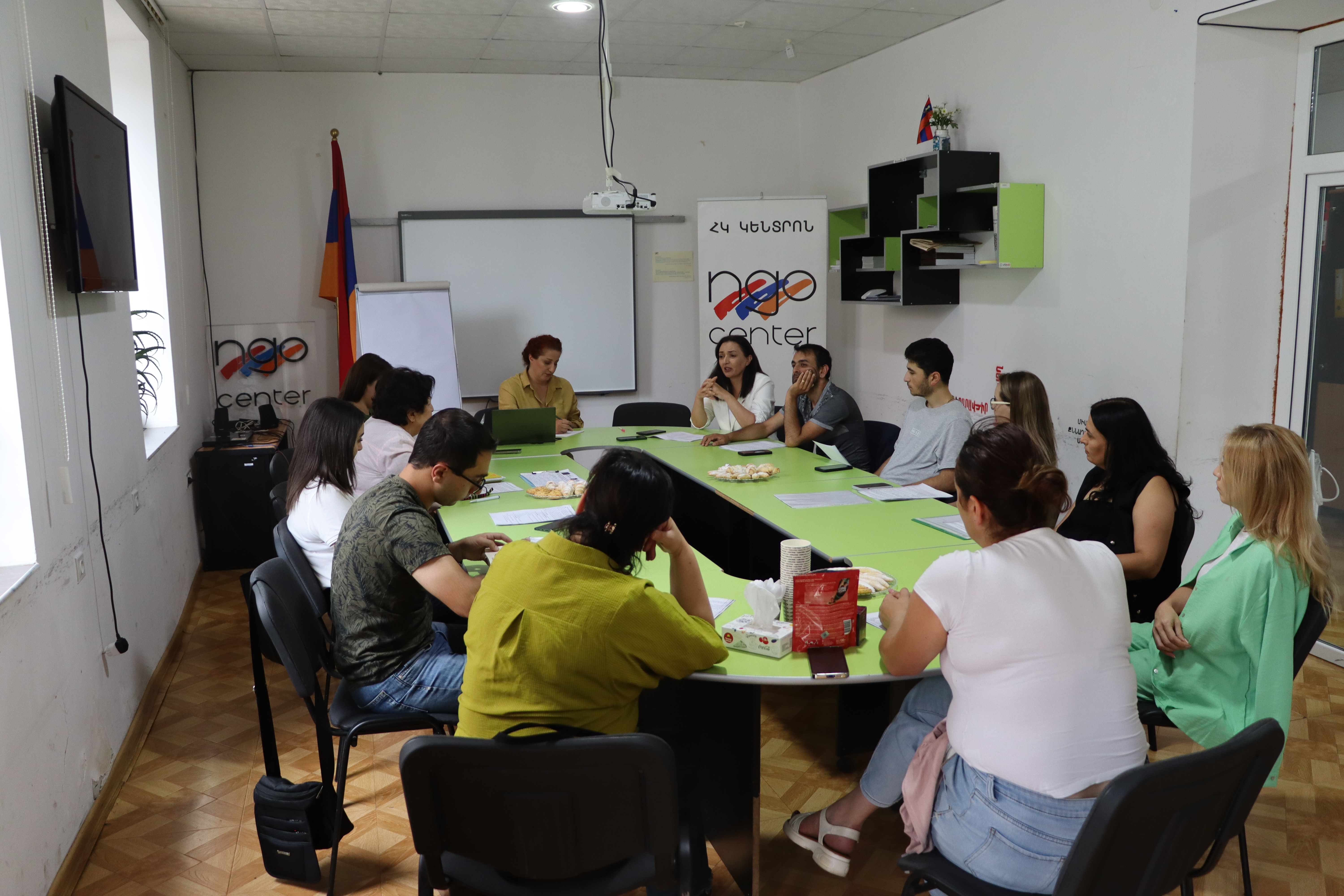
- Vanadzor focus group discussion
- e-transport.am acquisition
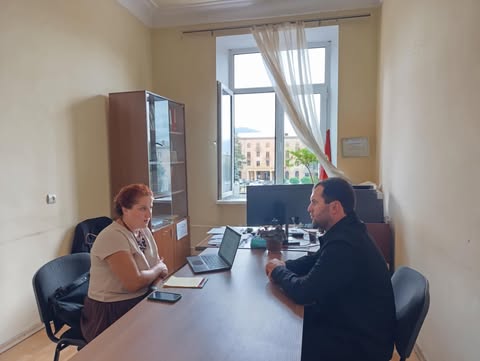
- Interview with the head of the transport department of Vanadzor
Provide evidence for your answer:
Focus Group Vanadzor Participant List4.pdf
Group
Interview 2.jpg
Section 2.
Did it open government?
2.1.1. – Did the government disclose more information; improve the quality of the information (new or existing); improve the value of the information; improve the channels to disclose or request information or improve accessibility to information?
Yes
Degree of result:
Marginal
Explanation: In narrative form, what has been the impact on people or practice.
It offers route maps, online ticketing, and feedback functionalities, which have the potential to increase citizen awareness and enable greater participation in monitoring transport services. However, interviews revealed that the application is still in its release phase and is not yet accessible to residents. Consequently, users are largely unaware of the platform and unable to utilize its intended functions, limiting its impact on citizens’ daily transport experience.
Moreover, information boards at designated bus stops have not been installed, leaving passengers without direct, real-time updates on bus arrivals or route status. Civil society representatives have highlighted that information about bus operations has primarily been communicated through social media rather than through official channels.
Overall, while the initiative has enhanced the importance of awareness and introduced innovative solutions, incomplete accessibility and implementation have constrained its effectiveness. Residents continue to require transparent, reliable, and easily accessible information systems to build trust in the new public transportation model.
Evidence:
Link Website E-transport
Provide evidence for your answer:
Screenshot 2025-10-01 at 21.39.25.png
2.1.2. – Did the government create new opportunities to seek feedback from citizens/enable participation inform or influence decisions; improve existing channels or spaces to seek feedback from citizens/enable participation/ inform or influence decisions; create or improve capabilities in the government or the public aimed to improve how the government seeks feedback from citizens/enables participation/ or allows for the public to inform or influence decisions?
Yes
Degree of result:
Did not change
Explanation: In narrative form, what has been the impact on people or practice.
The app includes a feedback function, but it is not yet operational. CSO representatives emphasize that without a consistent policy from the municipality, this will remain a formality.
2.1.3 Did the government create or improve channels, opportunities or capabilities to hold officials answerable to their actions?
No
Explanation: In narrative form, what has been the impact on people or practice.
The commitment did not provide new mechanisms for accountability of officials.
2.1.4 Other Results
No
2.2 Did the commitment address the public policy problem that it intended to address as described in the action plan?
No
Provide a brief explanation of your answer:
Civil society representatives emphasize that the challenge extended beyond the operation of five electric buses; the full implementation of a comprehensive “green transport” policy was required. However, the local government’s subsidy program was designed not for the procurement of electric buses, but for conventional Gazelles. This indicates that the strategic framework for environmentally friendly transport developed by experts under the EU-funded project and intended for implementation by the Vanadzor local government has not been fully adopted or institutionalized as a guiding policy by the authorities in either Vanadzor or Gyumri.
Section 3.
Lessons from
implementation
3. Provide at least one lesson or reflection relating to the implementation of this commitment. It can be the identification of key barriers to implementation, an unexpected help/hindrance, recommendations for future commitments, or if the commitment should be taken forward to the next action plan.
The concept of urban green transport in Vanadzor has received strong support from local residents. Civil society representatives emphasized that civic pressure was instrumental in initiating the operation of electric buses in the city.
Key observations:
- The commitment demonstrated that without a stable financial framework and a long-term strategy from local authorities, the implementation of “green transport” initiatives remains vulnerable.
- A comprehensive strategy should be formally adopted by local government and integrated into subsidy programs, ensuring not only the introduction of electric buses but also the development of a fully functional, sustainable system.
Recommendations:
- Expand the fleet of electric buses and identify sustainable financing mechanisms.
- Complete the implementation of ticket validation systems and install information boards at bus stops.
- Develop targeted awareness programs for pensioners and other vulnerable groups.
- Establish a monitoring mechanism with active involvement of civil society organizations to ensure transparencyAccording to OGP’s Articles of Governance, transparency occurs when “government-held information (including on activities and decisions) is open, comprehensive, timely, freely available to the public,... More and accountability.
Leave a Reply