Applying the Power of Weak Ties to Open Government Education

Let Birds of All Feathers Flock Together
Recently, we’ve been hearing a recurring story: alumni of the Transparency International School on Integrity are changing jobs or teaming up with new allies because of positive experiences at this executive course. The reason they provide? The course made them realize they can approach integrity and anti-corruption in a different, more effective manner.
What is happening here? We think we may have the answer. It is high time we apply the power of “weak ties” to open government education, i.e. the concept that people outside of our usual professional circles can provide us with new knowledge, ideas, and networks. Applying this insight in public servant educationAccountability within the public education system is key to improving outcomes and attainment, and accountability is nearly impossible without transparent policies and opportunities for participation ... will also position us better to succeed by helping turn awareness into action.
Traditionally, education fosters connections between like-minded people who share a similar awareness of the world and its problems. But in the face of unprecedented challenges like democratic backsliding, cultivating a shared awareness isn’t really the issue: we all know we need to do something to change our current path. Rather, what we need is impactful action, which relies on broad, capable social networks that give us the opportunity to tap into multi-faceted expertise. The OGP community offers just this sort of opportunity, but we need to be intentional about how we use it, particularly in the field of open government education. It is time for us to reimagine executive education on good governance, accountability, and public engagement to foster collective action, more than “just” specialized knowledge.
The Argument for Education Innovation
Almost every OGP member government invests in providing regular seminars and executive courses to civil servants. Yet, their effect is often vague. Political parties and public institutions alike are slow to embrace participatory and deliberative techniques or amplify current gains with civic tech, gov tech, and ed tech innovations. Indeed, most existing courses cater to “like-minded” public servants with similar backgrounds, or a self-selected group of practitioners with similar future career paths—often in the isolation of remote learning via online platforms.
To create better open government education, we should avoid the information silos and echo chambers that arise from what we call the “birds of a feather flock together” problem. In the government context, like-mindedness can reinforce civil servants’ shared mindset and ways of working, which makes it harder to introduce new ideas or find new solutions.
More than just inculcating a shared knowledge, education should help us understand how others understand and are prepared to advance open government. It is not only the question of what is taught, but also who participates and how participants are convened.
We learn best by getting out of our comfort zone. Innovation is often adaptation built on the success and discoveries of others outside our professional field. Think of the first access to information (ATI) law in 18th century Sweden, which relied on Enlightenment philosophy and the principles of press freedom. More recently, we’ve seen how advances in ATI inspired the proliferation of open data portals. Think of e-government arising from the success of commercial digital platforms, then spurring interconnected digital public infrastructure reforms in turn. Similarly, open government progress does not only rest on public officials and politicians knowing the OGP vocabulary and toolkit. Rather, it’s driven as much by good external examples, cross-sectoral learning and mentorship, and coalitions built on the incentives and contributions of all stakeholders.
Open government educational formats should therefore introduce public officials to alternative ways of and avenues to understanding the issues at hand from the get-go. This requires not just teaching civil servants how to convene inclusive consultations in the future, but incorporating face-to-face interactions with businesspeople, consultants, lobbyists, tech gurus, civil society, and academics as part of educational curricula. This way, “birds of all feathers” may benefit from discussing open government ideas and practical applications, stimulating learning with new insights and challenging everyday assumptions prevalent in siloed sectors.
Looking Ahead
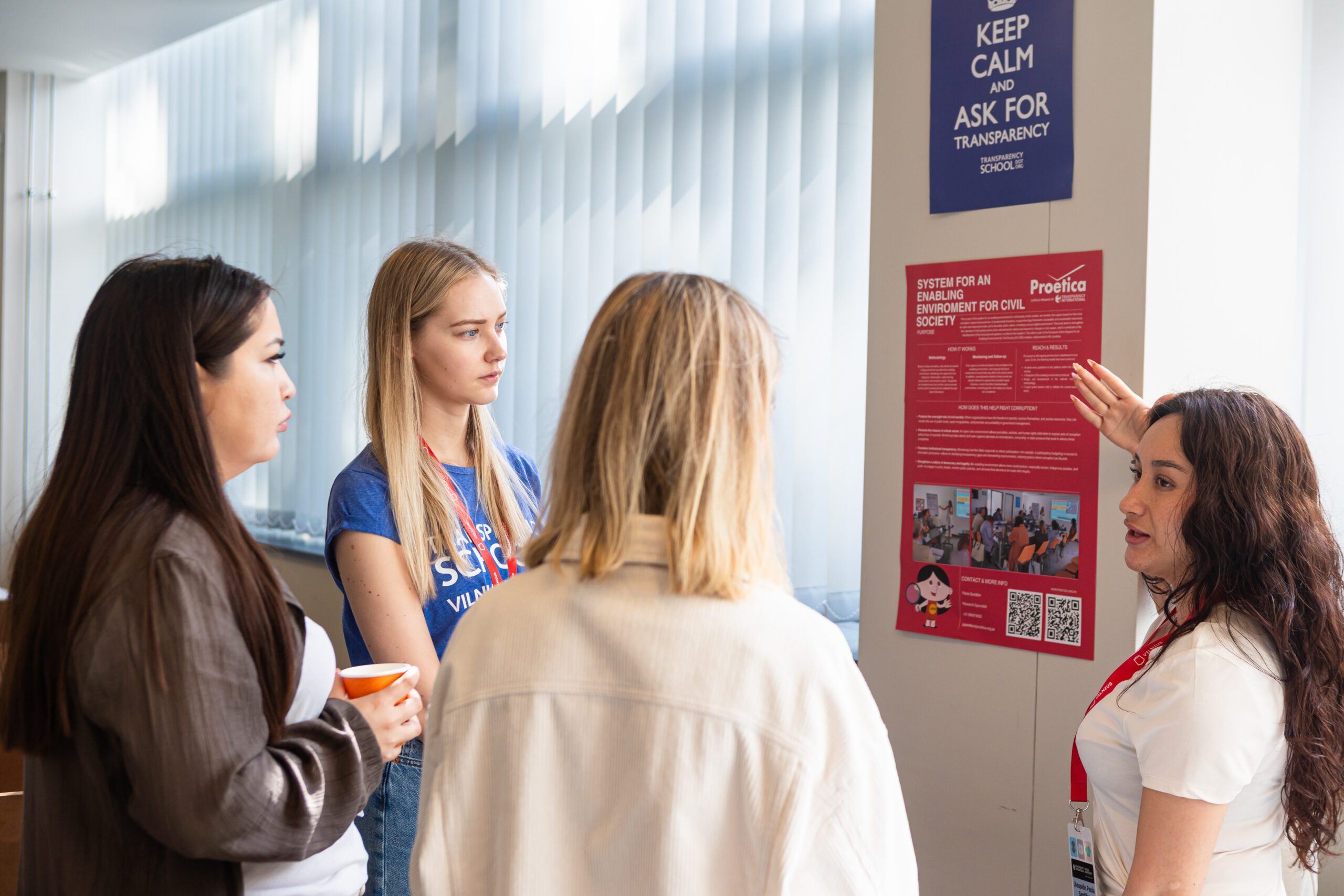
We know this can work. For the past fifteen years, young leaders from the public sector, businesses, non-governmental organizations, tech, and academia gather for one intensive summer week at the TransparencyAccording to OGP’s Articles of Governance, transparency occurs when “government-held information (including on activities and decisions) is open, comprehensive, timely, freely available to the public,... More School in Vilnius, Lithuania. The program serves as an immersive deep dive that exposes participants to a broad range of ideas, experiences, and contacts, i.e. “weak ties” that help them hone their own roadmap to improve their institutions and home countries. Participants learn from each other just as much as from lecturers through interactive and behavioral approaches. Innovation and explorative cross-pollination create transformative learning as well as life-long bonds.
This is, of course, just one example of how one can approach open government education, which can offer insight and serve as a blueprint for other national or regional initiatives. OGP Transparency Fellows, an annual intensive executive program for senior public officials in its fourth year of implementation already, is modelled in a similar fashion. Practitioners from varied backgrounds and countries partake in field visits, meeting an equally diverse set of fellow reformers across government branches and levels, as well as other various sectors, to learn what works and what doesn’t under which conditions. This helps the fellows identify which open government approach fits their context best as well as how to apply it and who to ask for further guidance, if needed.
Knowledge may be power, but it is one’s ability and networks to act on that knowledge that make all the difference.
No comments yet
Related Content
Spain’s Open Government Journey
Spain joined the Open Government Partnership (OGP) at its founding in 2011. Since then, its participation has expanded to include seven OGP Local members, and the engagement of all autonomous…
How Hamburg Builds a Data Culture in Public Administration
In today’s rapidly digitizing world, public administration faces a complex data landscape ...
 Reformers
 Faces of Open Government: Agila Barzdienė and Rugilė Trumpytė
To mark the International Day for People with Disabilities, Agila Barzdienė and Rugilė Trumpytė discuss how socially responsible procurement is advancing inclusion and accessibility in Lithuania.
Leave a Reply