
OGP and Infrastructure Transparency: The Next Frontier?
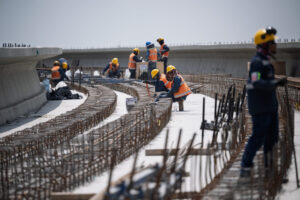
Credit: CoST Bogota
This month marks 10 years of collaboration between OGP and CoST – Infrastructure TransparencyAccording to OGP’s Articles of Governance, transparency occurs when “government-held information (including on activities and decisions) is open, comprehensive, timely, freely available to the public,... More Initiative. Infrastructure is central to economic growth, public service deliveryTo ensure that citizens of all groups are better supported by the government, OGP participating governments are working to improve the quality of and access to public services. Commitments in this are... More and climate resilience. Yet governments around the world face mounting pressures: deliver sustainable, quality infrastructure for growing populations while managing rising debtOpenly disclosing information about government debt enables informed decision-making, mitigates the risk of financial instability, and allows citizens to hold their governments accountable for respons... More burdens, constrained overseas development aidMore and better information about aid helps partner countries and donor institutions plan and manage aid resources more effectively, parliaments and civil society to hold governments accountable for t..., increasing competition for public finance and growing climate adaptation costs.
In addition citizens continue to be short-changed by inefficiency, weak oversight and corruption in public infrastructure delivery. IMF estimates suggest that, on average, one third of countries’ infrastructure spending is wasted. With infrastructure accounting for around 15–20 percent of public investment in many countries, this globally represents trillions of dollars that should be improving roads, schools, hospitals and essential public services.
But practical approaches already exist. In 2025, CoST members opened nearly 48,000 infrastructure projects covering US$21.4 billion of investment to public scrutiny, demonstrating what can be achieved when infrastructure information is made open and accessible.
There are opportunities to take these approaches further – both in countries where CoST and OGP already operate, and across OGP’s wider membership. OGP’s co-creation processes, action plans and Open Gov Challenge provide practical routes for doing so. Bogotá and Santiago de Cali demonstrated this potential in 2025, receiving Honorable Mentions in the Open Gov Challenge Awards for advancing public infrastructure transparency through CoST tools and standards.
Beyond the Open Gov Challenge, OGP Action Plans already show how CoST approaches can be translated into practical commitments.
In Sekondi-Takoradi, Ghana, an OGP commitmentOGP commitments are promises for reform co-created by governments and civil society and submitted as part of an action plan. Commitments typically include a description of the problem, concrete action... led to an open dataBy opening up data and making it sharable and reusable, governments can enable informed debate, better decision making, and the development of innovative new services. Technical specifications: Polici... portal using CoST’s international data standard, later complemented by an Infrastructure Analytical Dashboard and an Electronic Infrastructure Monitoring Tool. In Panama, an OGP commitment led to a legal mandate for publishing infrastructure data in line with the CoST standard and the development of an information platform, with CoST-related commitments subsequently carried into two further Action Plans.
The guidance note shows how infrastructure transparency can help OGP members advance priorities they have already identified. OGP provides the political platform, country reach and co-creation processes through which governments and civil society develop reform commitments, while CoST contributes infrastructure-specific expertise, tested tools and standards, and engagement with the private sectorGovernments are working to open private sector practices as well — including through beneficial ownership transparency, open contracting, and regulating environmental standards. Technical specificatio... More and professional bodies. The guidance maps these contributions across different OGP policy areas, helping members identify where CoST can add most value – from public participationGiving citizens opportunities to provide input into government decision-making leads to more effective governance, improved public service delivery, and more equitable outcomes. Technical specificatio... and fiscal openness to climate and the environment.
Here are five ways OGP members could put the guidance into practice:
- Review existing OGP commitments through an infrastructure lens. Take the guidance to the next multi-stakeholder forumRegular dialogue between government and civil society is a core element of OGP participation. It builds trust, promotes joint problem-solving, and empowers civil society to influence the design, imple... meeting and consider whether an existing commitment on fiscal openness, digital governanceAs evolving technologies present new opportunities for governments and citizens to advance openness and accountability, OGP participating governments are working to create policies that deal with the ... More, climate or inclusionOGP participating governments are working to create governments that truly serve all people. Commitments in this area may address persons with disabilities, women and girls, lesbian, gay, bisexual, tr... More could be strengthened by adding an infrastructure milestone.
- Give anti-corruption commitments a concrete infrastructure focus. Select a manageable number of high-value or high-risk projects, publish standardised project and contract data, and use the information to identify integrity risks, strengthen scrutiny and inform action.
- Strengthen commitments on climate financeGovernments are making climate finance more open by introducing public oversight to ensure funds reach intended targets and making decision-making processes more inclusive to make vulnerable groups mo... More. Use CoST’s international data standards’ sustainability and climate-finance modules to specify what information should be published and monitored about project selection, financing and implementation.
- Make fragmented infrastructure information usable. Use CoST’s international data standards to connect project and contract data scattered across different systems, then apply the CoST Independent Review process to validate the information and investigate recurring cost increases and delays.
- Open major infrastructure projects to meaningful participation. Combine OGP co-creation with CoST social-accountability tools to publish the underlying project information, involve affected communities early and establish continuing public oversight beyond a single consultation.
OGP’s updated 2026 Action Framework creates a timely opportunity to put the guidance into practice. Members can introduce open government commitments individually or in batches, rather than waiting for a complete national action-plan cycle. This gives government and civil society stakeholders a more flexible route to translate the guidance into specific, time-bound infrastructure reforms.
As an official technical expertise partner of OGP, CoST can work with government and civil society stakeholders to identify where infrastructure transparency can strengthen existing open government priorities and turn these opportunities into practical reform. With infrastructure under growing fiscal, climate and public scrutiny, there is a clear opportunity to make it a bigger part of the open government agenda.
CoST stands ready to help OGP members translate the guidance into concrete commitments and support their implementation.
You can download a copy of the guidance note in different languages below:
English | Spanish | Portuguese | French
For more information, email: [email protected]
No comments yet
Related Content

15 Years of OGP
Fifteen years ago, the Open Government Partnership began with a simple but bold idea: governments work better when they are transparent, accountable, and open to citizen participation.

15 Years of Progress
Over the course of 15 years, OGP has helped define how open governments can and should work, and the Partnership is uniquely placed to respond to complex crises. Read the…

Voices Across 15 Years
From heads of state to ambassadors, and former Steering Committee Co-Chairs, leaders from across the OGP community join us in celebrating 15 years of open government.
Leave a Reply