
End of Commitment Report – Transparency of community resource management
- Action Plan: Action plan – Vanadzor, Armenia, 2021 – 2026
Overview
Name of Evaluator
Arpine Hakobyan (“NGO Center” civil society development NGO)
[email protected]; [email protected]
Member Name
Vanadzor, Armenia
Action PlanAction plans are at the core of a government’s participation in OGP. They are the product of a co-creation process in which government and civil society jointly develop commitments to open government ... Title
Action plan – Vanadzor, Armenia, 2021 – 2026
CommitmentOGP commitments are promises for reform co-created by governments and civil society and submitted as part of an action plan. Commitments typically include a description of the problem, concrete action...
TransparencyAccording to OGP’s Articles of Governance, transparency occurs when “government-held information (including on activities and decisions) is open, comprehensive, timely, freely available to the public,... More of community resource management: Create a community resource management register.
Title
Transparency of community resource management: Create a community resource management register.
Action
It is necessary to create a unified register/system of community resources for the communities of Gyumri and Vanadzor, where the community resources will be determined: movable and immovable property (including the community budget), determination of procedures, mechanisms, and legal procedures to manage these resources. Particular attention is paid to assistance provided from the community budget, grants, donations, management of the public real estate, and Cemetery management problems. Mapping and addressing are possible here; the order has already been approved by the government. In particular, comprehensive information on land acquisition.
Problem
Community resource management needs to be made more transparent and accountable. In this regard, it is quite important to clarify and introduce competition procedures and mechanisms for community property resources. An existing or newly created electronic community resource inventory application/tool (defining what counts as a community resource) should be used to clarify procedures for each use (grants, assistance/aid, donations, sale, auction, rent, etc.). Often, grants are provided from the municipal budget of a particular organization, assistance to citizens, and other donations for which there is no reliable information. Developing a reporting and monitoring mechanism will help improve the effective management of community resources.
Section 1.
Commitment completion
1.1 What was the overall level of progress in the commitment implementation at the time of this assessment?
Substantial
Provide a brief explanation of your answer:
The commitment in Vanadzor has made substantial progress but remains incomplete. A unified national registry for municipal property and resource management was introduced in 2022, which allows residents to pay land, property, and vehicle taxes online. Vanadzor has also begun uploading lease contracts for movable and immovable property to its official website, and a new regulationGovernment reformers are developing regulations that enshrine values of transparency, participation, and accountability in government practices. Technical specifications: Act of creating or reforming ... on cemetery land allocation was approved in March 2025. Draft procedures for donations and grants exist but are not yet formally adopted. In Vanadzor, council meetings are not being held because of the lack of a quorum, which prevents approval processes and delays the adoption of new procedures. The auction mechanism is still under development and is planned for 2026, but local officials emphasized it will only be carried out if sufficient financial resources are available. While many milestones were initiated, the full system is not yet operational; thus, the commitment cannot be considered complete.
Provide evidence that supports and justifies your answer:
Vanadzor Council Decision.pdf
Focus Group Vanadzor Participant List.pdf
Evidence Community Property ManagementVanadzor.docx
1.2 Describe the main external or internal factors that impacted implementation of this commitment and how they were addressed (or not).
External shocks:
- COVID-19 pandemic and the 2020 war in Artsakh, which shifted municipal priorities and delayed activities.
- Local government electionsImproving transparency in elections and maintaining the independence of electoral commissions is vital for promoting trust in the electoral system, preventing electoral fraud, and upholding the democr... More: Following the formulation of the commitments, local self-government elections were held in Vanadzor on 5 December 2021. The newly elected mayor was later arrested, and for about six months the city operated without a mayor. An acting mayor was then appointed, who continues to lead the city to this day. These factors caused turnover and delays in the adoption of new procedures.
Internal factors:
- Over-ambitious design: Municipal staff noted, “When implementation started, we realized how difficult the task was.” Vanadzor did not fully assess risks or capacity at the beginning.
- Dependence on national reforms: The government launched a unified property management registry for all communities, which overtook the original local registry plans. While this addressed part of the commitment, it reduced local control over implementation.
- Procedural bottlenecks: Council meetings are not being held due to a lack of quorum, which prevents the formal adoption of draft procedures for donations, grants, and other community resource management measures.
- Mitigation measures: In 2021 capacity buildingEnhancing the skills, abilities, and processes of public servants, civil society, and citizens is essential to achieving long-lasting results in opening government. Technical specifications: Set of ac... sessions for 70 municipal staff and CSO partners enhanced knowledge of OGP principles and local resource management, while ongoing negotiations aim to include waste collection fees in the unified registry, a regulation on cemetery land allocation has been approved to address corruption risks, and the mapping, measurement, and registration of cemetery plots into a general register remain part of the commitment to prevent misappropriation and illegal sales.
- Remaining gaps: Key milestones, including the auction mechanism, formal adoption of grant/donation procedures, mapping, measurement, and registration of cemetery plots into a general register to prevent misappropriation and illegal sales, remain incomplete and are expected only by 2026
1.3 Was the commitment implemented as originally planned?
Most of the commitment milestones were implemented as planned
Provide a brief explanation of your answer:
Most milestones have been launched but not fully completed. The unified national registry replaced the planned local inventory, fulfilling part of the goal. A new master plan was approved in March 2025. A regulation on cemetery land allocation has been approved, but the component on mapping, measuring, and registering each cemetery plot into a general register has not yet been implemented. Donation and grant procedures were drafted but remain pending due to the council’s inability to convene meetings because of a lack of quorum. The auction system is being developed nationally and is expected to operate only from 2026. While the implementation path diverged from the original action plan, the majority of activities were pursued in line with the intended objectives.
Evidence:
- Unified state registry
- Draft regulations on donations/grants (not adopted)
- Vanadzor CSO focus group discussion
- Vanadzor Municipality official announcements (leases online)
Provide evidence for your answer:
Focus Group Vanadzor Participant-list1.pdf
The project of the procedure for providing grants has not been approved, because there is no council of elders.docx
Evidence Community property management Vanadzor1.docx
Section 2.
Did it open government?
2.1.1. – Did the government disclose more information; improve the quality of the information (new or existing); improve the value of the information; improve the channels to disclose or request information or improve accessibility to information?
Yes
Degree of result:
Major
Explanation: In narrative form, what has been the impact on people or practice.
The commitment improved the disclosure of information in Vanadzor. Citizens can now access data on their land, property, and vehicle taxes via the unified e-community system. Vanadzor began publishing lease contracts online, enhancing accountability in property use. Cemetery land allocation has been clarified and mapped through an officially approved plan. However, information on donations and grants remains opaque, as no transparent procedures are yet in force. The quality and accessibility of property-related information improved significantly, but gaps remain.
Evidence:
- City master plan decision (March 2025)
- Cemetery master plan decision
- Vanadzor Municipality lease contracts online
- Unified registry
Provide evidence for your answer:
Evidence Community Property management Vanadzor2.docx
Changes-in-the-purpose-and-operational-significance-of-community-settlement-land-plots-base-Vanadzor-community.zip
Vanadzor Council Decision1.pdf
2.1.2. – Did the government create new opportunities to seek feedback from citizens/enable participation inform or influence decisions; improve existing channels or spaces to seek feedback from citizens/enable participation/ inform or influence decisions; create or improve capabilities in the government or the public aimed to improve how the government seeks feedback from citizens/enables participation/ or allows for the public to inform or influence decisions?
No
2.1.3 Did the government create or improve channels, opportunities or capabilities to hold officials answerable to their actions?
Yes
Degree of result:
Marginal
Explanation: In narrative form, what has been the impact on people or practice.
Accountability channels were somewhat strengthened through the publication of lease agreements and the introduction of a national registry where residents can verify property-related obligations. The cemetery land allocation plan addressed corruption risks in graveyard management. However, accountability in budget allocations, donations, and grants remains weak. CSOs emphasized that support is still given based on ad-hoc council decisions rather than transparent, competitive procedures. Thus, progress is evident but fragmented.
Evidence:
- Cemetery allocation plan (March 2025)
- Draft procedures for donations/grants (pending adoption)
Provide evidence for your answer:
The-project-of-the-procedure-for-providing-grants-has-not-been-approved-because-there-is-no-council-of-elders1.docx Changes-in-the-purpose-and-operational-significance-of-community-settlement-land-plots-base-Vanadzor-community1.zip
Vanadzor Council Decision2.pdf
2.1.4 Other Results
Yes
Degree of result:
Marginal
Explanation: In narrative form, what has been the impact on people or practice.
The commitment indirectly strengthened intergovernmental cooperation. Municipalities became integrated into national reforms (unified registry, state auctions). Negotiations on expanding payment coverage (e.g., for waste fees) demonstrate increased responsiveness to citizen demands. Civil society actors gained awareness and experience, though unevenly across the two cities. These secondary effects contribute to long-term institutional learning, even if immediate outputs are partial.
Evidence:
- Interviews with municipal staff and focus group Interviews with CSOs
- Ongoing negotiations on waste fee inclusionOGP participating governments are working to create governments that truly serve all people. Commitments in this area may address persons with disabilities, women and girls, lesbian, gay, bisexual, tr... More
Provide evidence for your answer:
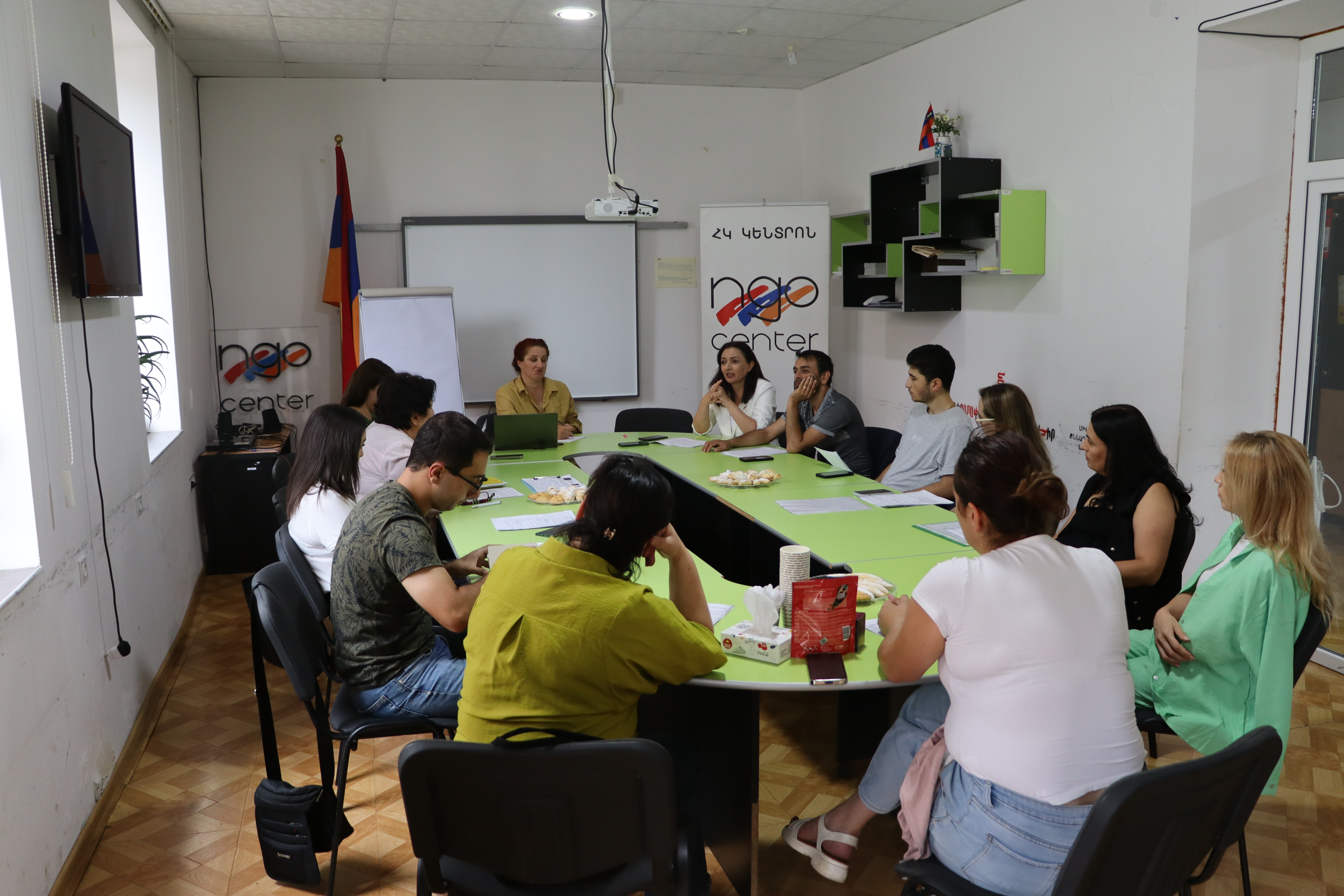
Meeting.JPG
Focus Group Vanadzor Participant-list2.pdf
2.2 Did the commitment address the public policy problem that it intended to address as described in the action plan?
Unclear
Provide a brief explanation of your answer:
The commitment aimed to improve transparency and accountability in community resource management. Significant progress was made: a unified registry exists, cemetery land regulation has been developed, and leases are published. However, core problems of opaque grant and donation allocation and lack of institutional continuity remain unresolved. Citizens’ trust in online systems is mixed, with some praising efficiency while others express distrust due to past errors. Thus, the commitment addressed parts of the problem but fell short of delivering full transparency and participation.
Evidence:
- Unified registry
- Focus group testimonies (citizens skeptical of online payments; some prefer face-to-face)
Provide evidence for your answer:
Section 3.
Lessons from
implementation
3. Provide at least one lesson or reflection relating to the implementation of this commitment. It can be the identification of key barriers to implementation, an unexpected help/hindrance, recommendations for future commitments, or if the commitment should be taken forward to the next action plan.
Implementation of the commitment in both Vanadzor and Gyumri revealed important lessons about institutional continuity, realistic planning, and the interdependence between local and national reforms.
A key lesson concerns institutional instability and loss of continuity. Frequent leadership changes in both cities—especially mayoral resignations and arrests—caused prolonged decision-making paralysis. In Vanadzor, the inability of the council to convene meetings prevented the formal adoption of several drafted regulations. In Gyumri, newly elected officials were unaware of previous Open Government PartnershipThe Open Government Partnership (OGP) is a multi-stakeholder initiative focused on improving government transparency, ensuring opportunities for citizen participation in public matters, and strengthen... More (OGP) obligations, highlighting the need to institutionalize commitments through written mandates, not individual political will.
Another major reflection is the over-ambitious and centrally dependent design. The introduction of the unified national property registry overtook local initiatives, reducing municipal ownership of the process. Future commitments should better assess municipal capacities and clarify how national systems complement, rather than replace, local responsibilities.
The experience also underscores the importance of procedural transparency and citizen trust. While online tools such as the e-community registry improved access to information, gaps in grant and donation procedures continue to undermine fairness. Citizens’ limited trust in online systems and lack of awareness further constrain participation. Awareness campaigns and simplified, transparent procedures are essential to strengthen public confidence.
Finally, the lesson for future action plans is to ensure realistic timelines, financial backing, and contingency mechanisms for political turnover. Integrating OGP principles into municipal regulations and digital platforms can ensure sustainability and protect progress regardless of leadership changes.
Leave a Reply