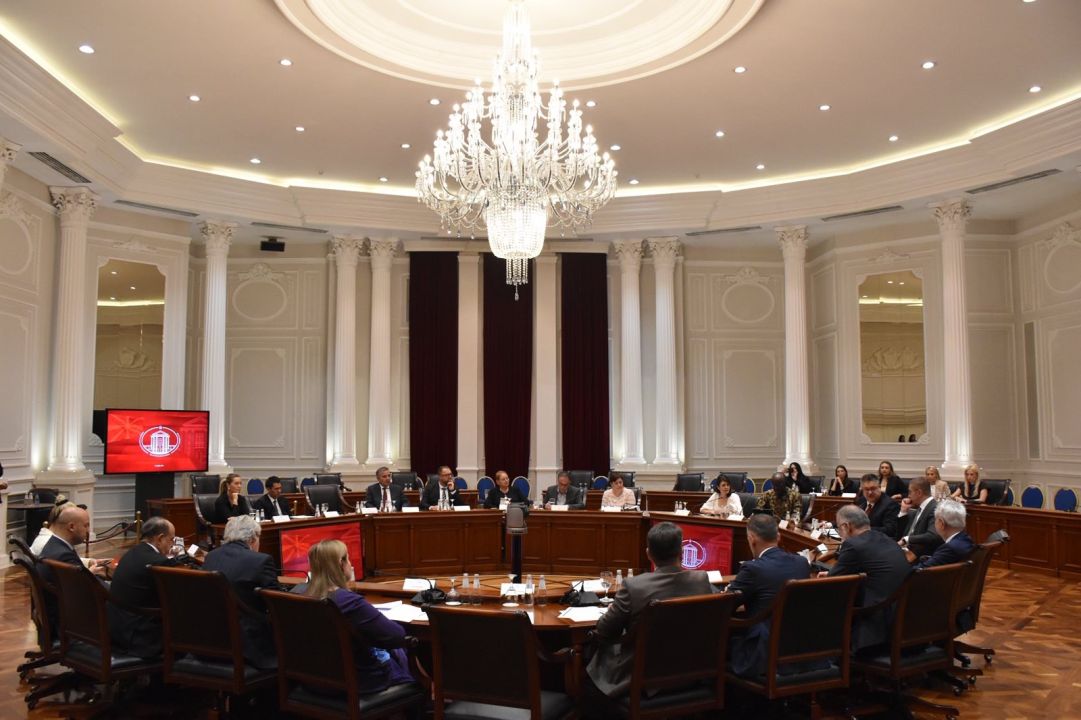
North Macedonia’s Parliament in Action
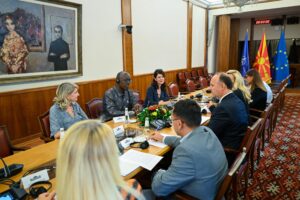
Credit: Assembly of the Republic of North Macedonia
I recently had the privilege of visiting North Macedonia in late August. In just three days, I met the Prime Minister and his Cabinet, the Speaker of Parliament, the President of the Supreme Court, and a wide array of civil society leaders. I was inspired by their shared ambitionAccording to OGP’s Articles of Governance, OGP commitments should “stretch government practice beyond its current baseline with respect to key areas of open government.” Ambition captures the potentia...: to become an open state, with an open executive, legislature, and judiciaryWhile a majority of open government reforms occur within the executive branch, OGP members are increasingly taking on commitments to increase the openness of the judicial branch. Technical specificati.... In this ambition, North Macedonia leads Europe.
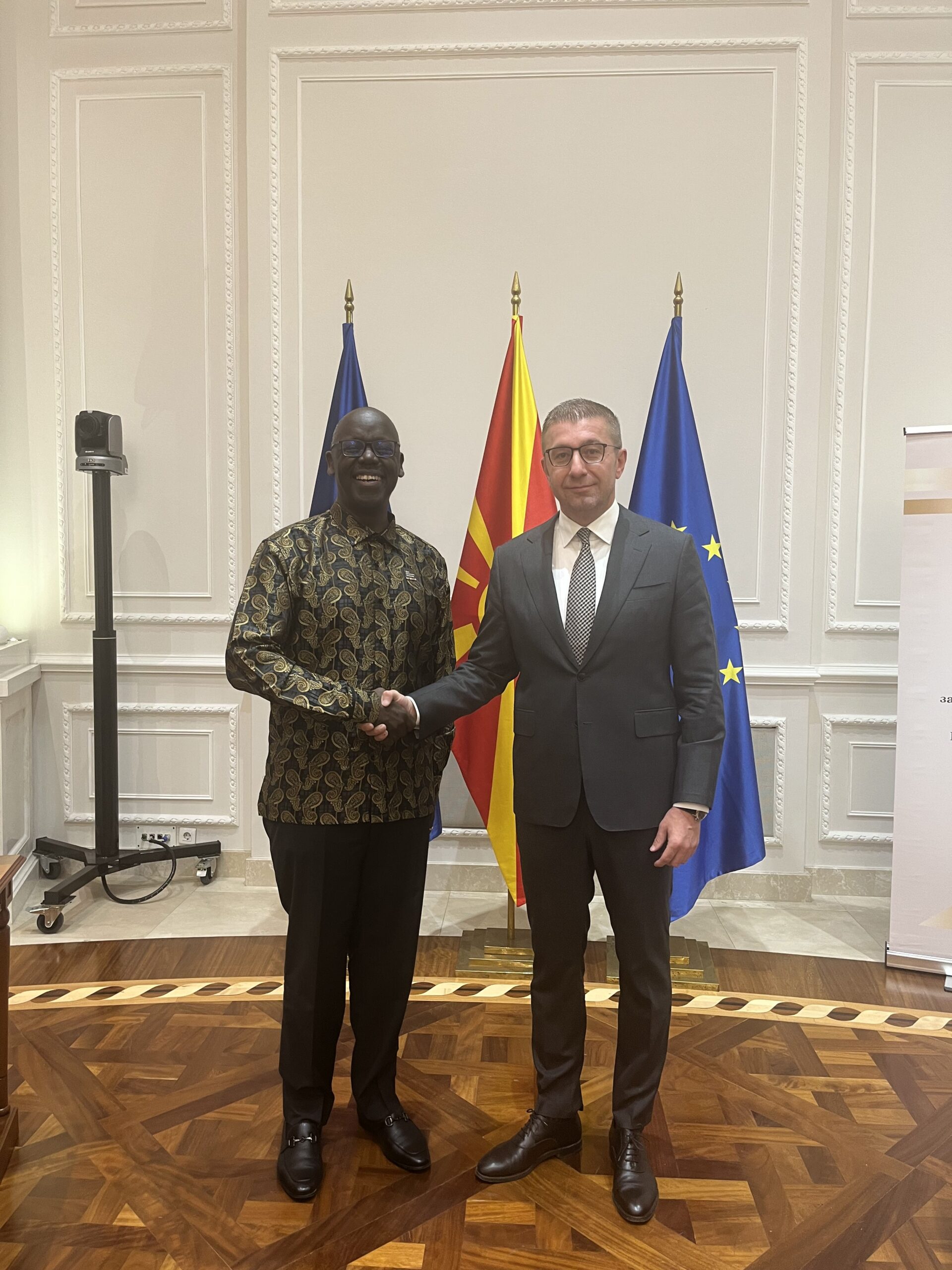
OGP CEO Aidan Eyakuze (left) and the Prime Minister of North Macedonia Hristijan Mickoski (right).
OGP CEO Aidan Eyakuze at the North Macedonian PM Cabinet Meeting.

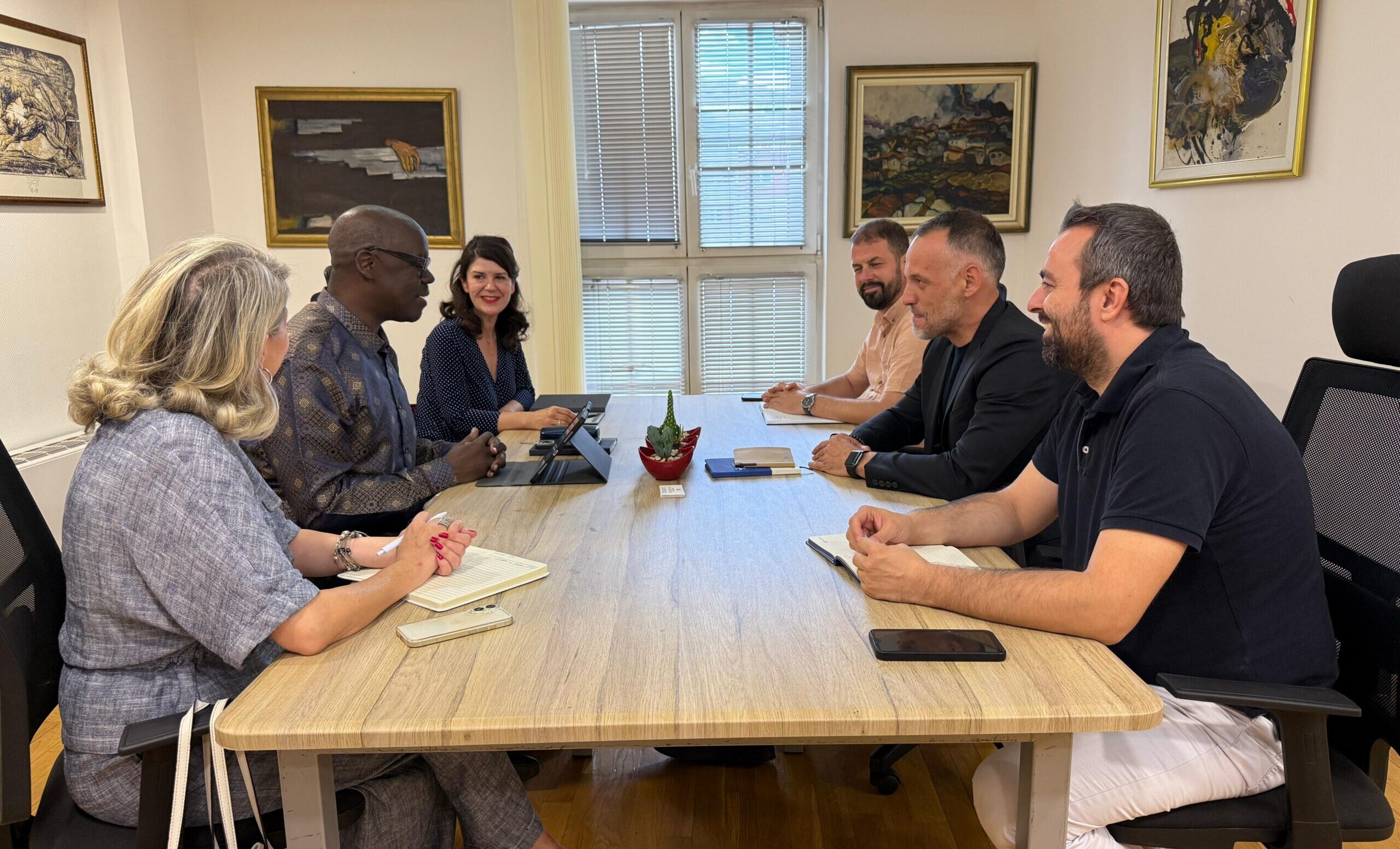
OGP CEO Aidan Eyakuze meets with the Deputy Prime Minister of North Macedonia Arben Fetaj.
I learned that in North Macedonia, the Open Government PartnershipThe Open Government Partnership (OGP) is a multi-stakeholder initiative focused on improving government transparency, ensuring opportunities for citizen participation in public matters, and strengthen... More translates to Partnership for Open Governance. The nuanced shift of language emphasizes how openness is a way of governing, with citizen collaboration occurring across every branch of the state.
For example, since 2018 parliament has dedicated itself to openness across three action plans. But this isn’t just words on paper. It is action, with two out of four commitments in the 2024–2026 action plan completed more than a year ahead of schedule.
The first commitment is the Parliamentary Caravan. The idea is simple and powerful: take parliament to the people. Between May and June 2025, the Caravan visited nine cities under the banner Parliament for the Citizens. More than 2,300 people engaged directly with 54 members of parliament (MPs) and 74 parliamentary officials. North Macedonia’s future—its children—joined and created 175 drawings, using art to express what democracy means to them.
It reminded me of my own experience in Tanzania in 2019, when Twaweza East Africa screened documentaries about MPs in villages and towns across 17 electoral constituencies. Citizens who watched felt more informed about their representatives’ work and, crucially, more likely to feel heard. North Macedonia’s Caravan shows the same truth: when citizens meet their representatives face-to-face, trust takes root.
The second bold action was Parliament TV. First imagined in 2018, it took years of patient policy, legal, financial, and technical work. On 25 January 2024, the channel went on air and by mid-2025, it was broadcasting 24 hours a day. The impact is clear. In early 2024, only 2 percent of citizens relied on Parliament TV for information about MPs. By May 2025, viewership had climbed to 10 percent. Recent monitoring surveys about the channel reveal what people want: clearer explanations of laws and lively debates on big issues, with young people looking for more ways to take part in parliamentary work.
OGP CEO Aidan Eyakuze’s interview at the North Macedonian Parliament TV.
The same spirit of openness is taking root beyond parliament. Ministries are testing more participatory approaches to policy-making. The judiciary, including the Supreme Court, is exploring commitments on open justice—the first of its kind in the region. Local governments are finding new ways to involve citizens in decisions. Civil society is both pushing and co-creating every step of the way. Together, these efforts paint a larger picture: a country where openness is becoming a shared commitmentOGP commitments are promises for reform co-created by governments and civil society and submitted as part of an action plan. Commitments typically include a description of the problem, concrete action... across the state.
None of this happens by accident. Across numerous meetings, I saw three forces at play. First, the “SWAT team”: a small group of long-serving members of government and civil society anchoring the multi-stakeholder forumRegular dialogue between government and civil society is a core element of OGP participation. It builds trust, promotes joint problem-solving, and empowers civil society to influence the design, imple... with energyEnsuring universal access to sustainable, dependable, and affordable energy is critical to every aspect of prosperity. Increasing public oversight and transparency in the energy sector can help to ens... More and persistence. Second, a growing culture of engagement, with ministries debating publicly, consulting widely, and weaving citizen voices into new laws. Third, the individual champions: ministers, MPs, civic actors, and reform partners who wake up each day determined to push openness forward.
North Macedonia proves that openness is alive. It is a caravan rolling into a small town. It is a TV channel explaining a new law to a young citizen. It is reformers who keep showing up, determined to make government transparent, participatory, and accountable. The journey is not easy. Reforms face obstacles, and progress can be uneven. Yet the reformers persist, even when the path is steep.
Trust between citizens and institutions grows one conversation, one broadcast, and one commitment at a time. North Macedonia’s pioneering journey to an open state is still unfolding. But what I witnessed in Skopje shows that when openness is embraced across all levels of government, and lived with passion and persistence, it has the power to bring government and citizens closer together. And that makes all the difference.
No comments yet
Related Content
Behind the Scenes of African Parliaments: Transparency in the Making
Au Maroc, en Côte d’Ivoire et au Ghana, des efforts soutenus sont à l’œuvre pour retisser le lien entre institutions parlementaires et citoyenneté. Lire la suite pour en savoir plus.
 Case Studies
 Open Parliaments: The Case of Buenos Aires
 Case Studies
 Reaffirming Freedom of Information in the Western Balkans after COVID-19
On paper, the Western Balkans have some of the most progressive Freedom of Information (FOI) laws in Europe. All OGP members in the region...
Leave a Reply