
End of Commitment Report – Providing information on access to special conditions of community facilities for people with disabilities.
- Action Plan: Action plan – Vanadzor, Armenia, 2021 – 2026
Overview
Name of Evaluator
Arpine Hakobyan (“NGO Center” civil society development NGO)
[email protected]; [email protected]
Member Name
Vanadzor, Armenia
Action PlanAction plans are at the core of a government’s participation in OGP. They are the product of a co-creation process in which government and civil society jointly develop commitments to open government ... Title
Action plan – Vanadzor, Armenia, 2021 – 2026
CommitmentOGP commitments are promises for reform co-created by governments and civil society and submitted as part of an action plan. Commitments typically include a description of the problem, concrete action...
Providing information on access to special conditions of community facilities for people with disabilitiesA government is not open unless it is accessible to all, and governments are working to ensure people with disabilities are afforded equitable services and opportunities to participate. Technical spec....
Title
Providing information on access to special conditions of community facilities for people with disabilities.
Action
Commitments will provide information on access to special conditions of community facilities for people with disabilities. This will increase public physical participation in community processes and decision-making actions.
Problem
People with disabilities sometimes avoid visiting the places, because they have no idea about the access to ramps or lifts in the facilities. With this commitment, it is proposed to post a map on the websites of the municipalities, where information on the availability of all buildings/structures will be available, which will help people with mobility difficulties (disabilities) to know in advance what level of accessibility is in the building before their visiting. The example was created within the initiative of the NGO Center (https://cutt.ly/YQsOxaW). Maps may also include access to audio information.
Section 1.
Commitment completion
1.1 What was the overall level of progress in the commitment implementation at the time of this assessment?
substantial
Provide a brief explanation of your answer:
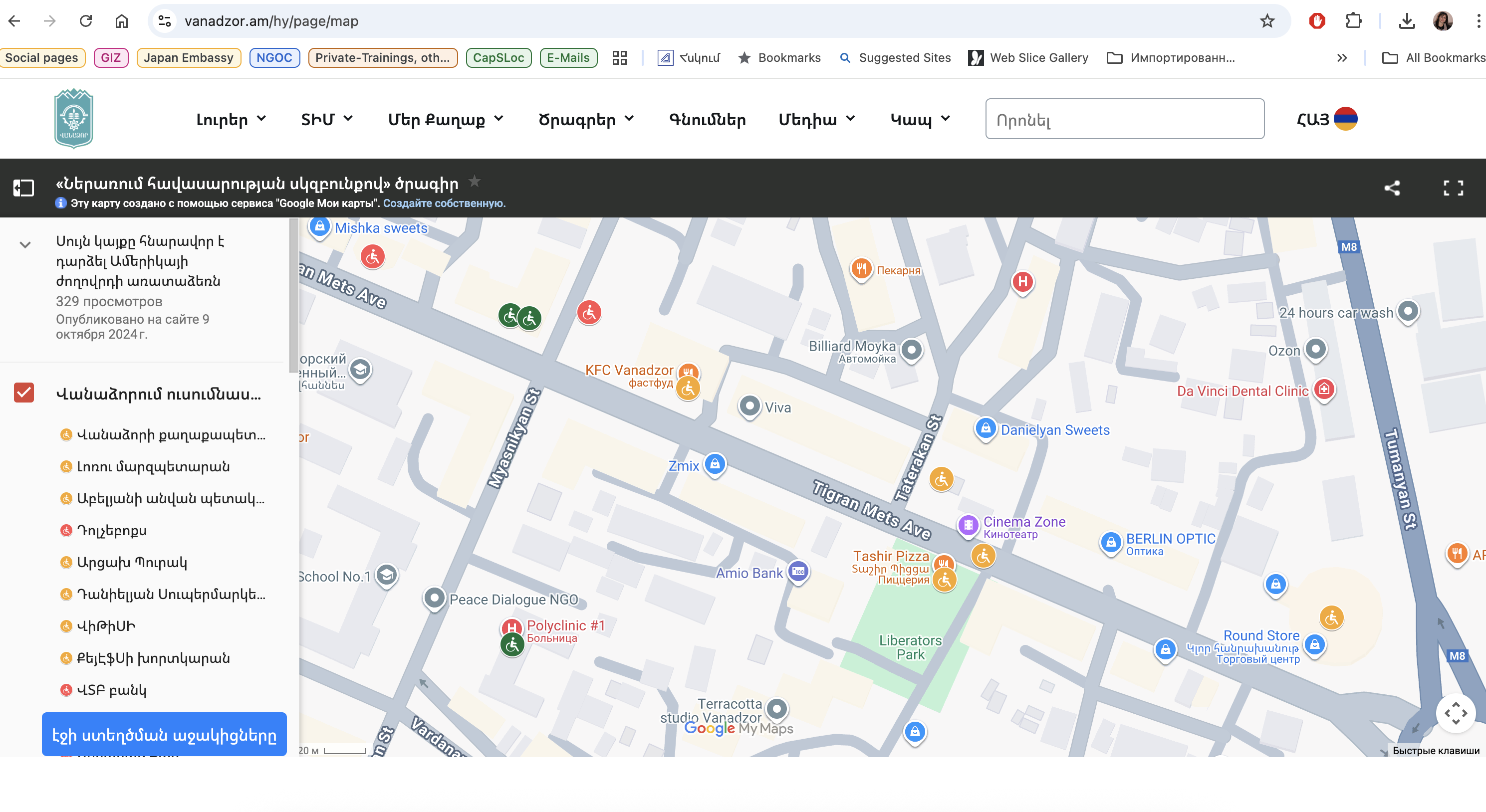
The commitment shows substantial progress. The Vanadzor municipality, in partnership with “Lusastgh” NGO and a contracted technical specialist, developed and published an interactive accessibility map covering around 70 public facilities, including schools, healthcare institutions, supermarkets, cultural centers, hotels, and restaurants. Facilities are color-coded (green – fully accessible, yellow – partially accessible, red – inaccessible), allowing citizens to understand accessibility conditions in advance. The map, officially launched at the Vanadzor municipality, is available on the official Vanadzor municipality website and can be regularly updated, and also includes a feedback option: users can leave comments if they notice inconsistencies. This does not imply a mandatory response․. However, the commitment has made substantial progress but remains incomplete: the audio information component for people with visual disabilities was not developed due to a lack of funding.
Provide evidence that supports and justifies your answer:
Map Screenshot From Municipality Webpage.png
Public Presentation of Map Photos.zip
Evidences Vanadzor Municipality Website with the accessibility map public presentation.docx
1.2 Describe the main external or internal factors that impacted implementation of this commitment and how they were addressed (or not).
Implementation was delayed twice due to political and administrative instability. For long periods, Vanadzor had no mayor, and city council meetings lacked a quorum, preventing budget allocations. As a result, the municipality relied entirely on donor funding (Counterpart International/USAID via Lusastgh NGO working with people with disability) to carry out the work. Overcoming this obstacle was facilitated by strong cooperation between the municipality, civil society, and international organizations, which secured the necessary funding for implementation. Another challenge was the initial underestimation of timeframes: implementing five commitments within one year proved unrealistic in an unstable political context, and deadlines had to be extended twice. Despite these challenges, the active involvement of specialists, community members, and close collaboration with Lusastgh NGO ensured substantial progress. The municipality and NGOs have acknowledged these lessons and plan to design future commitments over a longer, five-year cycle.
1.3 Was the commitment implemented as originally planned?
Most of the commitment milestones were implemented as planned
Provide a brief explanation of your answer:
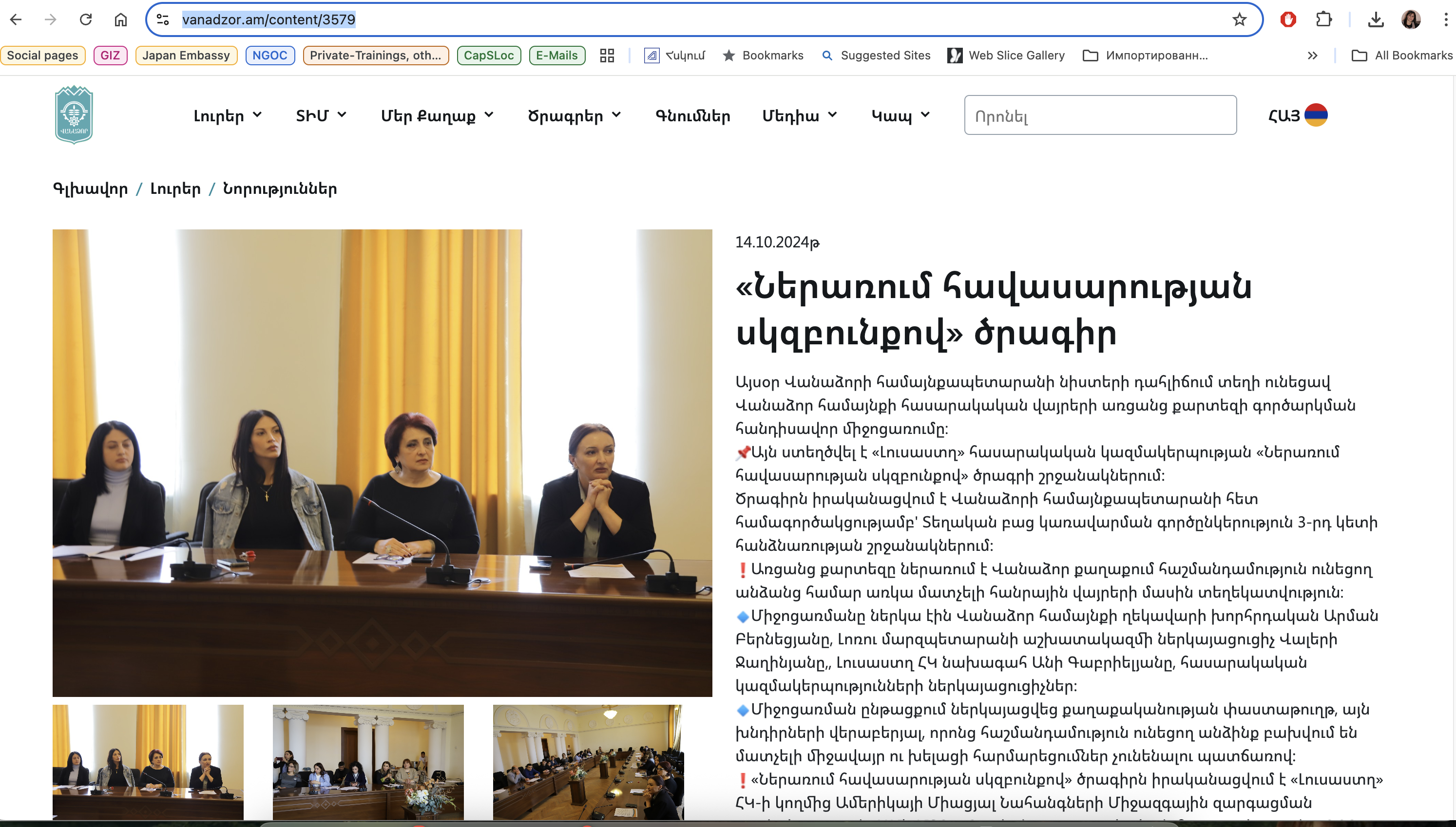
The accessibility map was developed and launched as originally planned, with around 70 public facilities in Vanadzor assessed and included, providing clear information on ramps, elevators, and other accessibility features for people with mobility difficulties. The map aimed to improve access to community facilities and inform residents in advance about accessibility conditions. At the same time, two elements of the original plan were not fully realized: the audio information feature for visually impaired people. The initiative involved close cooperation between Vanadzor municipality, Lusastgh NGO, and technical specialists. The map was officially launched at the Vanadzor municipality and is publicly available online, providing a practical tool to enhance access to information for people with disabilities and supporting inclusive urban development.
Provide evidence for your answer:
Focus Group Vanadzor Participant List.pdf
Public Presentation Screenshot From Municipality Webpage.png
Evidences Vanadzor Municipality Website with the Accessibility Map-.docx
Section 2.
Did it open government?
2.1.1. – Did the government disclose more information, improve the quality of the information (new or existing); improve the value of the information; improve the channels to disclose or request information or improve accessibility to information?
Yes
Degree of result:
Major
Explanation: In narrative form, what has been the impact on people or practice.
The commitment significantly improved accessibility information. For the first time, residents can access comprehensive data on public building accessibility via the municipality website, benefiting persons with disabilities, their families, and caregivers. Persons with disabilities actively participated in mapping, attending photography training by Lusastgh NGO to document spaces. One participant said, “It was very important for me to photograph and assess cultural spaces, like theaters, where few people with disabilities usually go. These skills will be useful throughout my life.” Another noted, “The map is crucial not only for locals but also for visitors with disabilities; psychologically it is easier to know in advance where access is limited than to arrive and find it inaccessible.” Participants emphasized its impact on self-esteem: “We were not ignored; we could do an important task for the community.”
Provide evidence for your answer:
Public Presentation.pptx
Public Presentation of Map Participants List.pdf
Public Presentation of Map Photos1.zip
2.1.2. – Did the government create new opportunities to seek feedback from citizens/enable participation inform or influence decisions; improve existing channels or spaces to seek feedback from citizens/enable participation/ inform or influence decisions; create or improve capabilities in the government or the public aimed to improve how the government seeks feedback from citizens/enables participation/ or allows for the public to inform or influence decisions?
Yes
Degree of result:
Major
Explanation: In narrative form, what has been the impact on people or practice.
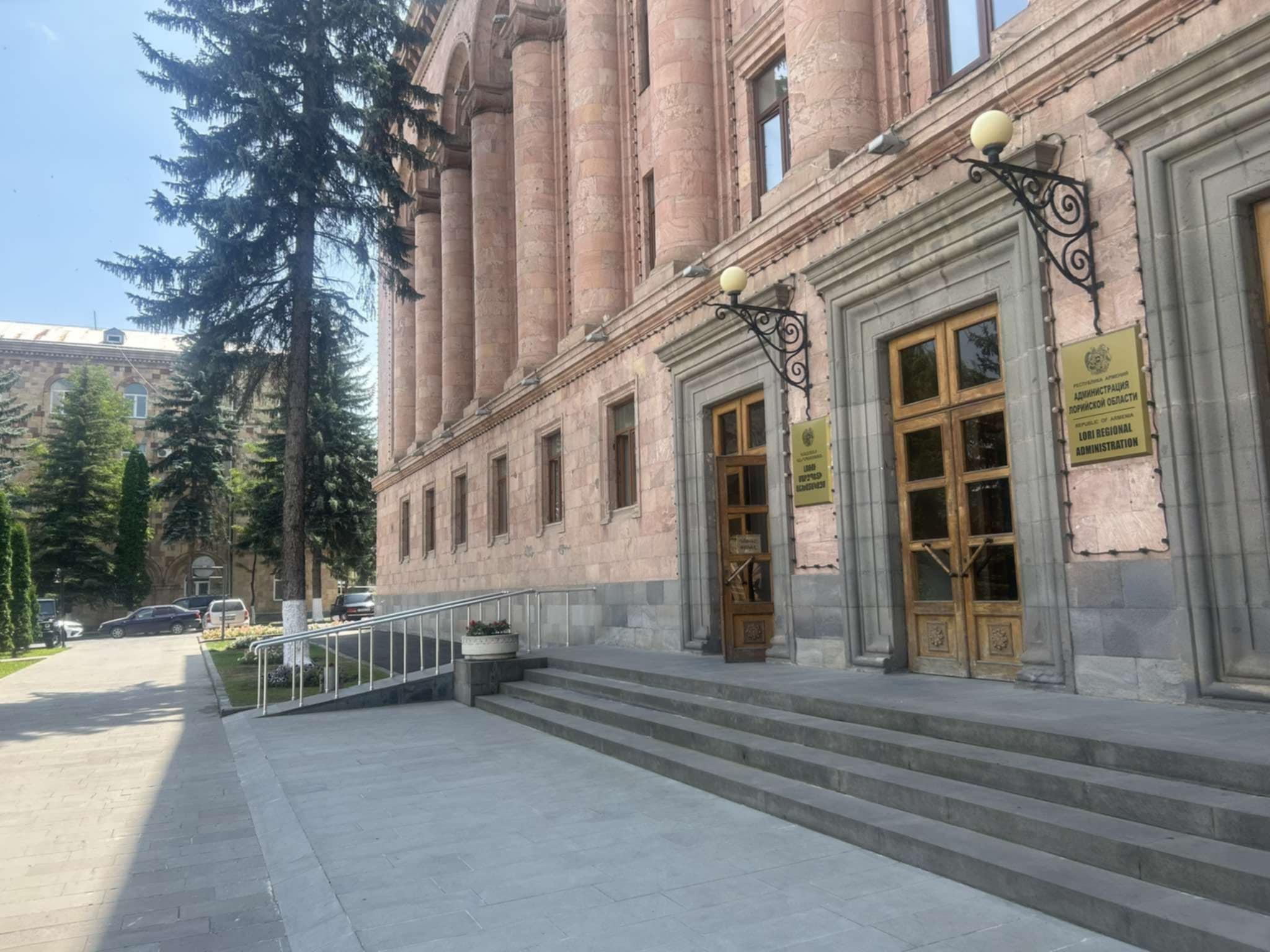
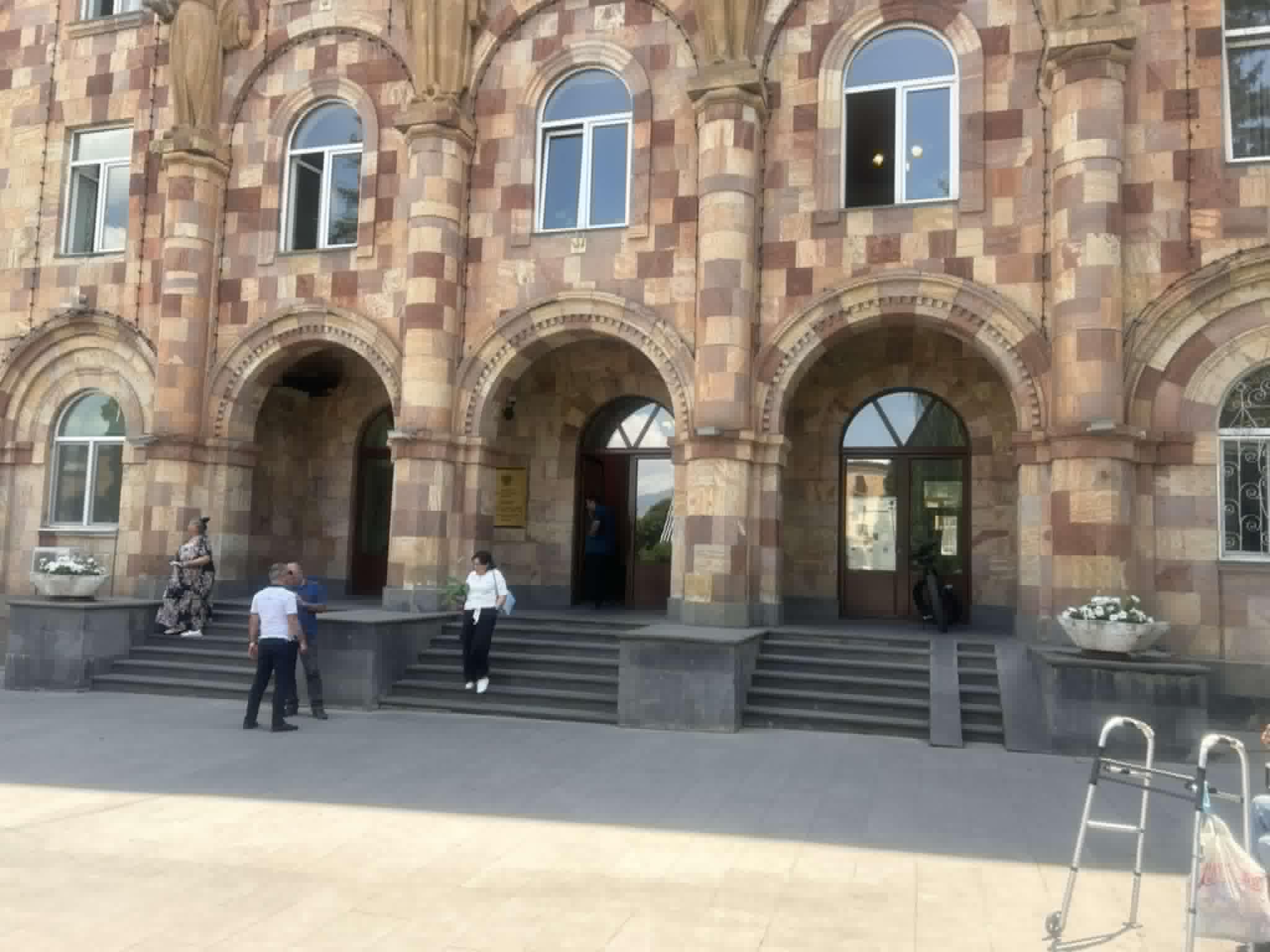
The process created meaningful opportunities for citizen participationAccording to OGP’s Articles of Governance, citizen participation occurs when “governments seek to mobilize citizens to engage in public debate, provide input, and make contributions that lead to more ... More. Approximately 20 persons with disabilities were directly trained to assess facilities according to accessibility standards and carried out on-site evaluations and photography. Their input determined which facilities were included on the map. Lusastgh NGO coordinated community meetings to collect feedback on which locations mattered most to residents. Municipal staff were trained to maintain and update the map in collaboration with community members. This co-creation not only increased ownership but also generated enthusiasm among participants, who voluntarily contributed without financial compensation. During the public launch at the municipality, the building was initially inaccessible, but staff assisted participants. The inaccessibility of the community on the day of the public presentation of the map led to immediate actions, such as ramp construction, and a fully accessible first floor where the Citizens Service Office is also located. The mapping process also forced newly built kindergartens to comply with accessibility standards. This demonstrates how data disclosure can trigger practical institutional changes.
Provide evidence for your answer:
Ramps.zip
Training Participant Lists.pdf
Training Presentation.pptx
2.1.3 Did the government create or improve channels, opportunities or capabilities to hold officials answerable to their actions?
Unclear
Degree of result:
Did not change
Explanation: In narrative form, what has been the impact on people or practice.
While the map improves transparencyAccording to OGP’s Articles of Governance, transparency occurs when “government-held information (including on activities and decisions) is open, comprehensive, timely, freely available to the public,... More and awareness, no formal accountability mechanisms were established. However, some facilities requested time to improve accessibility after being marked in red, and in at least two cases, ramps were built within days to change their status. This indicates indirect accountability pressure, though no systematic monitoring or sanctions exist.
Provide evidence for your answer:
Focus Group Vanadzor Participant list1.pdf
2.1.4 Other Results
Yes
Degree of result:
Marginal
Explanation: In narrative form, what has been the impact on people or practice.
The mapping exercise encouraged public institutions and businesses to align with accessibility standards. Some facilities, initially resistant to being shown as “inaccessible,” undertook improvements. The NGO also prepared a policy proposal for the city council to earmark budget lines for annual accessibility improvements, expected to be discussed in upcoming budget cycles. This could ensure sustainability beyond donor support.
Provide evidence for your answer:
Ramp 3.jpeg
Ramp 4.jpeg
Policy Paper Suggestions Lusastgh-NGO.pdf
2.2 Did the commitment address the public policy problem that it intended to address as described in the action plan?
Yes
Provide a brief explanation of your answer:
The commitment partially solved the problem of a lack of accessibility information. Persons with disabilities can now plan visits more effectively and advocate for better standards. Although audio accessibility was not developed, the Vanadzor map demonstrates how digital tools can expand inclusionOGP participating governments are working to create governments that truly serve all people. Commitments in this area may address persons with disabilities, women and girls, lesbian, gay, bisexual, tr... More and raise awareness of universal design standards.
Provide evidence for your answer:
Section 3.
Lessons from
implementation
3. Provide at least one lesson or reflection relating to the implementation of this commitment. It can be the identification of key barriers to implementation, an unexpected help/hindrance, recommendations for future commitments, or if the commitment should be taken forward to the next action plan.
The experience highlights the importance of realistic timeframes and stable political conditions for effective implementation. Attempting to implement five commitments in one year proved over-ambitious. For future cycles, municipalities should design commitments for longer periods (e.g., five years) to allow for sustainable planning, budgeting, and adaptation to unforeseen circumstances. Another lesson is the effectiveness of civil society partnerships: collaboration with Lusastgh NGO and direct involvement of persons with disabilities ensured both technical accuracy and legitimacy. Donor support was crucial, but reliance on external funding raises sustainability concerns. Embedding accessibility improvements in municipal budgets will be essential going forward. Finally, the project demonstrated that transparency tools can generate ripple effects: once data was published, both the municipality and private actors took tangible steps to improve accessibility.
Leave a Reply