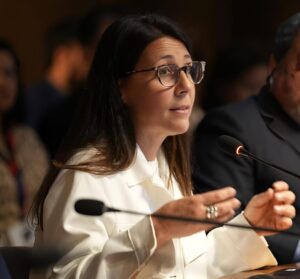
Uruguay’s fifth Open Government Plan was the first to include all three branches of government. As a result of a participatory co-creation process, the plan incorporated commitments on innovative topics and showed good levels of completion and early results. Although civil society participation was lower during the implementation and monitoring phases, this did not represent a problem since trust between civil society and government was maintained.
Join us for Open Americas from September 26 to 29 in Santo Domingo, Dominican Republic.
Del 26 al 29 de septiembre, ven a Santo Domingo, República Dominicana y únete a personas reformadoras de gobierno, sociedad civil, academia, sector privado y más para intercambiar ideas, crear alianzas y buscar soluciones para construir una región más abierta, más participativa y más inclusiva en un mundo post-pandemia.
Uruguay is implementing commitments from its fifth open government action plan, engaging a wide range of stakeholders including government agencies, civil society organizations...
Uruguay está implementando los compromisos de su quinto plan de acción de gobierno abierto, involucrando una multitud de actores como agencias de gobierno, organizaciones de sociedad civil, academia, ciudadanía y demás. En anticipación de la Semana de Gobierno Abierto, Daniel Carranza ...
Uruguay’s citizens were not able to fully understand the healthcare system and the choices it provided them. To fix this, an easy-to-use website empowered citizens in their decisions.
Virginia Pardo Director of the Information Society Department, Agency for Electronic Government and Information and Knowledge Society (AGESIC) [email protected]
The data below represents historical data for this member’s commitments. It does not reflect current work.
Commitment Performance
The following variables answer the question “Did this commitment open government?“, and focus on how government practices have changed as a result of the commitment’s implementation.
Starred commitments in OGP are one of the ways the IRM designates promising reforms. The graph below shows where the major areas for improvement in action plan design and implementation should take place based on past action plans.
Key
Stars (Global average 7%)
Focus on implementation
Focus on design
Pending IRM review
No IRM data
Focus on design
Focus on objectives and impact (ambition/potential impact)
This table shows: 1) the level of public influence during the development and implementation of OGP action plans, 2) whether consultations were open to any member of the public or only to those invited; and 3) whether a forum existed that met regularly.
Key
Participation was closed
Participation was open to any interested party
No IRM data
Forum
Pending IRM review
Definitions
Collaborate: Iterative dialogue and public helped set agenda
Involve:Government gave feedback on public inputs
Consult: Public gave input
Inform: Government provided public with information on plan
The data below is drawn from the 2019 OGP Global Report. You can view and learn more about the report here.
Selected Dimensions of Open Government
This section captures how each OGP member can play a leadership role, based on IRM-based findings and third-party scores. This list does not cover all of open government and OGP members are not required to take any action.
Action implications
These are recommendations on the role that each OGP member might play in each policy area. The recommendations are derived from a combination of the IRM-based findings and third-party scores.
IRM-based findings
Reflect the performance of commitments in a particular policy area, as assessed by the IRM.
(NC) No Commitments (CA) Commitment(s) in the policy area. (IR) IRM-Reviewed: At least one IRM-assessed commitment. (C) Was Complete: At least one commitment was substantially or fully completed. (A) Was Ambitious: At least one commitment with moderate or transformative potential impact. (ER) Showed Early Results: At least one commitment opened government in a “Major” or “Outstanding” way.
Third-party scores
Reflect “real-world” performance, i.e., performance outside of the OGP framework. Scores are comprised of various indicators collected by respected organizations.
As leaders, these members may consider playing a peer-support role by sharing their experiences and innovations with others in OGP, if they are not already doing so.
These are members making OGP commitments to improve their performance in the respective policy area. As members that have demonstrated political commitment through OGP, the next step is ensuring that implemented commitments have maximal impact.
These members have room for improvement in the respective policy area according to the third-party score and have not leveraged their OGP action plans to address the issue. They may consider reforms in the respective policy area, either within or outside of the OGP framework.
These members have not made ambitious OGP commitments or commitments that have shown early results. However, these members have recently made commitment(s) in the respective policy area that have not yet been assessed by the IRM. The OGP community will monitor these commitments and soon report on the progress achieved.
There is not enough third-party data available to identify an action implication.
As leaders, these members may consider playing a peer-support role by sharing their experiences and innovations with others in OGP, if they are not already doing so.
These are members making OGP commitments to improve their performance in the respective policy area. As members that have demonstrated political commitment through OGP, the next step is ensuring that implemented commitments have maximal impact.
These members have room for improvement in the respective policy area according to the third-party score and have not leveraged their OGP action plans to address the issue. They may consider reforms in the respective policy area, either within or outside of the OGP framework.
These members have not made ambitious OGP commitments or commitments that have shown early results. However, these members have recently made commitment(s) in the respective policy area that have not yet been assessed by the IRM. The OGP community will monitor these commitments and soon report on the progress achieved.
There is not enough third-party data available to identify an action implication.
As leaders, these members may consider playing a peer-support role by sharing their experiences and innovations with others in OGP, if they are not already doing so.
These are members making OGP commitments to improve their performance in the respective policy area. As members that have demonstrated political commitment through OGP, the next step is ensuring that implemented commitments have maximal impact.
These members have room for improvement in the respective policy area according to the third-party score and have not leveraged their OGP action plans to address the issue. They may consider reforms in the respective policy area, either within or outside of the OGP framework.
These members have not made ambitious OGP commitments or commitments that have shown early results. However, these members have recently made commitment(s) in the respective policy area that have not yet been assessed by the IRM. The OGP community will monitor these commitments and soon report on the progress achieved.
There is not enough third-party data available to identify an action implication.
As leaders, these members may consider playing a peer-support role by sharing their experiences and innovations with others in OGP, if they are not already doing so.
These are members making OGP commitments to improve their performance in the respective policy area. As members that have demonstrated political commitment through OGP, the next step is ensuring that implemented commitments have maximal impact.
These members have room for improvement in the respective policy area according to the third-party score and have not leveraged their OGP action plans to address the issue. They may consider reforms in the respective policy area, either within or outside of the OGP framework.
These members have not made ambitious OGP commitments or commitments that have shown early results. However, these members have recently made commitment(s) in the respective policy area that have not yet been assessed by the IRM. The OGP community will monitor these commitments and soon report on the progress achieved.
There is not enough third-party data available to identify an action implication.
As leaders, these members may consider playing a peer-support role by sharing their experiences and innovations with others in OGP, if they are not already doing so.
These are members making OGP commitments to improve their performance in the respective policy area. As members that have demonstrated political commitment through OGP, the next step is ensuring that implemented commitments have maximal impact.
These members have room for improvement in the respective policy area according to the third-party score and have not leveraged their OGP action plans to address the issue. They may consider reforms in the respective policy area, either within or outside of the OGP framework.
These members have not made ambitious OGP commitments or commitments that have shown early results. However, these members have recently made commitment(s) in the respective policy area that have not yet been assessed by the IRM. The OGP community will monitor these commitments and soon report on the progress achieved.
There is not enough third-party data available to identify an action implication.
As leaders, these members may consider playing a peer-support role by sharing their experiences and innovations with others in OGP, if they are not already doing so.
These are members making OGP commitments to improve their performance in the respective policy area. As members that have demonstrated political commitment through OGP, the next step is ensuring that implemented commitments have maximal impact.
These members have room for improvement in the respective policy area according to the third-party score and have not leveraged their OGP action plans to address the issue. They may consider reforms in the respective policy area, either within or outside of the OGP framework.
These members have not made ambitious OGP commitments or commitments that have shown early results. However, these members have recently made commitment(s) in the respective policy area that have not yet been assessed by the IRM. The OGP community will monitor these commitments and soon report on the progress achieved.
There is not enough third-party data available to identify an action implication.
As leaders, these members may consider playing a peer-support role by sharing their experiences and innovations with others in OGP, if they are not already doing so.
These are members making OGP commitments to improve their performance in the respective policy area. As members that have demonstrated political commitment through OGP, the next step is ensuring that implemented commitments have maximal impact.
These members have room for improvement in the respective policy area according to the third-party score and have not leveraged their OGP action plans to address the issue. They may consider reforms in the respective policy area, either within or outside of the OGP framework.
These members have not made ambitious OGP commitments or commitments that have shown early results. However, these members have recently made commitment(s) in the respective policy area that have not yet been assessed by the IRM. The OGP community will monitor these commitments and soon report on the progress achieved.
There is not enough third-party data available to identify an action implication.
As leaders, these members may consider playing a peer-support role by sharing their experiences and innovations with others in OGP, if they are not already doing so.
These are members making OGP commitments to improve their performance in the respective policy area. As members that have demonstrated political commitment through OGP, the next step is ensuring that implemented commitments have maximal impact.
These members have room for improvement in the respective policy area according to the third-party score and have not leveraged their OGP action plans to address the issue. They may consider reforms in the respective policy area, either within or outside of the OGP framework.
These members have not made ambitious OGP commitments or commitments that have shown early results. However, these members have recently made commitment(s) in the respective policy area that have not yet been assessed by the IRM. The OGP community will monitor these commitments and soon report on the progress achieved.
There is not enough third-party data available to identify an action implication.
As leaders, these members may consider playing a peer-support role by sharing their experiences and innovations with others in OGP, if they are not already doing so.
These are members making OGP commitments to improve their performance in the respective policy area. As members that have demonstrated political commitment through OGP, the next step is ensuring that implemented commitments have maximal impact.
These members have room for improvement in the respective policy area according to the third-party score and have not leveraged their OGP action plans to address the issue. They may consider reforms in the respective policy area, either within or outside of the OGP framework.
These members have not made ambitious OGP commitments or commitments that have shown early results. However, these members have recently made commitment(s) in the respective policy area that have not yet been assessed by the IRM. The OGP community will monitor these commitments and soon report on the progress achieved.
There is not enough third-party data available to identify an action implication.
As leaders, these members may consider playing a peer-support role by sharing their experiences and innovations with others in OGP, if they are not already doing so.
These are members making OGP commitments to improve their performance in the respective policy area. As members that have demonstrated political commitment through OGP, the next step is ensuring that implemented commitments have maximal impact.
These members have room for improvement in the respective policy area according to the third-party score and have not leveraged their OGP action plans to address the issue. They may consider reforms in the respective policy area, either within or outside of the OGP framework.
These members have not made ambitious OGP commitments or commitments that have shown early results. However, these members have recently made commitment(s) in the respective policy area that have not yet been assessed by the IRM. The OGP community will monitor these commitments and soon report on the progress achieved.
There is not enough third-party data available to identify an action implication.
As leaders, these members may consider playing a peer-support role by sharing their experiences and innovations with others in OGP, if they are not already doing so.
These are members making OGP commitments to improve their performance in the respective policy area. As members that have demonstrated political commitment through OGP, the next step is ensuring that implemented commitments have maximal impact.
These members have room for improvement in the respective policy area according to the third-party score and have not leveraged their OGP action plans to address the issue. They may consider reforms in the respective policy area, either within or outside of the OGP framework.
These members have not made ambitious OGP commitments or commitments that have shown early results. However, these members have recently made commitment(s) in the respective policy area that have not yet been assessed by the IRM. The OGP community will monitor these commitments and soon report on the progress achieved.
There is not enough third-party data available to identify an action implication.
As leaders, these members may consider playing a peer-support role by sharing their experiences and innovations with others in OGP, if they are not already doing so.
These are members making OGP commitments to improve their performance in the respective policy area. As members that have demonstrated political commitment through OGP, the next step is ensuring that implemented commitments have maximal impact.
These members have room for improvement in the respective policy area according to the third-party score and have not leveraged their OGP action plans to address the issue. They may consider reforms in the respective policy area, either within or outside of the OGP framework.
These members have not made ambitious OGP commitments or commitments that have shown early results. However, these members have recently made commitment(s) in the respective policy area that have not yet been assessed by the IRM. The OGP community will monitor these commitments and soon report on the progress achieved.
There is not enough third-party data available to identify an action implication.
As leaders, these members may consider playing a peer-support role by sharing their experiences and innovations with others in OGP, if they are not already doing so.
These are members making OGP commitments to improve their performance in the respective policy area. As members that have demonstrated political commitment through OGP, the next step is ensuring that implemented commitments have maximal impact.
These members have room for improvement in the respective policy area according to the third-party score and have not leveraged their OGP action plans to address the issue. They may consider reforms in the respective policy area, either within or outside of the OGP framework.
These members have not made ambitious OGP commitments or commitments that have shown early results. However, these members have recently made commitment(s) in the respective policy area that have not yet been assessed by the IRM. The OGP community will monitor these commitments and soon report on the progress achieved.
There is not enough third-party data available to identify an action implication.
As leaders, these members may consider playing a peer-support role by sharing their experiences and innovations with others in OGP, if they are not already doing so.
These are members making OGP commitments to improve their performance in the respective policy area. As members that have demonstrated political commitment through OGP, the next step is ensuring that implemented commitments have maximal impact.
These members have room for improvement in the respective policy area according to the third-party score and have not leveraged their OGP action plans to address the issue. They may consider reforms in the respective policy area, either within or outside of the OGP framework.
These members have not made ambitious OGP commitments or commitments that have shown early results. However, these members have recently made commitment(s) in the respective policy area that have not yet been assessed by the IRM. The OGP community will monitor these commitments and soon report on the progress achieved.
There is not enough third-party data available to identify an action implication.
On the sidelines of the high-level event “Democracia Siempre” Aidan Eyakuze, CEO of the Open Government Partnership (OGP), joined heads of state...
Ante el auge del autoritarismo, la reducción del espacio cívico y el deterioro de la confianza pública en todo el mundo, líderes democráticos y reformadores de la sociedad civil se reunieron esta semana en Santiago de Chile con un mensaje…
In this interview, Virginia Pardo, Director of the Information Society Department at the Agency for Electronic Government and Information and Knowledge Society (AGESIC) in Uruguay, shares how innovative and transparent digital services are designed to meet public needs.
Anabel reflects on her experience working with civil society and Latin America globally, and her vision for the partnership's next decade.
Anabel reflexiona sobre su experiencia de trabajo con la sociedad civil y América Latina a nivel mundial, y su visión de la próxima década de la asociación.
Uruguay is implementing commitments from its fifth open government action plan, engaging a wide range of stakeholders including government agencies, civil society organizations...
Uruguay está implementando los compromisos de su quinto plan de acción de gobierno abierto, involucrando una multitud de actores como agencias de gobierno, organizaciones de sociedad civil, academia, ciudadanía y demás. En anticipación de la Semana de Gobierno Abierto, Daniel Carranza ...