
How Gen Z is Leading the Fight against Corruption
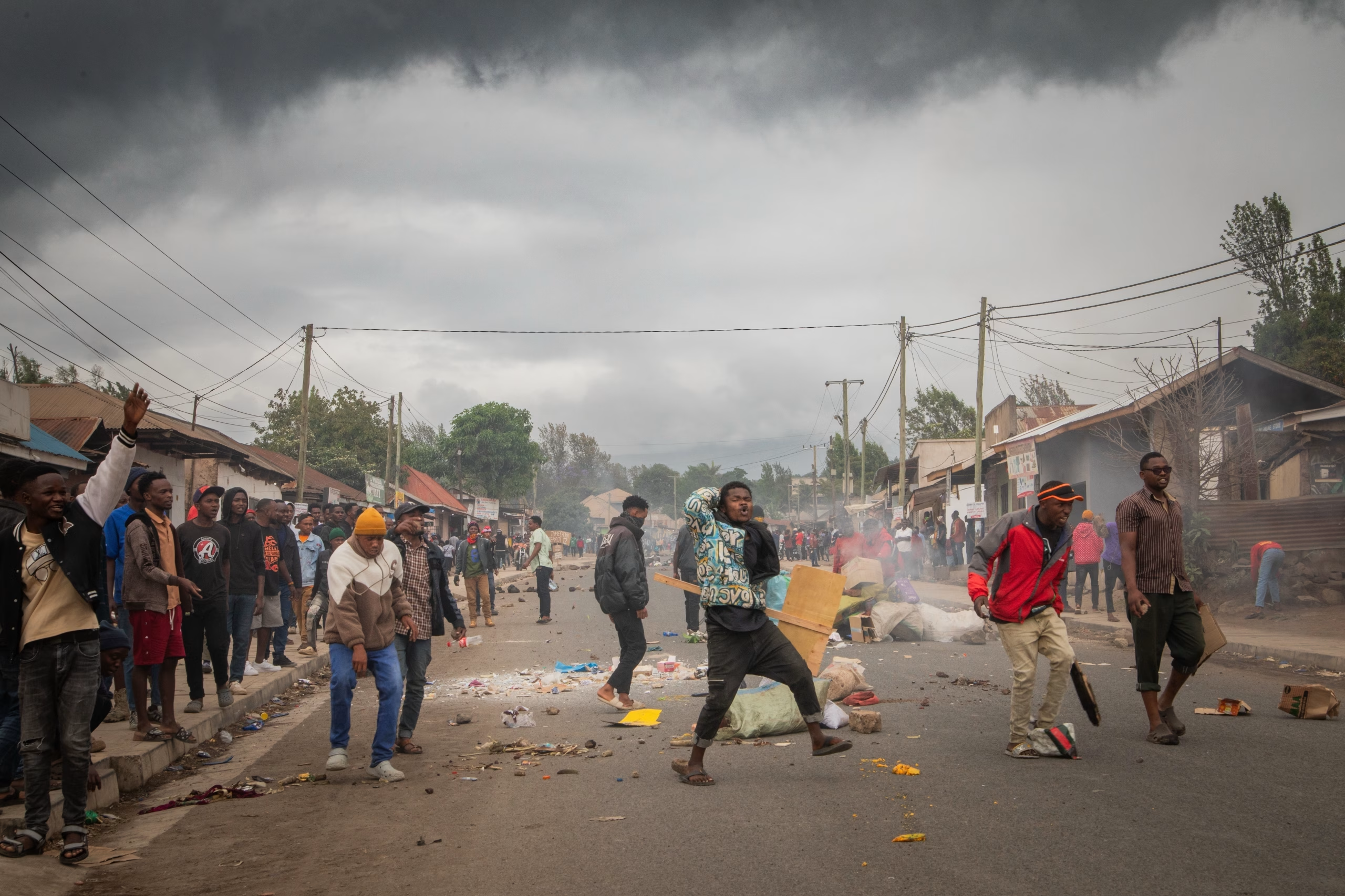
The tension is so thick in the streets of my hometown Dar es Salaam, Tanzania’s largest city that it can be cut with a knife. Tuesday marked Tanganyika’s Independence Day, which coincided with International Anti-Corruption Day. Yet instead of celebrating 62 years of nationhood with pride, unity, and joy, official festivities were cancelled. The absence of celebration mirrors our political reality.
Young people took to the streets to protest the October 29th election results, denouncing the ruling party’s successful efforts to exclude opposition candidates from the ballot. Hundreds of these young protestors lost their lives in the days that followed, while the police detained leaders of the opposition party for a week.
I understand the frustration of these young people, who are willing to put their lives on the line in protest. Their anger has deep roots: shrinking economic opportunities, distant and unaccountable public institutions, and civic spaces that have steadily narrowed. These conditions are connected by one thing: corruption. Years of sweetheart deals for the politically connected have left people poorer, disillusioned and angry.
Tanzania is not unique. Globally, young people have mobilized to confront governance failures, often at immense personal risk. From Morocco to Peru, Madagascar to Nepal, and Indonesia to Serbia, young people are organizing and calling out corruption. Yet I see these protests not as a threat, but as a democratic signal. When young people take to the streets, governments need to listen.
Young people are calling for transparencyAccording to OGP’s Articles of Governance, transparency occurs when “government-held information (including on activities and decisions) is open, comprehensive, timely, freely available to the public,... More, inclusionOGP participating governments are working to create governments that truly serve all people. Commitments in this area may address persons with disabilities, women and girls, lesbian, gay, bisexual, tr... More, dignity, and genuine public agency. To meet this moment, governments can apply three lessons to respond to public outrage and meaningfully counter corruption.
Take Youth Protests Seriously
Globally, youth-led mobilizations are using a blend of digital tools with street protest. Understanding this trend is key to channeling the energyEnsuring universal access to sustainable, dependable, and affordable energy is critical to every aspect of prosperity. Increasing public oversight and transparency in the energy sector can help to ens... More of the streets into public policies that invest in the future.
Consider Morocco. A Discord server launched by four young people became a community of more than 250,000 within weeks. What began as online conversations about inequality and allegations of corruption morphed into coordinated offline mobilization on a massive scale. These real-world demonstrations fed back into the internet through campaigns on TikTok, Instagram, and WhatsApp to expose wrongdoing and spread the message further. These strategies do not exist in isolation: the groundswell of youthRecognizing that investing in youth means investing in a better future, OGP participating governments are creating meaningful opportunities for youth to participate in government processes. Technical ... More support in Morocco drew on lessons from actions taken in Nepal, Madagascar, and Peru.
The government listened. Following the protests, Morocco introduced reforms to expand political participation and improved social services. This is a powerful reminder of what is possible when governments treat youth-driven digital spaces as a source of insight for inclusive governance.
Build Online Spaces for Public Participation
Young people are building their own civic spaces online to fight corruption because existing channels feel closed. This is a gap that governments can fill by creating new, credible spaces to build public trust among young people. One way to do this is through civic technology.
Civic technology helps people actively participate in public decisions, such as by accessing open dataBy opening up data and making it sharable and reusable, governments can enable informed debate, better decision making, and the development of innovative new services. Technical specifications: Polici..., tracking public spending, or contributing to policy design. Through my work at the Open Government PartnershipThe Open Government Partnership (OGP) is a multi-stakeholder initiative focused on improving government transparency, ensuring opportunities for citizen participation in public matters, and strengthen... More (OGP), I see governments experimenting with civic technology to rebuild trust with young people.
Take Kaduna State in Nigeria. For years, young people were excluded from decisions regarding public contracts. Now, the state has adopted a digital standard to disclose this information, which will help the public track how government funds are spent. Crucially, officials invited young people to help design how the data would be presented, which will make it clearer and easier to analyze.
When governments release high-quality, user-friendly data on budgets, contracts, and spending, they invite citizens to follow the money, identify corruption risks, and help repair institutions that have frayed over time. Most importantly, they send a signal: we see you, we hear you, and we are willing to share power.
Invest in Collaborative Policy-Making
Finally, governments must be willing to collaborate with young people as real partners in policy-making.
Ukraine offers a model. The cities of Zviahel and Orzhytsia will work together to launch training programs to involve young people in the budgeting process for the cities’ schools. In Zviahel, the government will train teachers and students on how the budgeting process works, with an emphasis on including the voices of youth with special needs. In Orzhytsia, the city will create a digital platform for students to propose and vote on projects to improve their schools. These initiatives have the potential to empower young people to not only shape how public school funds are allocated, but also to encourage them to stay engaged in monitoring how funds are actually spent.
When governments give youth a seat at the table, young people can shape policies that respond to people’s actual needs.
Democracy Requires Listening
As I look towards 2026, I am hopeful that young people in Tanzania and across the world will live in societies that increasingly listen to them, and that my country will celebrate the next Independence Day knowing that real, positive change has been enacted. Because when young people are ignored, they seek to create change outside the system. But when they are heard, they strengthen the very foundations of democracy.
International Anti-Corruption Day is a call for leaders everywhere to work with young people to fight corruption and foster real reform. Young people are already leading the way. Will governments follow?
No comments yet
Related Content
 Insights
 The Youth Participation Crisis
Young people are redefining how democracy works—shifting from traditional political engagement to new forms of activism, grassroots organizing, and digital mobilization. Learn how the open government community can help support…

OGP Youth Collective
Learn how young leaders can meaningfully shape open government reforms, connect with peers, and engage directly with the OGP community through the OGP Youth Collective.

Open Governance Can Channel Youth Protests into Future-Proofed Systems
Learn how governments can engage young people in governance and build better decision-making systems from OGP's partners at Accountability Lab.
Leave a Reply