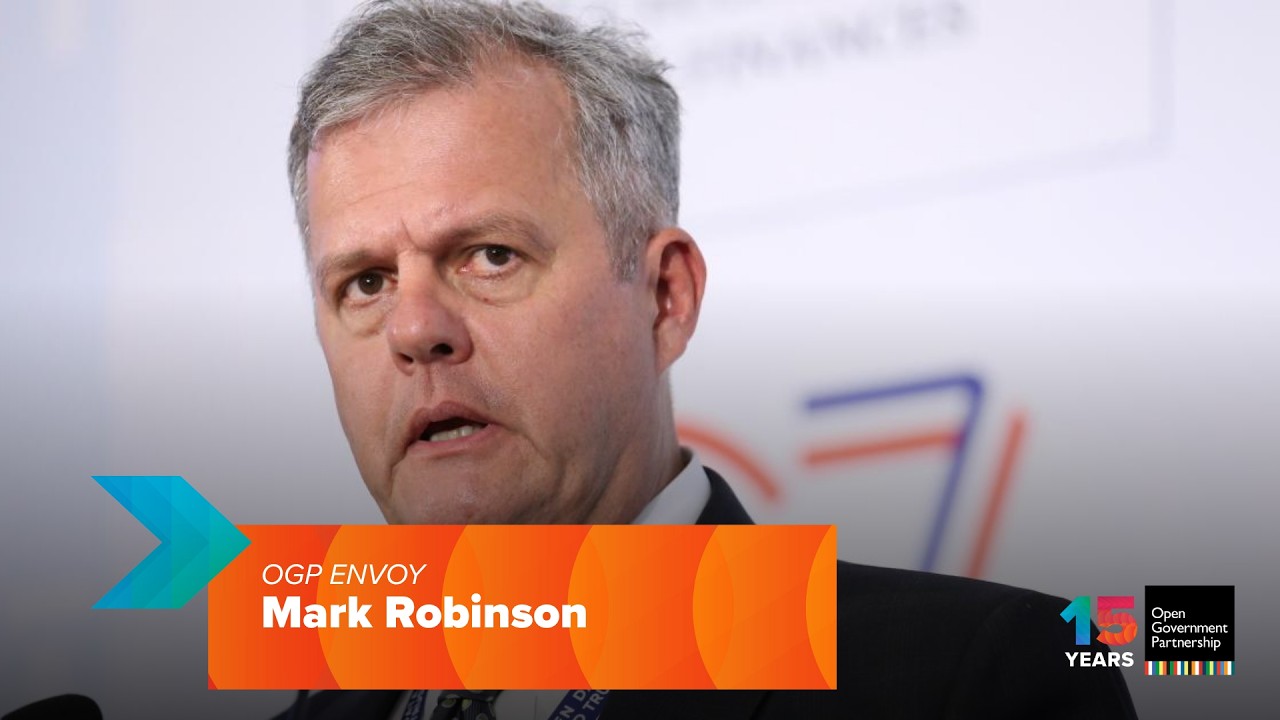
Mark Robinson: Why Open Government Matters More Than Ever
Fifteen years ago, the Open Government Partnership (OGP) began with a simple but bold idea: governments work better when they are transparent, accountable, and open to citizen participation. What started with eight founding countries has grown into a global movement of 73 countries, more than 135 local governments, and thousands of civil society organizations working together to make governments more open. Over that time, they have co-created thousands of reforms that strengthened right to information laws, opened up public spending and company ownership, expanded inclusive participation, and more.
OGP’s 15th anniversary arrives at a pivotal moment. Democracies worldwide are grappling with declining trust, polarization, and increasingly complex challenges. Open Government is not just more relevant; it is more necessary than ever. This milestone is both a recognition of what has been built and a call to go further, scaling ambitious reforms, strengthening democratic institutions, and advancing solutions on issues such as digital governance, civic space, economic transparency, and public service delivery. Learn more.
Mark Robinson: Why Open Government Matters More Than Ever
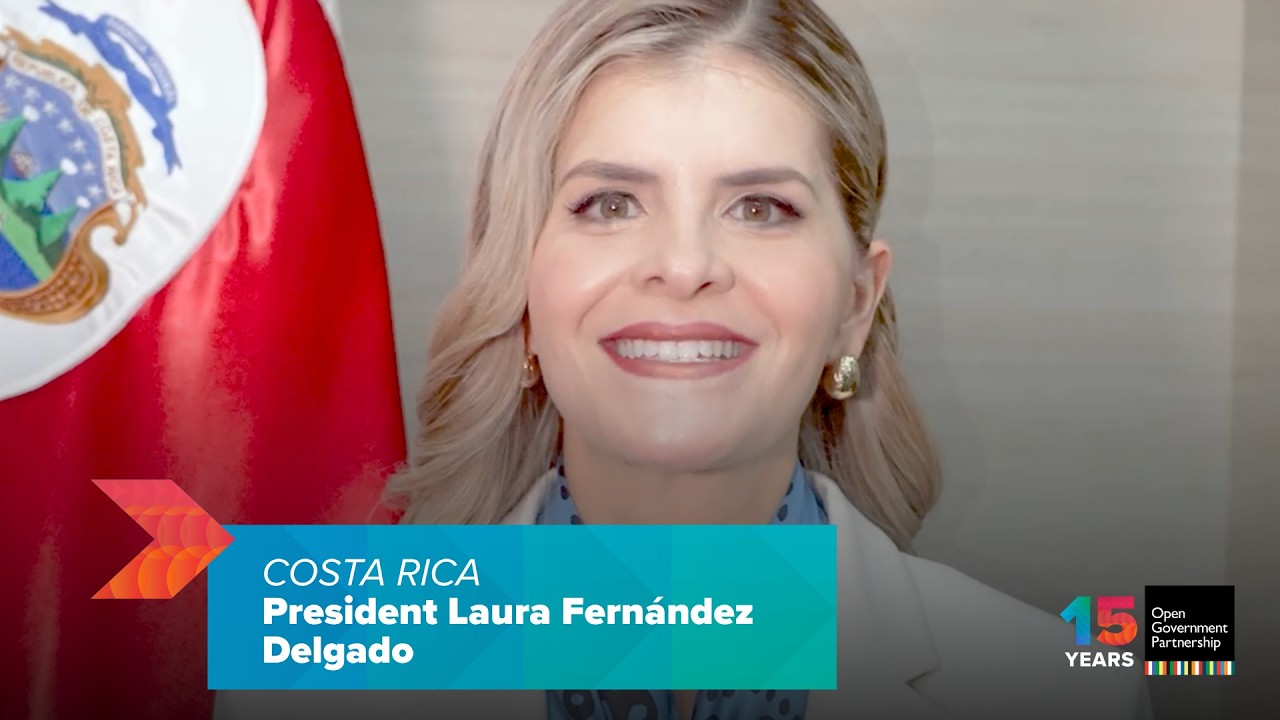
President of Costa Rica: Open government for better public services
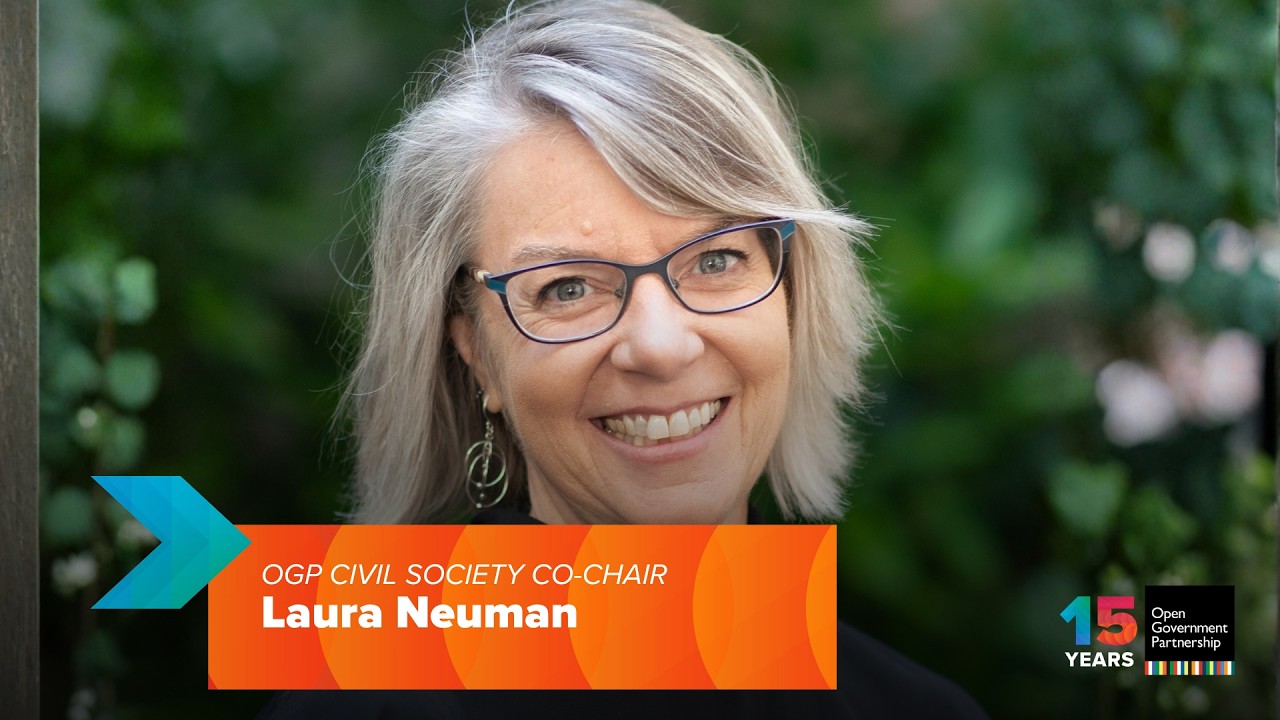
Laura Neuman: From 15 Years of Progress to the Next Chapter
Over the course of 15 years, OGP has helped define how open governments can and should work. Since 2011, members have delivered meaningful policy and institutional change. In that time, OGP has evolved as a platform for generating reforms that drive tangible outcomes, like expanding civil society participation in policy-making and improving public services, government responsiveness, and resource allocation.
This publication celebrates the hard work of political champions, public servants, civil society reformers, and partners. It also reflects the Partnership’s resilience in advancing open government reforms in the past 15 years. This milestone is both a recognition of what has been built and a call to go further by scaling ambitious reforms.
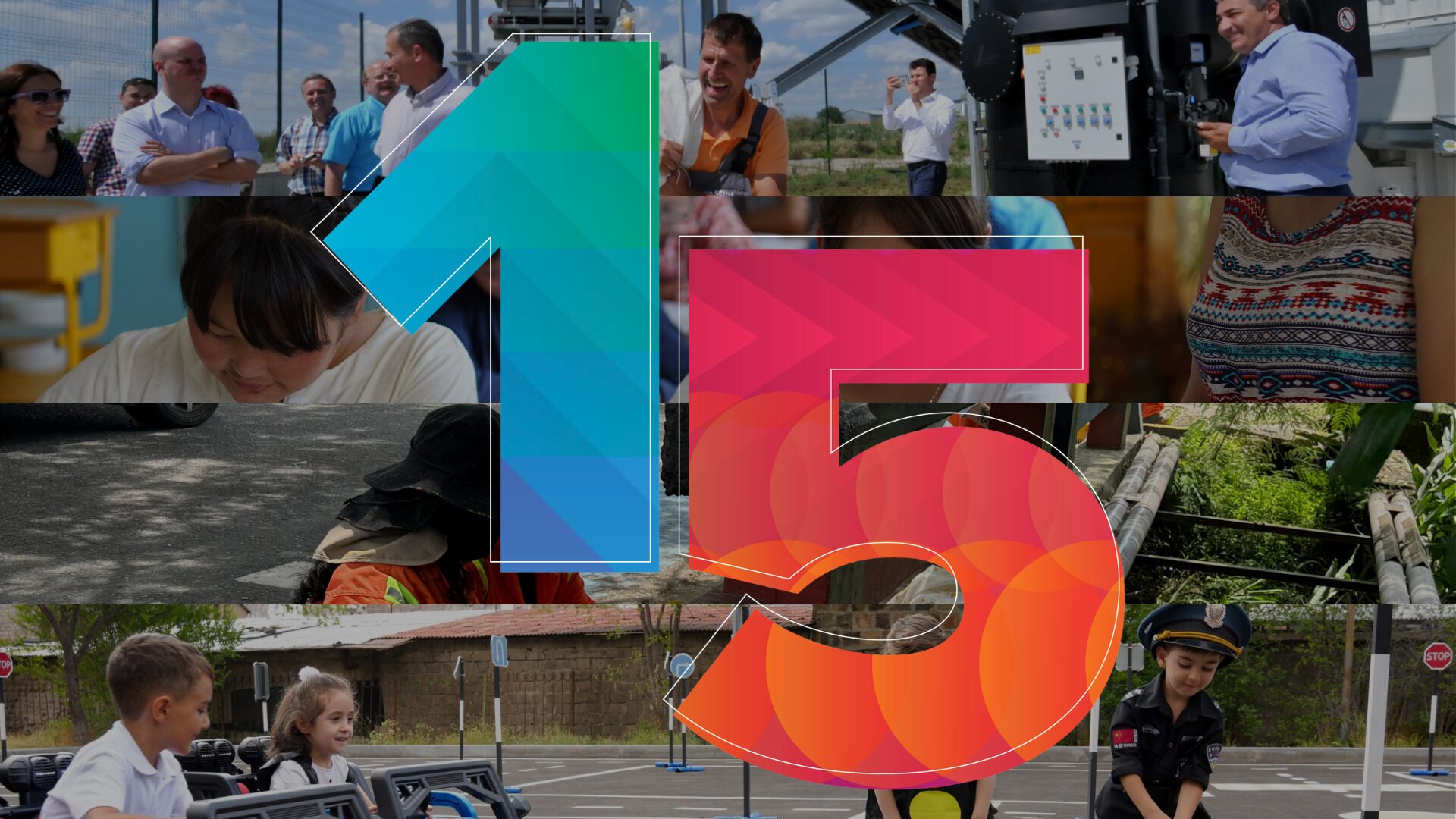
Explore 15 years of open government in practice through stories from across policy areas and issues. Discover how governments, civil society, and reformers have worked together through OGP to turn ambitious ideas into meaningful reforms, and the results these efforts have delivered for people and communities.
Hear from OGP’s CEO, Ambassadors, and other leaders as they reflect on the Partnership’s journey over the past 15 years. Explore their perspectives on the progress made, the challenges facing open government today, and the role OGP can play in shaping more open and accountable governance in the years ahead.
The work of open government is far from finished. Explore resources, updated frameworks, and practical tools designed to help reformers build on the progress of the past 15 years, tackle emerging challenges, and advance open government reforms for the next generation. Together, these resources can help build more open, prosperous, and resilient societies.
What should open government deliver over the next year?
As OGP marks its 15th anniversary, the Government of the United Kingdom and Laura Neuman, OGP’s new Co-Chairs, have set out a shared agenda focused on turning open government commitments into practical reforms and lasting outcomes.
Their five strategic priorities are:
🔹 Strengthen civic space by protecting the conditions for civil society and communities to organise, speak out and participate in public life.
🔹 Deepen public participation by giving people and communities a stronger role in shaping the decisions and services that affect them.
🔹 Advance information integrity by improving access to reliable information and promoting responsible approaches to AI and digital governance.
🔹 Tackle corruption and illicit finance through stronger transparency, information sharing and civil society engagement.
🔹 Renew the Partnership by strengthening member leadership, driving implementation and growing OGP’s membership.
Together, these priorities set out a vision for an OGP that is more focused on action, implementation and tangible outcomes.
Read the full OGP Co-Chair Agenda 2026-2027, link in bio.
#OGP15 #OpenGovernment #CivicSpace #PublicParticipation #InformationIntegrity

In Mongolia, opening up public contracts is giving citizens a clearer view of how public money is spent in one of the country’s most important sectors.
From thousands of tenders published online to public hearings in mining regions, greater transparency is making it easier to follow contracts, ask questions, and track whether promises are delivered.
Filmed and edited by @shiokhidasheli
Produced by @shiokhidasheli and @tamara_jobava
Scripted by @tamara_jobava and Christina Socci
Two September newsletters, two ways to catch up with the OGP community.
📩 From our anniversary roundtable in New York to reflections from leaders across the OGP community, the 𝐎𝐆𝐏 𝐃𝐢𝐠𝐞𝐬𝐭 special edition looks at 15 years of progress and what comes next. It brings together stories, voices and evidence from across the Partnership, including how open government reforms have translated into concrete changes in countries around the world.
📩 The 𝐋𝐨𝐜𝐚𝐥 𝐑𝐨𝐮𝐧𝐝𝐮𝐩 highlights recent work from OGP Local members, including a message from John Swinney, First Minister of Scotland, on Scotland’s experience and the role of collaboration in strengthening open government.
Read both September editions and catch up on the latest from across the OGP community.
OGP Digest: https://mailchi.mp/opengovpartnership/ogp-digest-september-2026
Local Roundup: https://mailchi.mp/c74a25618108/local-roundup-september-2026
Older people bring knowledge, experience, and strong connections to their communities. Yet too often, participation and public policy still approach aging primarily through a welfare lens.
How can local governments move beyond this model and create meaningful opportunities for older people to shape the policies, services, and communities they belong to?
Join us for the next OGP Local Circle on Inclusion to explore how local governments are putting this approach into practice.
📅 October 8, 2026
🕘 16:00 CEST / 11:00 GMT-3
Together, we`ll discuss how to:
🟠 Strengthen older people`s participation through inclusive and accessible participatory processes.
🟠 Advance digital inclusion to support access to services, information, and civic participation.
🟠 Build collaborative responses to loneliness through knowledge-sharing and cross-sector cooperation.
🟠 Co-design solutions with older people, drawing on their experience, knowledge, and ideas.
The session will feature real-life examples from the cities of Leova, @khmelnytskamiskarada, and the @@gobaragon .
Link to register in the bio.
#OGPLocal #Inclusion
Today marks the start of a new term for the OGP Steering Committee.
As we celebrate 15 years of OGP, we’re welcoming new voices to help shape the next chapter of the Partnership.
🇨🇦 🇿🇦 Welcome to the governments of Canada and South Africa as new members of the Steering Committee!
And congratulations to our re-elected members, the Government of Spain and Zukiswa Kota.
As we look to the next 15 years, we look forward to working with the Steering Committee to strengthen political leadership for open government and turn our shared commitments into action.
@tbs_sct @thedpsa_za
“Ultimately it is up to all of us.”
Keeping open government moving forward takes all of us: national and local governments, civil society, donors and partners working together to turn transparency, accountability and public participation into meaningful change.
Laura Neuman has been part of OGP’s journey from the beginning. When OGP launched 15 years ago, she was working with @thecartercenter to advance the right of access to information. She became one of OGP’s early civil society representatives, partnering with the government of Mexico to lead the Access to Information Working Group.
Today, Laura takes on a new role as OGP Civil Society Co-Chair for 2026–27, alongside the UK government.
Looking ahead, her ambition is clear: move from declarations to action, from commitments to tangible outcomes, and from short-term gains to long-term, scalable impacts that improve people’s lives.
Welcome, Laura. We look forward to the next chapter of OGP.
#OGP15
Today, we’re saying thank you to the Government of Kenya and @blairglencorse as they conclude their time on the OGP Steering Committee.
Both played a leading role in guiding OGP as Co-Chairs in 2023–2024, helping strengthen political support for the Partnership, advance its action-oriented agenda, shape OGP`s 2023–2028 strategy and champion new areas of work, including digital governance and youth engagement.
Since then, they have continued to contribute to the Steering Committee and the wider OGP community. In 2025, Kenya hosted the OGP Africa & Middle East Regional Meeting, bringing together more than 350 participants in Nairobi.
Thank you, Kenya and Blair, for your leadership, commitment and friendship over the years.
#OGP15 #OpenGov
The Open Gov Challenge is evolving!
As the policy landscape changes, we’re updating the Open Gov Challenge to ensure ambition keeps pace with new developments and create space for new areas of action in open government.
Here’s what’s changing:
🔹The Challenge scope is being updated
Each policy area has been refreshed to reflect a changing policy context and create space for ambitious commitments.
🔹 Challenge eligibility will be assessed automatically
Every commitment submitted to OGP will now be assessed for Open Gov Challenge eligibility. We’ll let you know if it is eligible, nothing else for you to do!
🔹 A new OGP benchmarking initiative
We’re launching a benchmarking initiative to measure how well members are implementing different areas of the Open Gov Challenge using third-party indicators. The data will be published on a rolling basis over the coming months.
More ambition. New directions. A simpler way to participate.
Learn more about the updated Open Gov Challenge and what it means for your next commitment, link in bio.
#OpenGovChallenge