OGP has worked to engage political leaders, line ministries, and public servants from different branches and levels of government to mainstream open government in the culture and practices of governments. OGP defines “mainstreaming” in four ways.
- Institutionalizing collaboration: Administrative, executive, or legal instruments to ensure continuity of open government and OGP commitments across political cycles.
- Meaningful dialogue: Civil society’s ability to meaningfully shape and influence policy through the OGP action plan.
- Open state reforms: Open government practices are adopted, replicated, and scaled beyond executive offices to legislatures, courts, and local governments—ensuring vertical integration and taking a more systemic approach to reforms.
- Local-level impact: OGP reforms at the local level help members of the public and civil society shape policies and improve public services in their day-to-day lives.
Reformers have used OGP’s action framework to ground reforms in structural change, leading to policy, practice, and resources dedicated to making government more open and collaborative. Beyond these tangible mechanisms, OGP also influences the relational conditions for reform: its global visibility, cross-country coalitions, and learning sharpen political incentives and legitimacy for reformers to take action.
MAINSTREAMING AREAS
Institutionalizing Collaboration
Meaningful Dialogue
Open State Reforms
Local Open Government
OGP has helped embed open government practices to ensure that open government reforms have continuity through political transitions.
Seventy-five percent of the Partnership has institutionalized OGP (51 out of 68 countries1), meaning they have administrative, executive, or legal instruments that ensure continuity of open government principles and practices. In a majority of these OGP countries (46 out of 51), the multi-stakeholder forum was institutionalized.
1 Thailand, Benin, Timor Leste, and Zambia have not yet produced action plans or have do not yet an an IRM report.
Learn more
Political engagement: In Armenia and the Philippines, the OGP Support Unit team directly engaged with high-level and working-level government officials at the Prime Minister’s office to advocate for institutionalized mechanisms of collaboration between government and civil society. The OGP Support Unit team also actively supported strategic planning in the Philippines to ensure sustainability of activities of the incoming Program Management Office following the presidential elections in 2022.
Peer exchange: The inspiration for Spain’s multi-stakeholder forum came when the Spanish government point of contact attended the 2016 OGP Global Summit in Paris. Upon returning to Spain, the point of contact’s team began establishing a multi-stakeholder forum. IRM recommendations were taken into account, and by bringing together key CSOs and the network of autonomous communities, Spain co-created its third action plan and included a commitment to establish a formal multi-stakeholder forum.
SPAIN
Spain’s journey in OGP has significantly evolved from initial distrust towards a more constructive, formalized dialogue between government and civil society. Early participation was limited, as the government viewed OGP as an administrative modernization initiative while civil society struggled to engage meaningfully. Over time, pressure from active CSOs, lessons from the IRM, and international exchanges steered Spain toward deeper collaboration. By the third action plan, Spain had established government institutions to oversee the OGP process, formalize collaboration between territorial administrations on open government reform, and establish the Open Government Forum. The government order that established the forum also provided the first legal basis for the OGP process to formalize government-civil society dialogue. These changes have contributed to shifts in the perception of open government from something ad-hoc and technical to an institutionalized practice. This was further reinforced by the passage of Spain’s first Open Parliament Action Plan by the Congress of Deputies in 2025.
BRAZIL
The combination of a strong institutional mandate and political leadership ensures the sustainability of open government reform. In Brazil, the (CGU) brings a strong historical mandate as well as political leadership in monitoring and encouraging the implementation of the commitments. This has helped navigate changes across multiple political transitions and secured results in its latest action plan. In the Philippines, OGP was institutionalized through an executive order, with dedicated financial resources and staffing through the PH-OGP Program Management Office. The Philippine National Development Plan also noted OGP as a key platform for participatory governance for national development priorities. This institutionalization gives the OGP platform a permanent regulatory basis in the Philippines, somewhat shielding it from future changes in administration.
ARMENIA
For over a decade, OGP has helped transform government-civil society relations in Armenia into a culture of long-term collaboration. This spirit of co-creation culminated in late 2024, with the establishment of a Participatory Governance Department within the Prime Minister’s Office, led by the Chief of Staff and the OGP high-level point of contact. The department will oversee OGP, public engagement, civic space, whistleblowing, and anti-corruption, embedding open government at the center of Armenia’s policy-making.
FRANCE
France’s new Open Forum (which serves as its multi-stakeholder forum) is anchored in the Economic, Social, and Environmental Council (CESE), its third constitutional assembly alongside the National Assembly and the Senate. The OGP Support Unit actively supported the institutionalization of this multi-stakeholder forum at the highest level.
Evidence shows that when government and civil society work together, reforms are more ambitious, better implemented, and deliver stronger results. OGP’s participation and co-creation standards set clear and measurable minimum requirements on how governments should engage civil society. Over the course of the last two action plans, the vast majority of OGP countries strengthened the space for dialogue, conducted wider outreach to encourage active public participation, and provided feedback on how stakeholder inputs were incorporated in the development and implementation of their action plans. OGP countries have also seen a growth in the number of actors formally engaging in the OGP process.
Multi-stakeholder forums: Over 80 percent of OGP countries (59 out of 73) now have multi-stakeholder forums, compared to just over 50 percent (27 out of 50) in 2017 and 2018.
Improving dialogue: 71 percent of OGP countries (50 out of 70) improved in the way the government engaged civil society in developing or implementing their latest OGP action plan.
New actors: From a stakeholder survey conducted in 2025, roughly 60 percent of OGP countries (32 out of 52) saw new actors formally engaging in the OGP process.
Learn more
Accountability and learning: The IRM provides regular and detailed assessments of every action plan cycle in a country, with targeted recommendations on how to improve and meet OGP’s co-creation and participation standards. These assessments were used by civil society to advocate for improvements in OGP’s co-creation processes for the next action plan cycle.
Peer exchange: The OGP Support Unit convened a timely peer exchange between Peru, Guatemala, and the Dominican Republic, enabling the first two to draw inspiration from Dominican Republic’s innovation co-creation practices. This resulted in Guatemala designing its most participatory co-creation for its latest action plan.
Mobilized funding: In Nigeria, Guatemala, and Colombia, the OGP Support Unit helped strengthen their respective multi-stakeholder fora and secured resources from development partners like the European Union and Ford Foundation, which helped make co-creation processes more inclusive. In Nigeria, this led to nationwide youth consultations and the integration of their inputs into the latest action plan.
NIGERIA
Nigeria’s OGP stakeholders advanced the reconstitution of the National Steering Committee, which now includes several new ministers and agency heads from the current administration. This deepened institutional understanding of OGP, strengthened multi-stakeholder coordination, and built momentum for the co-creation of the action plan. OGP supported civil society participation in this process, alongside support from the European Union.A central achievement was the conclusion of nationwide youth consultations, feeding into Nigeria’s 2025–2029 action plan. The Nigeria Youth Futures Fund, PROMAD Foundation, Socio-Economic Research and Development Center, and the OGP National Secretariat convened a validation workshop in Abuja to finalize youth inputs into the Nigeria We Want report and youth-specific commitments for the action plan. These consultations, conducted across Nigeria’s six geopolitical zones, ensured that youth aspirations were formally documented and prepared for submission to the action plan drafting committee. By institutionalizing youth voices within the national reform framework, the process strengthened political legitimacy and reinforced executive level commitment to an action plan based on people’s needs.
AMERICAS
Following a request from Peru and identifying a similar need from Guatemala to shape co-creation for their next action plan, the OGP Support Unit convened a peer exchange with the Dominican Republic to explore innovations in co-creation. Drawing from the Dominican Republic’s experience over two cycles, Guatemala explored how to build a strong multi-stakeholder forum, ensure meaningful participation, and turn public proposals into real commitments. Co-creation sessions for their seventh action plan expanded beyond the capital to 10 prioritized territories to ensure a highly participatory process. In addition, the OGP Support Unit, with resourcing from the Ford Foundation, partnered with Iniciativa Latinoamericana por los Datos Abiertos (ILDA) to engage over 10 women representing sexual diversity and feminist organizations and movements in Guatemala, introducing them to the OGP process and its inclusion and gender-focused approach.
The Americas’ co-creation processes are among the most collaborative in OGP, and commitments emerging from the region are more ambitious, better implemented, and generate more results than those of other regions. In Colombia, civil society advocated for open publication of extractive contracts and audits in health, turning them into commitments in Colombia’s action plan. In Chile, civil society used the OGP forum to push for reforms that embedded participatory mechanisms in the justice system, like public input in court transparency processes. Uruguay stands out because its forums are institutionalized across action plan cycles and CSOs are systematically engaged in agenda-setting, such as in advocating for improving people’s access to digital services and open data in the latest action plan.
CÔTE D’IVOIRE
Through the leadership of the High Authority for Good Governance, the OGP framework was used to co-create a commitment in Côte d’Ivoire’s 2022–2024 action plan with civil society, the private sector, and public institutions. Focused on strengthening the fight against corruption, this commitment led to the development, adoption, and public dissemination of the National Anti-Corruption Strategy. The OGP Support Unit ensured that civil society secured a permanent role on oversight committees responsible for community monitoring of public spending and social protection funds. OGP’s co-creation process also strengthened accountability, as clear timelines for the strategy’s development and implementation were established.
FINLAND
National dialoguesis a method jointly developed by the Finnish government, civil society and partners and streamlined through OGP action plans. The national dialogues process utilizes small group discussions to create better understanding of a topic and inform policy preparation and decision-making. For example, a Helsinki hospital used the outcomes from a dialogue involving patients and nurses to adjust service practices. This practice is now used in Latvia, with Estonia, Lithuania, Sweden, and Norway also considering expanding some pilots into national formats. The multi-stakeholder forum in each country provides a practical platform to channel the findings from the National Dialogues to policy priorities. From 2022 to date, 1,200 dialogues in Finland alone have involved 11 thousand people from ages 3 to 90 in 170 different locations.
OGP has expanded open government beyond the executive branch and helped replicate the OGP model at the local level. This whole-of-government approach, known as an “open state,” is increasing awareness of open government and improving coordination among institutions, ensuring that open government is embedded across key national and sectoral strategies and programs.
More branches implementing open government: In 2011 and 2012, 29 percent of countries involved parliament or the judiciary. By 2024 and 2025, this stood at 54 percent. Adding in local governments, 90 percent of OGP countries (66 out of 73) have involved multiple branches of government in at least one action plan to date. Parliaments and judiciaries are implementing open government commitments in countries like Spain, Morocco, Colombia, Honduras, and North Macedonia, among many others.
Replication and scaling at the local level: Open government initiatives led by the national government have been widely replicated and scaled at the local level in Spain, Chile, Germany, Estonia, Nigeria, and Morocco.
Learn more
High-level political engagement: The OGP Support Unit engaged magistrates, judges, members of parliament and heads of state to institutionalize open government reforms across branches of government across Colombia, Honduras, and North Macedonia. In North Macedonia a cabinet-level endorsement in 2025—backed by the Prime Minister and Deputy Prime Minister—put OGP at the center of government priorities and catalyzed a whole-of-government approach (executive, parliament, judiciary) to addressing open government reforms.
Global visibility: Using instruments like the Open Government Challenge and global and regional events, OGP incentivized political leaders by providing visibility and showcasing domestic and regional leadership in advancing cross-government efforts to open government. Events like América Abierta brought high-level judges together, incentivizing commitments on open justice and enabling peer exchange. OGP was also instrumental in the International Open Justice Conference which produced the Santo Domingo Declaration, a comprehensive political document that emphasizes civil society’s equal role alongside judicial institutions, recognizes OGP as a key implementation platform, and establishes a follow-up committee of four member countries to monitor progress.
Replication of the OGP model: OGP provided a structured framework through its action plans and co-creation standards that countries adapted and scaled across levels of government and sectors. Germany used the OGP framework to create “Regional Open Government Labs,” turning isolated pilots into a coordinated national model spanning 100+ municipalities.
SPAIN
Since 2016, Spain has transformed OGP from a niche agenda into a truly cross-government effort involving a wide range of institutions. The creation of the Open Government Forum brought together the 17 autonomous communities through the Sectoral Commission on Open Government, the Spanish Federation of Municipalities and Provinces, and multiple ministries all in the same space with civil society organizations and representatives from organizations working with marginalized communities. Spain’s fourth action plan marked a major shift from earlier plans, which were largely limited to national-level reforms, and shifted open government from a partisan issue to an institutionalized practice. The commitments resulted in improvements across a wide range of policy areas, including open data, open government training for civil servants, online public participation platforms, and the participation of young people in developing public policies. Notably, Castile and León developed a “normative footprint” that allows the public to trace how public feedback influenced the text of laws throughout the legislative process. Most recently, Spain’s Congress of Deputies also approved its first-ever Open Parliament action plan, embedding transparency, participation, and accountability at the legislative level.
MOROCCO
Morocco has notably been pursuing open government on three levels: a national OGP action plan, Open Parliament action plans, and a growing local government network. The government of Morocco launched the PACTO program (Support Program to Open Local Government) in 2022 to institutionalize open government at the local levels. The network, which had 66 local governments in 2023, now includes 308 local governments. The region of Tangier-Tétouan-Al Hoceima, a standout OGP Local member, recently hosted the Tétouan Forum on Participatory Democracy with 200 participants, including delegations from Morocco, Benin, Côte d’Ivoire, and Senegal, to reinforce regional cooperation around open government. Morocco also submitted its third Open Parliament action plan for 2024–2027, with new commitments on the use of artificial intelligence for efficiency, openness in parliament, and public participation in climate change policies. It has also played a leading role in establishing an Open Parliament Network across multiple African countries.
MOLDOVA
While co-creating the 2023–2025 OGP national action plan, Moldova’s State Chancellery worked with the Congress of Local Authorities from Moldova, civil society, the Council of Europe, and OGP to bring local priorities into the national agenda. The action plan linked national reforms to local implementation through training on access to information and transparency in decision-making; stronger proactive disclosure on local authority websites; wider use of particip.gov.md; public participation workshops; an online open government course; and support for CSOs to monitor local and state budgets. Moldova is also extending open government to Parliament. In 2026, Parliament-Civil Society Cooperation Day brought together hundreds of CSOs and senior parliamentary figures and helped advance parliamentary openness within Moldova’s regular OGP action plan process. This approach is feeding into local reform. Leova became Moldova’s first OGP Local member and co-created a local action plan with residents, civil society, and the diaspora, showing how OGP can shift open government from a central process into a broader open state agenda.
AMERICAS
Through instruments like the Open Gov Challenge, and high-level events such as América Abierta, OGP provided the incentives and spaces for high-level judges and magistrates from the Constitutional Court and Council of State to to underscore the judiciary’s commitment to open justice. For example, Colombia’s fifth national action plan includes specific commitments for open justice, while in Honduras, the Supreme Court formally approved an Open Justice Policy. América Abierta’s Judiciary track and the magistrates’ lunch also allowed Honduras’ Judiciary to connect and start a more intensive peer exchange with judiciaries in the Dominican Republic and Costa Rica, which will be fundamental to transfer knowledge and products directly related to the milestones of its open justice policy commitment.
NORTH MACEDONIA
North Macedonia’s sixth OGP action plan (2024–2026) includes a dedicated third Open Parliament and second Open Justice plan, making North Macedonia a pioneer in Europe for having all three branches simultaneously developing OGP plans. A cabinet meeting held in 2025 proved to be a defining moment, by placing OGP on the formal government agenda, and the Prime Minister and Deputy Prime Minister signaling that transparency and accountability are core state priorities. This cabinet-level endorsement of the OGP process elevated North Macedonia’s credibility in the international community and demonstrated that transparency, accountability, and participation are not confined to the executive branch but embraced across the whole governance system. North Macedonia’s commitment to open government is not confined to a single institution but is shared across the administration. It also created momentum for developing a national open government strategy, a longstanding need for harmonizing reform priorities, reducing fragmentation, and embedding openness across ministries and sectors. The government’s acknowledgment that such a strategy is necessary—and that OGP can serve as the framework through which it is operationalized—was a major step forward. Discussions with the Deputy Prime Minister and OGP Council reaffirmed that a strategy rooted in EU integration priorities, responsive to people’s needs, and supported by cross-institutional collaboration would help North Macedonia consolidate its leadership position and improve the consistency of reforms over time.
GERMANY
Germany’s “Regional Open Government Labs” are a national‑level initiative under its OGP action plan. The Federal Ministry of the Interior (BMI) selected regional labs where local administrations, local politicians, civil society, academia, and businesses can work together on open government projects. The initiative piloted 13 regional labs, which connected over 100 municipalities and CSOs in a network to support the design and implementation of open government initiatives. The labs have implemented 24 projects covering various policy areas, such as health, rural development, and closing the digital gap for older adults. OGP provided the formal vehicle, timeline, and reform logic that led BMI to create a structured lab model rather than isolated pilots.
ESTONIA
Estonia’s territorial reform left many municipalities struggling with limited public engagement and weak access to information at the local level. To address this, the government and e-Governance Academy used its OGP action plan to pilot open government projects in select municipalities, later expanding the approach through national action plans, workshops, and capacity-building programs. Since 2021, the Ministry of Finance has published an annual mapping of public service levels in all municipalities on the platform http://www.minuomavalitsus.ee, including on open governance. The data shows that municipalities with open government action plans rose from six to 22 from 2018 to 2022. In 2025, 62 percent of these municipalities had completed their open government activities in 2025. Municipalities practicing participatory budgeting also grew from 18 to 43 between 2018 and 2025.
JALISCO, MEXICO
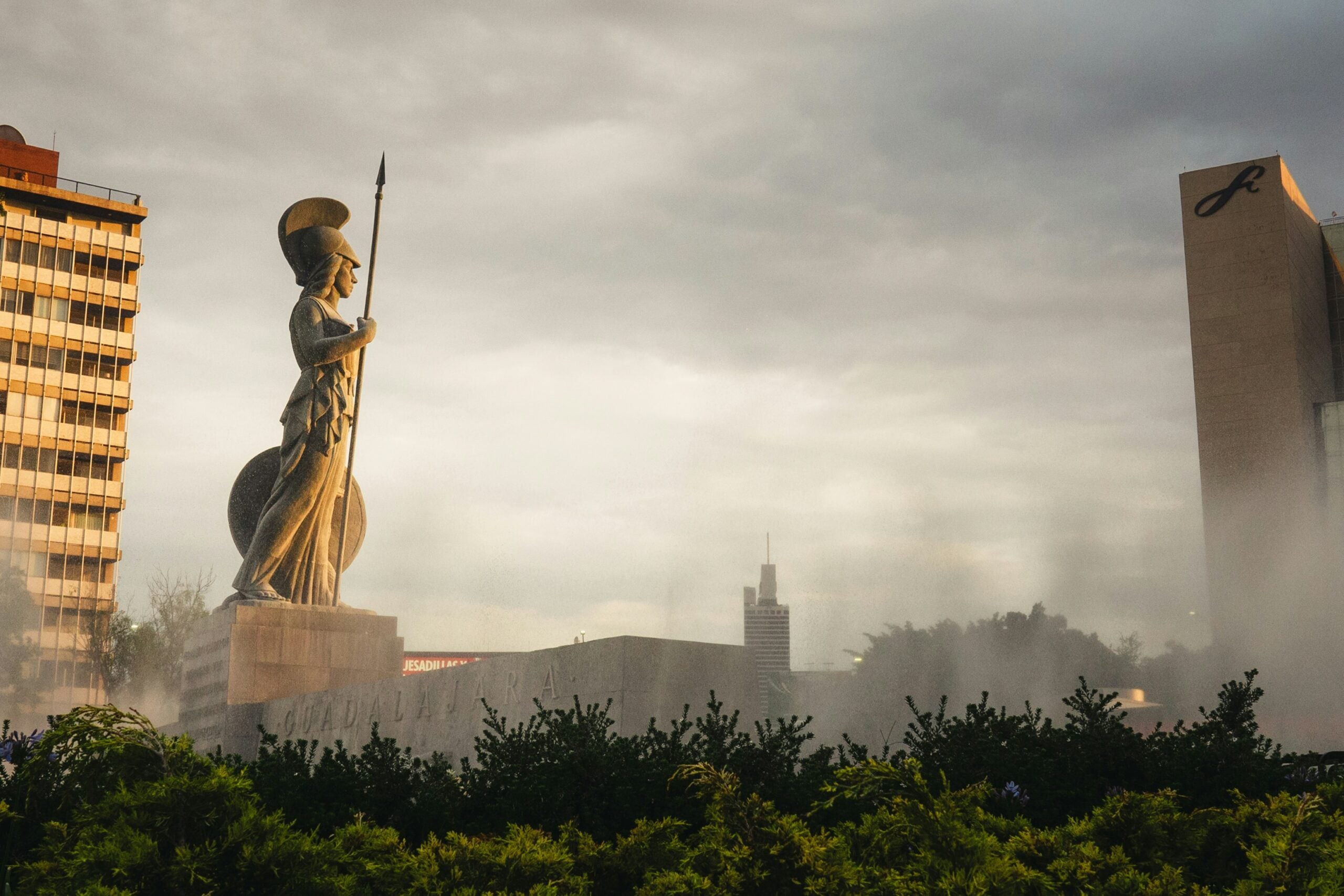
Jalisco (Mexico) transformed open government from an executive-led initiative into a coordinated state governance model involving the executive, legislative, and judicial branches, with civil society as a permanent co-creator—an uncommon approach among subnational OGP members. This model strengthened accountability, policy continuity, and shared responsibility while reducing institutional silos, resulting in more accessible and participatory interactions across government functions. Members of the public now benefit from easier participation in law-making, clearer judicial information through plain-language rulings, more transparent social program rules, and expanded opportunities to influence public decisions. Together, these efforts advanced SDG 16 through a unified governance agenda rather than fragmented reforms.
Local governments have enthusiastically engaged in OGP since its inception, using open government approaches to directly engage with people to solve everyday challenges from climate change, economic inequality, housing, and energy crises.
Exponential growth of OGP Local: Since its launch in 2016 with just 15 pioneer jurisdictions, OGP Local has grown nine-fold to 136 members by 2026—bringing together 133 individual local governments and three consortia of local governments. Fifty-four locals have multi-stakeholder forums, and at least 19 of them have institutionalized these spaces for dialogue and open government processes through decrees, ordinances, regulations, memoranda of understanding, association agreements, and framework agreements. Public participation, public service delivery, and inclusion are the most popular themes in OGP Local commitments, many of which have led to real change in the lives of communities.
Locally-led commitments in national action plans: National and local governments have also worked together to solve difficult problems. Most national OGP members have included reforms that affect local jurisdictions, with 126 commitments driven directly by local governments. These commitments are more ambitious than those led by national governments (51 percent versus 41 percent) and more likely to show early results (23 percent versus 14 percent).
Learn more
Replicating the OGP model: Local members innovated not only in policy content but in process design—tailoring multi-stakeholder spaces for dialogue, expanding the diversity of civil society partners, and embedding inclusion into consultation processes. In Plateau State (Nigeria), the OGP Local process led to a multi‑stakeholder steering committee and thematic government‑CSO groups that not only designed the Gender and Equal Opportunities Commission, but stayed involved as it began handling rights violations and mainstreaming gender into state policies. The same OGP platform was used to keep reforms politically visible, most notably through a televised gubernatorial debate where all candidates publicly committed to continue OGP‑backed efforts, helping civil society secure continuity for the commission’s work.
Global visibility: OGP’s summits and regional meetings have become crucial avenues for local leaders to showcase local government reforms at the global stage. Over the past five years, 10 local governments received open government awards for their innovations in open government. Close to 40 percent of high-level local leaders from OGP Local governments participated in OGP’s global and regional summits in the past five years.
Peer exchange: The OGP Local Circles are a community of practice that bring together the experiences of local governments to share significant challenges, promising innovations, and practical lessons in implementing climate action, the Sustainable Development Goals, inclusion, artificial intelligence, and anti-corruption. Lisbon (Portugal), Goiás (Brazil), Peñalolén (Chile), and OGP’s strategic partners recently exchanged lessons on integrity reforms, procurement oversight, and anti-corruption strategies, while Buenos Aires (Argentina), Bogotá (Colombia), and Athens (Greece) shared how AI is being used to improve public services and public engagement.
OGP Local Commitments
GLASGOW, UNITED KINGDOM
In Glasgow (United Kingdom), residents frustrated by neglected parks and infrastructure found a solution through a participatory budgeting commitment in OGP. The city gave its 23 Area Partnership committees, which unite government and community representatives, direct control over GBP 1 million each from the Neighborhood Infrastructure Improvement Fund. In 2023, two wards piloted the model, generating 760 resident proposals in just three weeks—from better drainage to safer playgrounds—with nearly 1,000 locals voting on priorities. One winning idea transformed a struggling park into a safe play area for children, alongside 40 other community-selected improvements. Recognized with a 2023 Open Government Award, the initiative has since spread to other wards, showing how community voices can be channeled into tangible improvements and stronger trust in local government.
PLATEAU STATE, NIGERIA
In Plateau State (Nigeria), weak enforcement of gender rights laws left women and girls vulnerable—until the creation of the Gender and Equal Opportunities Commission. Born from the state’s first OGP action plan and backed by cross-party commitments during televised gubernatorial debates, the commission launched in 2023 with a mandate to enforce the 2015 Gender and Equal Opportunities Law. In just over a year, it has tackled 23 rights violations, repatriated nearly 100 trafficked children, and begun embedding gender perspectives into the state’s development strategy.
SANTO DOMINGO DE LOS TSÁCHILAS, ECUADOR
In Santo Domingo de los Tsáchilas (Ecuador), members of the public are helping fight deforestation through a co-created platform that manages over 100 environmental threats and 200,000 reforestation requests. The platform brings together the provincial government, communities, and environmental organizations around a digital system for monitoring and reforestation. Through this tool, more than one hundred types of environmental threats and hundreds of thousands of requests for the reforestation of native species are managed, speeding up procedures and directing institutional responses to the most critical areas. The OGP commitment has helped generate open data on the forest inventory, strengthen public policy on reforestation, and educate the population through campaigns and sanctions on polluting actors, which is already translating into greater public participation and better territorial control. Members of the public and environmental defenders use the system to report tree felling, pollution, and other damage, turning each report into input for more transparent and effective decisions about the province’s environmental future.
BANGGAI REGENCY, INDONESIA
Banggai Regency (Indonesia) has transformed maternal health by co-creating a mobile app that allows health workers to monitor pregnant women in real time and ensure they receive minimum standard services. Since the app’s launch, three-quarters of pregnant women in Banggai now access essential health services more easily, including remote consultations and rapid emergency referrals. The digital platform has expanded coverage from two to four health center areas and opened up 24/7 access to information and services, reducing barriers created by distance and COVID-19 restrictions. By targeting high‑risk pregnancies and integrating ambulance dispatch, the system contributes to lowering maternal and infant mortality and has been recognized nationally as a top regional health innovation.
MADRID, SPAIN
Madrid (Spain) has used its membership in OGP Local to root open government principles in its local administrative culture. The first action plan (2016–2017) produced important reforms, including participatory budgeting through Decide Madrid and a mandatory lobbying register for the Madrid City Council, eight years before the national government’s own proposals for a lobbying register. The number of registered lobbyists has increased from 50 in January 2018 to 1,120 by July 2025, showing a consolidation of the process. Successive plans have included measures such as the creation of a complaints mailbox,“Madrid in Data”, the creation of a dashboard for open government commitments, the improvement of Decide Madrid, and the promotion of community actions for a healthier city.
Commitments led by OGP Local members in National Action Plans
CASTILE AND LEÓN, SPAIN
In Castile and León (Spain), members of the public could comment on draft laws, but there was no clear way to see how proposals evolved or whether public input actually changed the final text, which fueled perceptions of a closed, insider‑driven legislative process. The regional government responded by creating a “huella normativa” section on its open government portal that publishes, within specific deadlines, the key documents, reports, and comments generated at each stage of drafting binding norms in an open data format. This effectively turns each law’s journey into a publicly traceable dossier where people can follow who said what, when, and how the administration reacted. The reform is a flagship measure to deepen transparency, reduce regulatory opacity, and make participation feel consequential rather than symbolic.
BERLIN AND SCHLESWIG-HOLSTEIN, GERMANY
Berlin and Schleswig‑Holstein (Germany) both identified that simply putting data online was not enough: budget numbers and other information were technically online, but too scattered and inconsistent for people to find, compare, or combine easily. Both local governments developed common semantics for budget data, ensuring that numbers “speak” the same language and can be compared or visualized together as if they were one coherent dataset. Berlin responded by overhauling its biennial budget into high‑quality Linked Open Data, building new infrastructure, defining a shared vocabulary, and assigning stable identifiers so that each budget line can be automatically linked to other datasets and reused across government and civic tech projects. Schleswig‑Holstein went a step further and started adding similar rich descriptions and standard labels to the data it already publishes, and set up an online service where anyone can “ask questions” across all these datasets at once instead of downloading separate files and stitching them together. As a result, what used to be isolated files now forms part of an interconnected data infrastructure that strengthens financial transparency, lowers the barrier for new open‑data services, and lays the groundwork for other German administrations to follow.