
Open Government Journey
Introduction
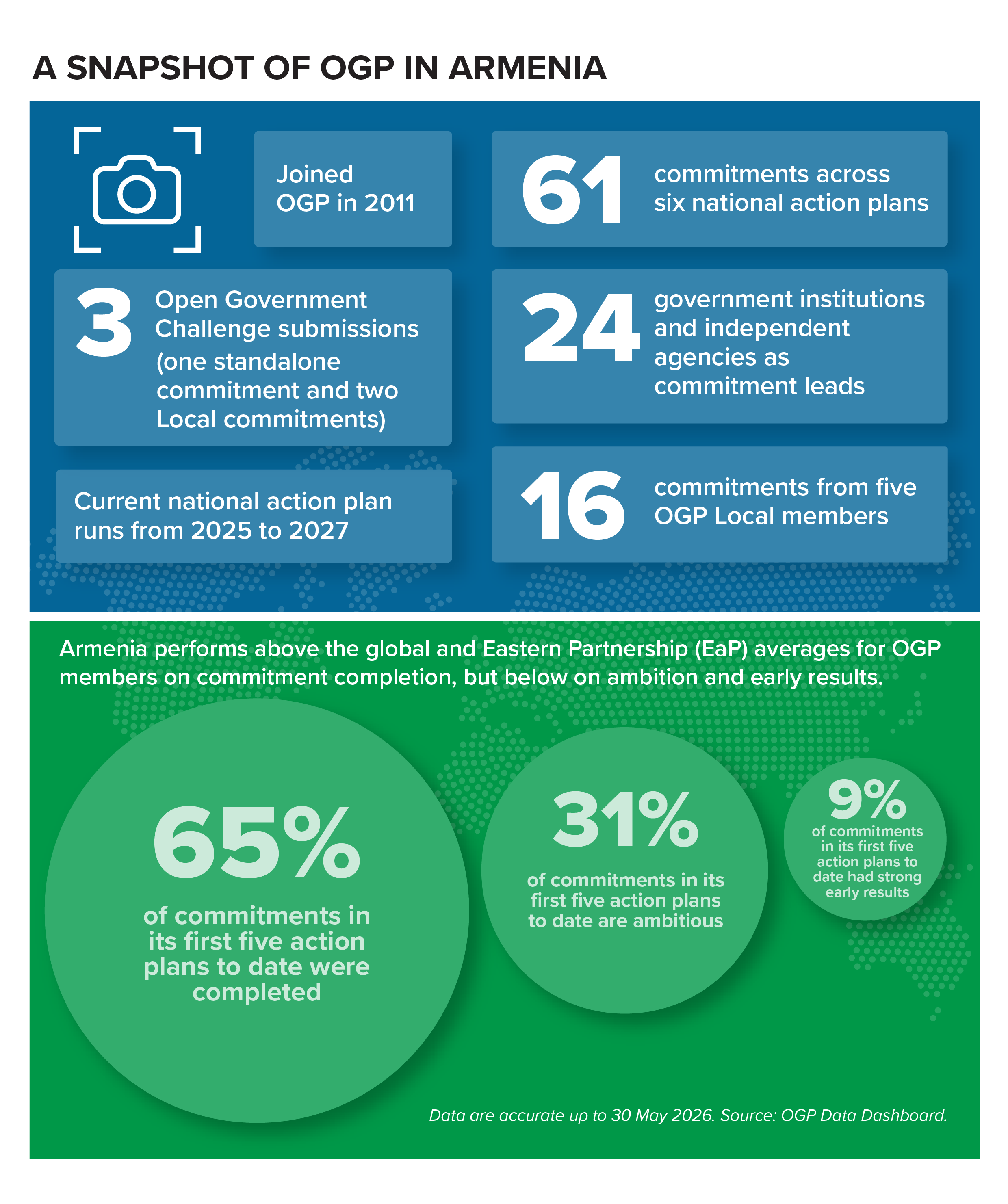
Armenia joined the Open Government Partnership (OGP) in 2011, the year it was founded. Since then, Armenia has made 61 commitments across six national action plans. Its most successful commitments have led to the launch of a publicly accessible beneficial ownership register, the widespread adoption of participatory budgeting, and the establishment of a dedicated Department for Participatory and Open Governance within the Prime Minister’s Office, providing permanent institutional leadership for Armenia’s open government agenda.
At the local level, the communities of Armavir, Gyumri, Metsamor, Vanadzor, and Yerevan have joined the OGP Local program, creating stronger links between national and local open government reforms. Internationally, Armenia has also taken on a greater role in the leadership and governance of OGP after being elected to the OGP Steering Committee in 2025.
After Armenia’s peaceful Velvet Revolution in 2018, the government’s strong political commitment to OGP improved the use of the platform for open government reform. The inclusion of commitments to amend legislation has raised the ambition of the country’s action plans. OGP has served as an implementation mechanism of the Public Administration Reform Strategy, the Anti-Corruption Strategy, and the Digital Transformation Strategy. A growing number of Armenia’s OGP commitments have also addressed international recommendations and benchmarks, such as those from the Group of States against Corruption (GRECO) and the European Union (EU). This has resulted in significant advances, such as the adoption of a publicly accessible beneficial ownership register in 2023 covering the entire Armenian economy.
Armenia’s open government ecosystem has evolved into a strong network of civil society organizations and government reformers. Armenian civil society has valued the opportunity created by the OGP process to enter into direct dialogue with the government over reforms. Following the Velvet Revolution, the government has made greater efforts to involve civil society in the co-creation and implementation of action plans. Armenian civil society has played an active role in raising public awareness for OGP, organizing co-creation events, and supporting local governments participating in the OGP Local program. Financial and technical support from international partners has been vital to government and civil society efforts to implement OGP reforms and raise awareness. Several donor-supported initiatives in Armenia have been successfully maintained by the government after external financial support ended, notably the implementation of participatory budgeting at the local level.
However, progress has not been without challenges. The COVID-19 pandemic, armed conflict with Azerbaijan over the territory of Nagorno-Karabakh/Artsakh, as well as the US government foreign aid freeze in early 2025 affected the pace of open government reforms. Nevertheless, civil society and the government have ensured that the OGP process and reforms have continued. The establishment of a dedicated Department of Participatory and Open Governance in the Prime Minister’s Office in 2024 is a major step toward the long-term sustainability of open and participatory governance, including the OGP process.
This Open Government Journey spotlights Armenia’s efforts through OGP to address issues of public integrity—particularly public officials’ asset declarations and beneficial ownership transparency, fiscal transparency and participatory budgeting, and public participation in decision-making and access to information. It also examines how government and civil society have used the OGP framework to discuss and work collaboratively on reforms.
The Evolution of Armenia’s Open Government Ecosystem
While a professional civil society sector had emerged in Armenia in the 1990s and early 2000s during the country’s transition to democracy, its national open government ecosystem has strengthened considerably since the country joined OGP. After the 2018 Velvet Revolution, open government reforms became a political priority and received strong support from domestic civil society and international partners. This section highlights the changing relationship between government and civil society after the Velvet Revolution, how collaboration has been sustained by international partners, and the ongoing work to institutionalise engagement around open government despite domestic and geopolitical uncertainties.
Starting out in early action plans (2012–2018)
When Armenia joined OGP in 2011, the Ministry of Foreign Affairs (MFA) launched the first action plan (2012–2013) with commitments that largely reflected existing government priorities and donor-supported initiatives. Soon after, the government established an OGP working group, initially consisting of implementing government agencies and three civil society organizations (CSOs): Freedom of Information Center of Armenia (FOICA), Transparency International Anti-Corruption Center (TIAC), and Asparez Journalists’ Club. These CSOs were among the most active organizations on transparency issues in Armenia before joining OGP, having previously advocated for and contributed to good governance and transparency reforms, such as the 2003 Law on Freedom of Information.
For the second (2014–2016) and third (2016–2018) action plans, coordination of the OGP process shifted to the Staff of the Government, which expanded the working group to eight CSOs. Civil society carried out donor-supported public awareness-raising and put forward their own proposals, resulting in the inclusion of several civil society priorities in the second and third action plans, such as commitments for Armenia to join the Extractive Industries Transparency Initiative (EITI).
Armenian civil society already valued its participation in the OGP process during these first three action plans. OGP’s participatory model, in which the government was required to engage CSOs in reforms, was unique in Armenia at that time. However, while the government was open to listening to CSOs and incorporating their priorities, a major civil society criticism was that the government disqualified proposals that required legislative changes. Instead, it focused on minor policy issues and e-government initiatives.
The development of Armenia’s OGP working groupArmenia has had a multi-stakeholder working group as an advisory body for OGP action plans since 2012. Originally created by Prime Ministerial decree, it included government institutions, diverse civil society participants, and one private sector representative. International partners also attended working group meetings, providing input on the design and implementation of commitments. Over time, the role of the working group evolved from government institutions seeking civil society endorsement for commitments with little discussion, to using the working group to harness civil society expertise in the development and implementation of action plans. Between 2012 and 2019, the Prime Ministerial decree would be amended with each action plan cycle to reflect the updated membership of the multi-stakeholder forum. However, the government has not amended the Prime Ministerial decree since the adoption of the fourth action plan (2018–2020) because adopting the decree is time consuming. Several civil society members believe a formal multi-stakeholder forum with clear roles and responsibilities could foster a stronger sense of ownership among both government and civil society participants. They noted that the level of communication from ministries in those meetings can vary widely and that working group meetings could occur more frequently. |
The Velvet Revolution: A key turning point
In 2018, Armenia underwent a major political change, known as the Velvet Revolution, In which mass protests led to the resignation of Prime Minister Serzh Sargsyan. Following a snap parliamentary election in December 2018, leader of the protest movement, Nikol Pashinyan, and his coalition won the majority of the votes.
The Velvet Revolution was a turning point for Armenia’s OGP community, as reformers were in the process of developing the fourth action plan (2018–2020) with political corruption and state capture at the forefront of the protests and public debate. The Pashinyan government came to power with a mandate for democratic transformation, institution-building, anti-corruption, and the restoration of an independent judiciary. In addition, after having been active in the protests that brought down the previous government, some civil society activists joined the new government or were elected as members of parliament (MPs). This created strong synergies between civil society’s priorities and the new government’s reform agenda.
Demonstrating the greater importance that the government attached to the initiative, the Pashinyan government placed OGP work under the portfolio of the Chief of Staff of the Prime Minister. The government also said it was open to including commitments requiring legislative changes for the first time, raising expectations for more ambitious OGP action plans. Since then, the government has continued to see civil society as partners and has been willing to include legislative changes and CSO recommendations on legislative drafts. For example, Armenia has introduced ambitious commitments around creating a beneficial ownership register, legislating a government-wide data management policy, and establishing a legal framework governing gift registration and declarations, all of which involved passing or amending legislation. Civil society generally considers OGP to be a useful platform for advancing their priorities, allowing reform-minded public officials to advance open government norms in their ministries and institutions as well. However, the legislature and judiciary have not included commitments in Armenian OGP action plans yet, as they still view OGP as falling exclusively under the purview of the executive branch.
Over the course of Armenia’s participation in OGP, 24 government institutions, including ministries, independent commissions, and other public bodies, have led the implementation of at least one commitment. Regular commitment leads include the Ministry of Finance, the Ministry of Justice, the Commission on the Prevention of Corruption, and the Ministry of Territorial Administration and Infrastructure. Reformers credit the government point of contact’s professionalism, dedication, and longevity (having held the post since 2016) as key to the long-term stability of the OGP process and the continued engagement of government institutions.
Civil society organizations have helped to expand and diversify participation in the OGP process, such as convening town halls and public-private dialogues across the country during the development of action plans reaching additional CSOs. The involvement of CSOs based outside Yerevan, such as the Armavir Development Center (ADC), Asparez, and the Non-Governmental Organization Center (NGOC) in the national OGP process also resulted in regionally focused commitments in the action plans. The environmental organization EcoLur has supported Yerevan’s OGP Local commitments. Outside of civil society, the Confederation of Trade Unions of Armenia and the Republican Union of Employers of Armenia have also supported various OGP commitments.
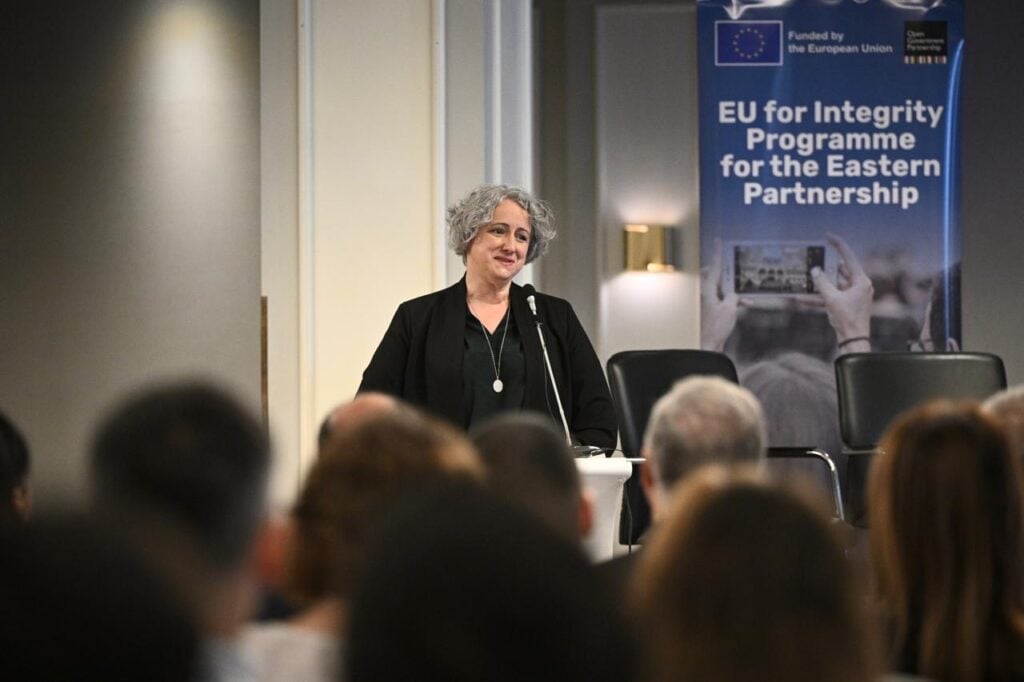 Katherine Krueger, then-Director of Governance and Fragile States at Counterpart International, at the third Eastern Partnership Community Dialogue in Armenia (Credit: OGP)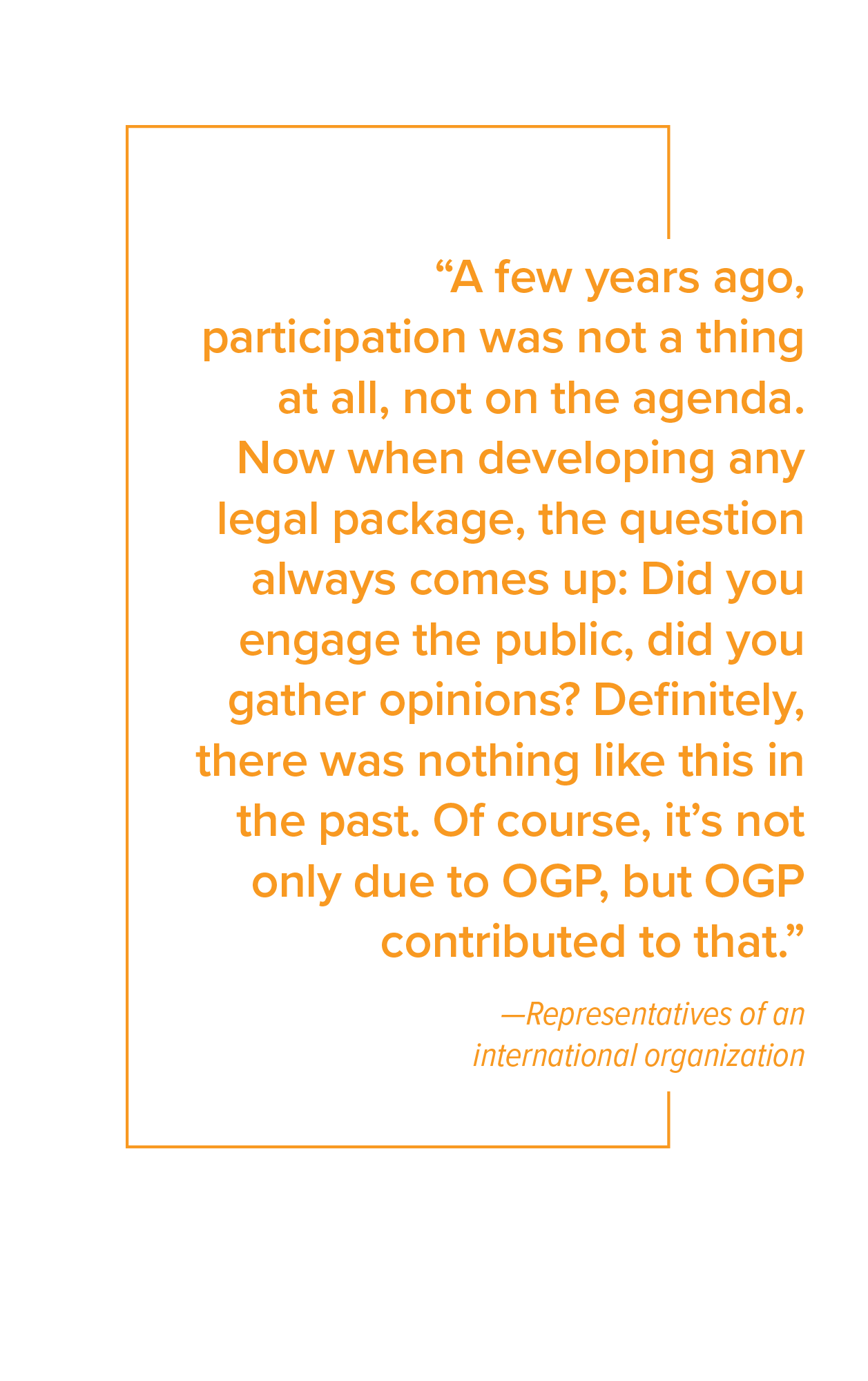
Navigating domestic and geopolitical uncertainty
Armenian reformers have demonstrated resilience in maintaining the OGP process against the backdrop of the COVID-19 pandemic and recurring conflicts with Azerbaijan over Nagorno-Karabakh/Artsakh. During implementation of the fourth action plan, these events slowed government decision-making as it responded to the global health crisis and redirected attention toward national security. These shifts in priorities delayed some OGP commitments and postponed the co-creation of the fifth action plan until after the snap elections in 2021. During the implementation of the fifth action plan, government resources shifted toward humanitarian efforts following the displacement of the Armenian population from Nagorno-Karabakh/Artsakh in 2023. Civil society observed that progress in government openness slowed during this period. Yet, civil society remained in communication with the government and maintained its role as a watchdog. Reformers also credit the OGP Support Unit with helping to keep the OGP process on track.
The value of OGP and the role of international partners
For the government, international visibility through OGP membership has been an important incentive. The initiative has unlocked access to a global network of reformers and experts. Global and regional OGP events have given CSOs and government officials valuable opportunities to learn from the experiences of other countries, showcase Armenia’s achievements (such as through awards received for reforms), and boost Armenia’s global visibility as a reform-oriented country. For example, the OGP Transparency Fellowship for the Eastern Partnership and the Open Government Leadership Collaborative have helped officials build their capacities and network with colleagues in other countries. These opportunities have supported and strengthened the country’s open government ecosystem.
International partners have also played an important role in supporting Armenia’s open government ecosystem. Limited domestic funding is available to Armenian CSOs for advocacy and watchdog activities, so most CSOs depend on foreign funding. OGP’s and the World Bank’s Multi-Donor Trust Fund (MDTF) awarded two rounds of grants to Armenian CSOs which facilitated strategic outreach campaigns during co-creation and supported the development of proposals that became commitments in the 2018–2020 OGP action plan. International support, including from the EU, has helped to fill gaps in government resourcing and capacity, particularly for complex and technical reforms. The Prime Minister’s Office and the OGP Support Unit have been important interlocutors between Armenian CSOs and partner organizations, helping secure funding.
Development partners, notably the United States Agency for International Development (USAID), the Asian Development Bank (ADB), the United Nations Development Programme (UNDP), and the World Bank have supported CSOs to organize public consultations around OGP action plans, carry out awareness raising for OGP in the regions, and implement action plan commitments. The EU has also provided additional grant funding for Armenian CSOs to support OGP activities over the years, particularly after the Armenia-EU Comprehensive and Enhanced Partnership Agreement (CEPA) was concluded in November 2017.
Several important foreign-funded initiatives have been continued by the government after the initial support ended. For example, the government amended legislation to extend and increase funding for local participatory budgeting from the state budget, after participatory budgeting was initially piloted in local communities during the fifth action plan (2022–2024) with support from the Deutsche Gesellschaft für Internationale Zusammenarbeit (GIZ). The e-draft platform, launched in 2017, was initially funded by the EU and has remained active, while the Ministry of Justice has maintained Armenia’s beneficial ownership register after significant technical support from Open Ownership for the register’s development. A commitment to develop a publicly accessible gift register for public officials was interrupted by the US government’s foreign aid freeze in January 2025, but the government agreed to provide central funding for this register and carried the commitment into the current sixth action plan.
Supporting a culture of collaboration through OGP’s Eastern Partnership programSince 2021, Armenian CSOs have received grants from OGP’s Eastern Partnership Program funded by the EU (‘EU4Integrity’). The program has enabled OGP to provide whole-of-action plan support, covering action plan co-creation and commitment implementation. For example, CSO initiatives on whistleblower protection and citizens’ budgets were incorporated by the Ministries of Justice and Finance respectively. A consortium of CSOs in Armenia received a grant to enhance the development of the fifth action plan. This resulted in wide-scale awareness-raising and the convening of town halls and public-private dialogues across the country, as well as the appointment of a consultant to support the government point of contact. Civil society believes these grants have helped fill important gaps in Armenia’s OGP framework and have led to sustained changes. This funding has facilitated the institutional adoption of CSO-developed easy-to-understand budget information, and self-assessments for freedom of information compliance in public institutions. It has also enabled discussion events on the gift register and e-court statistics, awareness raising and capacity building for whistleblowing, and monitoring of OGP Local commitments implementation in Armavir, Gyumri, Vanadzor, and Yerevan among other initiatives. |
Promoting open government in the public sector
To better oversee the development, implementation, and monitoring of open government-related policies, processes, and strategies (including the OGP action plans), the Prime Minister’s Office established the Department of Participatory and Open Governance in 2024. It recently led the co-creation of Armenia’s sixth action plan. Inspired by the OGP model, this department is mainstreaming open government principles in the development of draft national strategies as part of the government’s new strategic management system. The OGP model has already been replicated in the development of the national Anti-Corruption Strategy and in the Anti-Corruption Council (which includes civil society representatives).
Civil society stakeholders and public servants believe it is important that this department endures future political changes because it will be critical in securing the long-term sustainability and institutionalization of open government reforms and the OGP process. Despite the many advances, one government official noted that the open government agenda in Armenia faces challenges that are shared with other Eastern Partnership countries. For example, there are still many public officials who are unaware of or skeptical of open government principles. Implementation of these norms still varies widely by institution. At the moment, the OGP process continues to rely heavily on efforts of the OGP point of contact in the Prime Minister’s Office. The implementation of OGP commitments is frequently disrupted by staff turnover in government agencies and ministries. When ministers or deputy ministers resign, some officials no longer feel responsible for completing the commitment.
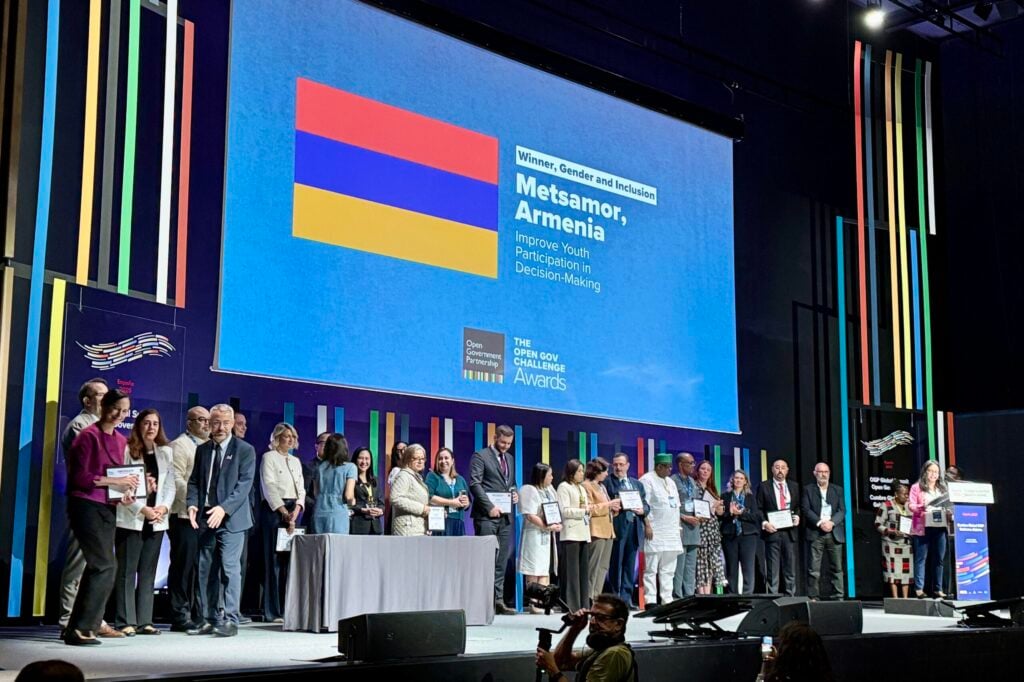
Expanding OGP to the local levelThe biggest expansion in Armenia’s open government ecosystem in recent years has been at the local level. Gyumri and Vanadzor joined the OGP Local program as a consortium in 2020, followed by Armavir and Yerevan in 2022 and Metsamor in 2024. So far, these five communities have made 16 commitments across five action plans, covering a variety of topics from participatory budgeting and integrity to green policies. Yerevan and Metsamor have submitted Open Government Challenges on online participatory budgeting and a youth ambassadors network for open governance. Metsamor’s commitment to establish a youth ambassadors network won an Open Government Challenge Award in 2025. The Gyumri-Vanadzor’s 2021 action plan included five commitments proposed by civil society. Two of these commitments—participatory budgeting and unified property registry—were implemented in Gyumri. In Vanadzor, commitments to develop a unified community resource register and introduce participatory budgeting were implemented, alongside an accessibility map for people with disabilities, by Lusastgh NGO through a USAID-funded project. Other commitments were not fully implemented due to a lack of necessary funds and personnel changes following elections. In Vanadzor, some commitments also faced funding challenges in 2021 and the council subsequently did not adopt the 2022 municipal budget. As Yerevan is home to more than one third of Armenia’s population, its membership in OGP Local—led by the Urban Development Projects Implementation Unit under the deputy mayor—is important for the country’s open government ecosystem. During the 2023 OGP Summit in Estonia, Yerevan won an ‘Inspirational Reform’ award for its Green Seal program which incentivizes municipal organizations to meet sustainability standards, driving further adoption of green practices. Yerevan also organized public discussions on development programs and budgets in each district of the city, resulting in greater attendance compared to previous hearings, which required residents to travel to the city hall. Yerevan’s second action plan (2025–2028) features four commitments on participatory budgeting, fiscal openness, youth engagement, and digital transformation. |
Advancing Anti-Corruption Through Collaboration
After the Velvet Revolution, Armenia’s new government declared the fight against long-standing corruption to be a political priority. Armenia’s score in Transparency International’s Corruption Perceptions Index has improved substantially since joining OGP, and particularly following the Velvet Revolution, rising from a score of 34 (105th place) in 2012 to 46 (65th place) in 2025.
This section looks at how the OGP platform has become an important space for government-civil society dialogue on anti-corruption reforms. It examines the gradual improvements in the publication of asset declarations, culminating in a publicly accessible online system, and a shift toward implementing a gift register for officials. It also looks at how OGP supported Armenia in becoming a global frontrunner in beneficial ownership transparency, not least through its membership in the Extractive Industries Transparency Initiative (EITI). Lastly, it examines the ongoing efforts to make government databases interoperable so they can be used as anti-corruption tools.
A multi-stakeholder approach to anti-corruption reforms
Armenia’s anti-corruption reforms are embedded in the government’s anti-corruption strategies . Many of these derive from international mechanisms like the Council of Europe (COE)’s Group of States against Corruption (GRECO) and Committee of Experts on the Evaluation of Anti-Money Laundering Measures and the Financing of Terrorism (MONEYVAL), as well as the United Nations Convention against Corruption (UNCAC) and the Organization for Economic Co-operation and Development (OECD)’s Istanbul Anti-Corruption Action Plans.
Government and civil society participants in OGP believe that OGP has served as an effective implementation platform. In their view, OGP action plans have helped translate complex anti-corruption reforms into clear deliverables with specific deadlines. Civil society notes that OGP commitments add a layer of public accountability for government implementation. Additionally, some gaps in government expertise have been filled by civil society, through the OGP ecosystem, for example, when providing recommendations and analysis in developing the legal framework governing gift registration and declaration. Government and civil society stakeholders value the guidance and expert contacts that OGP membership brings, which, in their view, sets OGP apart from other international initiatives.
Stakeholders also credit OGP with contributing to a culture of cooperation around anti-corruption that was previously limited. OGP played an important role in showing government officials that there are benefits to engaging with civil society on anti-corruption reforms. OGP’s role has had broader effects. For example, the multi-stakeholder Anti-Corruption Policy Council, which replaced the previous Anti-Corruption Council and now includes CSOs contributed to drafting Armenia’s National Anti-Corruption Strategy. OGP has successfully served as a practical example of dialogue, which has since also been applied in Armenia’s EITI process.
Asset and income declarations: incremental steps with strong results
As political power and economic interests tend to be closely intertwined in Armenia , the topic of asset and income declarations of high-level officials has drawn significant scrutiny from CSOs and the media. The system for asset and income declarations has improved significantly through the OGP process, building on the country’s national anti-corruption strategies as well as GRECO and UNCAC reviews. Through commitments carried across multiple OGP action plans, the government has steadily expanded both the scope of information in declarations and the scope of officials subject to disclosure requirements.
Armenia introduced its first regulations on asset declarations in 2001, which became mandatory in 2011 with the passage of the Law on Public Service (establishing the Ethics Commission for High-Ranking Officials to collect, monitor, and publish asset declarations) and Decision No. 1835-N (providing the list and format of the data from the declarations that should be published). Armenia later used its OGP action plans to publish asset declarations on a designated platform and expand the scope of information required . Initially, these were scanned PDF images, limiting their potential for re-use. During an OGP co-creation event in 2018, the government committed to using civil society proposals, which were incorporated in 2020 and 2021 legal amendments to expand the content of declarations and the scope of declarants to over 6,000 individuals. In 2023, the Corruption Prevention Commission introduced a new register for declarations with data published in machine-readable format. In addition to significant improvement in transparency and accessibility, this marked an important step in digital transformation. More recently, the asset declarations system has been linked to the state registry platform (including the beneficial ownership register) to better support anti-corruption monitoring, and crypto assets have been added to the list of declarable assets.
There have been examples of investigations into officials’ declared assets, although this is still not common . Government and civil society stakeholders believe the changes to the declaration requirements have had a preventive effect on corruption, even if this is difficult to measure. One civil society representative recalled how, during a local election, someone chose not to run, after learning that they and their family would have had to declare their assets abroad. Preventive measures continue to be put in place so that, for example, persons related to officials cannot take part in state procurements .
Civil society points out that some limitations remain, such as the inability to view all declarations submitted by an official and their family members across different years in one place. Limited data verification capacity and approach continue to hinder the detection of illegal enrichment and conflict of interest breaches. For all these reasons, a commitment in the current OGP action plan (2025–2027) looks to expand the interoperability of the asset declarations system with other databases, as well as automate red flagging of declarations, to facilitate easier data verification.
Developing a gift register
The practice of public officials receiving gifts for performing services is common in Armenia, often framed as gratitude rather than bribery. However, countering the lack of transparency and closing gaps in the legislation governing gifts is a long-standing priority for civil society. According to media reports , some officials and members of their families used to receive gifts worth tens or even hundreds of thousands of dollars without disclosing the sources.
Armenia’s fifth action plan (2022–2024) included a commitment to develop a mandatory gift register for gifts above 40,000 AMD (about 106 USD), intended to enforce legal regulations and align with international anti-corruption standards and GRECO recommendations.
In 2022, Armenia clarified the definition of a gift as well as the procedures for registering and declaring gifts. The development of a register was suspended in January 2025 following a freeze on the US government’s foreign aid that had been funding the program. As a temporary measure, gift declarations are currently published in a Google Drive folder. The Corruption Prevention Commission (CPC) is continuing work on the register in the sixth action plan (2025–2027) and as an Open Gov Challenge , with plans to make the gift register interoperable with other government databases and integrate automated evaluation and verification solutions using artificial intelligence. Through the Open Gov Challenge, the government also hopes to showcase Armenia’s efforts internationally and seek cross-country feedback and discussions.
The government believes the regulations have a preventive effect on officials accepting gifts. However, according to civil society, the register and regulations still have limitations as only gifts received in connection with official duties are reported, excluding so-called more common ‘personal gifts’. Through USAID and GIZ projects, as well as the EU4Integrity program , CSOs have identified the need for significant awareness raising among both officials and the public, particularly on the legal implications of giving and receiving gifts.
Beneficial ownership: from sector-specific initiative to holistic reform
Armenia has been recognized as a global frontrunner in beneficial ownership transparency over the years, in part thanks to its OGP commitments implementing these reforms. In 2020, Armenia began by disclosing company ownership in the mining sector, linked to the country’s membership in the Extractive Industries Transparency Initiative (EITI)—which in turn was also attained through an OGP commitment—before expanding disclosure requirements to the entire economy in 2023, covering approximately 120,000 legal entities.
Armenian civil society had advocated for joining EITI as early as 2009. However, the government only began taking measures toward membership in 2025, including through a commitment in the second action plan (2014–2016) . Armenian reformers connected with a variety of donors, including the European Bank for Reconstruction and Development (EBRD), USAID, the United Kingdom Foreign, Commonwealth, and Development Office (FCDO), UNDP, the World Bank, and GIZ to support the EITI Secretariat and the EITI application process. Reformers credit the OGP Support Unit with explaining how joining EITI and publishing data on the owners of the extractives sector would increase domestic and international trust in the economy, making Armenia a safe place for foreign investment. Armenia established its EITI multi-stakeholder group (MSG) in November 2016, submitted its candidacy in December 2016 (approved by EITI in March 2017), and published its first EITI report in March 2019. In 2024, Armenia achieved a high score of 89.5 points—the second-highest possible score—in implementing the EITI Standard. This placed Armenia in the top 80th percentile of EITI implementing countries.
The Armenian economy has seen mining grow in recent years , accounting for 3.8% of GDP, 6.8% of government revenues, and 28% of export revenue in 2024. EITI’s reporting requirements created an opportunity to shed light on a notoriously opaque sector of the Armenian economy. Despite some improvements to the transparency of natural resource governance during the second action plan , information on the ownership of mining companies remained limited. The 2008 Law on Combating Money Laundering and Terrorism Financing provided some regulations for the disclosure of beneficial owners, but this information was not publicly available or regularly updated. The lack of public information on the owners of mining companies and the large amount of foreign investment fueled allegations of opacity, conflicts of interest, corruption, and environmental damage. The Amulsar gold mining project near the resort town of Jermuk caught public attention and was suspended in 2018 following large protests against potential damage to the local water supply.
As part of its fourth action plan, Armenia launched a publicly accessible beneficial ownership register . It started by requiring disclosure from the extractives sector by 2020, expanding to the entire economy by 2023. The decision to pilot the register in the mining sector was closely linked to EITI requirements. To identify a larger number of beneficial owners, legal amendments i n 2019 lowered the mandatory disclosure threshold for shareholders of mining companies to 10%, much lower than the 25% share threshold under the EU’s Anti-Money Laundering Directive.
The OGP Support Unit connected Armenian reformers to Open Ownership. A memorandum of understanding (MoU) between Open Ownership and the Ministry of Justice set the foundation for Open Ownership to provide a high level of support to Armenia as part of its OGP commitment to develop the register. In 2021, Armenia adopted the Beneficial Ownership Data Standard , becoming one of the first countries in the world to implement an open standard for data on company ownership. Through OGP, Armenian reformers have participated in peer learning networks around beneficial ownership, gaining valuable insights for Armenia’s domestic reform. At the 2019 OGP Global Summit in Ottawa, Armenia joined the UK-initiated Beneficial Ownership Leadership Group , demonstrating leadership in advancing global norms around beneficial ownership transparency. A Ministry of Justice official working on beneficial ownership participated in the OGP Transparency Fellowship for the Eastern Partnership and in the Open Government Leadership Collaborative , which helped them build capacities and network with colleagues in other countries. The official later became the Head of the Anti-Corruption Policy Development and Monitoring Department and currently serves as a Commissioner of the CPC.
Media outlets use the data in the register to reveal affiliations between officials and businesses. For example, data in the register has revealed how the majority of profits from Armenian metal mines went to foreign interests, particularly Russian oligarchs. Beneficial ownership declarations have revealed the owners of mines in Armenia, with many mining companies submitting incomplete and/or inaccurate data. Using information on the register, the NGO EcoLur visits affected local communities to raise awareness about how mining companies are supposed to pay royalties to their local budgets.
Civil society believes Armenia still has room for improvement in beneficial ownership transparency, such as by lowering thresholds even further, arguing that mining company shareholders split shares into amounts below the existing threshold of 10%. For example, the shareholders of the company involved in the controversial Amulsar mine each held less than 10% of shares, avoiding disclosure. As with assets disclosure, inadequate human resources and weak capacity to effectively verify beneficial ownership declarations remain a challenge. At the moment, data verification is done when there are specific reports of violations, but a risk-based assessment methodology is on track for completion by the end of 2026 as part of the sixth action plan.
The future of anti-corruption reforms
Armenia’s upcoming work around anti-corruption aims to consolidate previously piecemeal improvements into a more holistic reform agenda. The 2023–2026 Anti-Corruption Strategy calls for drafting an omnibus Law on the Prevention of Corruption that will consolidate various legal provisions for the public integrity system, including regulations on conflict of interest, restrictions on accepting gifts, incompatibility requirements, and post-employment restrictions. As part of the Anti-Corruption Strategy, the Ministry of Justice introduced draft amendments to regulate transparency of lobbying activities. Anti-corruption measures have also taken place in the judiciary in recent years, although they fall outside of the OGP process.
While Armenia still has a long way to go in addressing corruption, it has made meaningful progress through OGP. The system of asset declarations has undergone major changes since the first action plan, increasing the transparency and usability of these declarations. The country has improved the legal framework around gifts for officials and is on course to develop a gift register. Through the OGP process, Armenia became a member of EITI and has become a global frontrunner in beneficial ownership transparency. The OGP process has also contributed to a culture of government-civil society dialogue about anti-corruption reforms that largely did not exist in Armenia before the country joined OGP.
More recently, reformers have observed an increase in disinformation aimed at discrediting state anti-corruption bodies and CSOs. The implementation of anti-corruption measures has coincided with and come under pressure from significant geopolitical developments in Armenia, such as the COVID-19 pandemic and armed conflict with Azerbaijan. Stakeholders recognize that sustaining these hard-won anti-corruption gains will require strong political will and resilience against political efforts to weaken the reforms.
Making Government Spending Transparent and Participatory
Through successive OGP action plans, Armenia has strengthened fiscal transparency, public participation in budgeting, and openness in public financial management. According to the International Budget Partnership (IBP)’s 2025 Open Budget Survey (OBS) , Armenia scored 63 out of 100 on budget transparency, passing the 61-point threshold for publishing sufficient budget information to provide meaningful coverage of core fiscal data and enable public understanding and debate on government budget decisions and fiscal policy.
This section looks at efforts to improve fiscal transparency through the OGP framework, as well as the institutionalization of participatory budgeting at the local level. It also examines the focus in recent action plans to improve the transparency of public procurement information through the planned development of a new centralized e-procurement system.
Improving fiscal transparency
Armenia publishes key budget documents on the Ministry of Finance’s and other government websites. In its first action plan (2012–2013), Armenia committed to improving budget planning and reporting. This led the Ministry of Finance to create an interactive budget platform during the third action plan (2016–2018) . When it was developed in 2016, the interactive budget platform offered an innovative presentation of the national budget in Armenia, allowing users to see budget dynamics in real time. However, user uptake remained limited, highlighting the need to present fiscal information in more accessible and user-friendly formats. CSOs generally prefer to use the quarterly and monthly reports published by the Ministry of Finance to obtain a more up-to-date picture of the budget.
Historically, there have been few opportunities for the public to contribute to the budget development process in Armenia, beyond government agencies posting their draft budget proposals on their websites for public input. During the fifth action plan (2022–2024) , the Ministry of Finance established a page on its website with links to public consultation announcements on draft budgets. These included notices by government agencies, the National Assembly, prosecutor, Constitutional Court, Supreme Judicial Council, and all 10 regional governments, as well as files containing draft budget proposals and the collected suggestions by agency.
The platform has not significantly increased civil society and public interest in the discussions on draft budgets, but state bodies continue to post budget consultation announcements on their websites and social media platforms. The Ministry of Finance has prepared and disseminated a guide for consultations among state bodies, and plans to incorporate visualization tools and materials, including videos, so that citizens can understand how to participate in the budget process more easily. Government and civil society reformers believe there is still a need for more opportunities to participate in the early stages of budget development. However, they are skeptical that digital solutions alone will provide tangible results.
Simplifying budget informationDuring the fifth action plan (2022–2024) , the Armenian Center for Socio-Economic Studies (ACSES) prepared a citizens’ budget for 2024 under the Open Door Grant from OGP’s EU4Integrity program. ACSES produced 10 videos on budget-related topics with easy-to-understand infographics, with 1.5 million unique users in Armenia having seen at least one of the publications across platforms such as Facebook, TikTok, YouTube, and public television. ACSES reported that the Ministry of Finance has since adopted the citizens’ budget template and the videos they produced. These outcomes were supported by the Ministry of Finance’s openness to cooperation with civil society through successive OGP action plans, including on social media outreach, CSO inputs, and accessible public information. |
Institutionalizing participatory budgeting
Although local authorities are legally required to hold public discussions on their annual community budget, these are often treated as a formality . Meanwhile, participation tends to be weak due to limited budgets and low perception of changes being adopted. However, at least at the local level, recent efforts to introduce participatory budgeting have greatly exceeded expectations.
During the fifth action plan , four communities (Abovyan, Armavir, Ashtarak, and Jermuk) piloted a participatory budgeting initiative with support from GIZ and the Ministry of Territorial Administration and Infrastructure. They allocated between 2 and 10 million AMD (5,000–25,000 USD) from the community budget to projects proposed and voted on by local residents. Following the successful pilot, the national government institutionalized participatory budgeting by allocating dedicated state funding and establishing a framework for nationwide expansion. The national government adopted a decision allocating 500 million AMD (around 1,250,000 USD) from the state budget in 2024 to the four communities to implement participatory budgeting projects. Tangible results, such as new playgrounds, park renovations, and cultural and youth clubs have encouraged citizens to participate in budgeting in their communities. According to GIZ, the OGP process and government funding for communities were vital to the success of the initiative. The government has since scaled up participatory budgeting to 52 communities with 2 billion AMD (5,300,000 USD) allocated in 2026. To qualify, communities must adhere to the procedures and allocate at least 20% of funding from their own community budget.
GIZ representatives believe the initiative has had a positive impact on public trust in Armenia. When citizens submit proposals that are not selected, efforts are made to explain why their proposal was not selected for a vote. Some communities have also decided to implement additional citizen proposals in addition to the winning proposals. The involvement of young people and women in participatory budgeting has been particularly noteworthy. The concept of participatory budgeting has also become more widely understood and accepted among community officials and local residents who now have a better understanding of local budgeting processes.
The continued allocation of funding from the state budget for participatory budgeting in communities will be critical to the long-term sustainability and impact of the reform. The sixth action plan (2025–2027) continues to institutionalize participatory budgeting at the local level, while also piloting participatory budgeting monitoring groups, a community service assessment platform, and co-creation of community services.
Public procurement transparency: a new frontier
Armenia has several public procurement platforms, including the e-procurement system (ARMEPS) ; Procurement Plan and Contracts Management (PPCM) , a system for vendors to participate in electronic auctions; and procurement.am , which serves as a procurement bulletin.
Public procurement in Armenia was not a major focus of early OGP action plans and was viewed as something that was difficult to change or make more transparent. However, more attention has been paid to public procurement in recent years. A commitment in the fifth (2022–2024) and sixth (2025–2027) action plans seeks to develop a new e-procurement system that will publish information in open data format and be linked with other government databases, such as the beneficial ownership register and the asset declaration system as well as banks, the treasury, and tax service. By combining open contracting data, interoperability with key government databases, and digital risk analysis tools, the reform aims to increase transparency, as well as strengthen integrity, prevent conflicts of interest, detect corruption risks, and improve value for public money.
Reformers credit the OGP process for helping to bring the topic of public procurement transparency into the public discourse in Armenia. OGP’s multi-stakeholder framework has enabled the engagement of the private sector, IT companies, and CSOs, which reformers see as an achievement in itself, helping develop joint solutions. One government representative noted the discussions around the commitment have led to a shift in popular perceptions around the topic, from seeing transparency as a self-serving goal to a way of ensuring better value for money in procurement. Now, there is a greater willingness from the government and civil society to engage each other on this topic over the shared goal of improving transparency. Through the coordination of the Prime Minister’s Office, the OGP process has provided a structured platform for cooperation between the Ministry of Finance, civil society, the private sector and international partners on procurement reform. Beyond improving transparency, the Ministry of Finance has promoted public accountability by enabling civil society organizations to participate in monitoring the implementation of public contracts and engage directly with contracting authorities during the post-award phase.
The Ministry of Finance is working through OGP to define principles for procurement transparency. Government officials credit the OGP Support Unit with putting them in contact with the Open Contracting Partnership (OCP) at the 2023 Global Summit in Tallinn, Estonia, for support in adopting the Open Contracting Data Standard (OCDS). The ministry was also able to talk to peers and civil society representatives from other countries and identified ways to engage civil society more constructively and consistently.
There is still a need for continued civil society-government dialogue around public procurement transparency. Armenian CSOs are becoming more interested in the topic of fiscal transparency, which the ministry expects will result in more collaboration. However, the OGP process has already helped the Ministry of Finance engage with civil society in a structured format, anticipating better results. In the future, the ministry believes that discussions will eventually shift from open contracting and e-procurement to the integration of artificial intelligence into public procurement.
Transparency of state grantsIn 2024, 267 public organizations and foundations received funding from the state budget, totaling about 13 billion AMD (around 37.2 million USD). About 70% of this funding was allocated to cultural, educational, social, and youth activities. Historically, there has been a strong public perception that transparency and competitive processes in the allocation and distribution of these funds were lacking. Civil society frequently complained that the same organizations typically received these grants. Due to commitments to improve transparency of state grants in the third (2016–2018) and fourth (2018–2020) OGP action plans, many concerns have been addressed and the transparency and competitiveness of state grant-making processes improved. However, there remain several challenges . According to preliminary discussions between CSOs and the Ministry of Finance, the new e-procurement platform will address technical shortcomings of the state grant application process. |
Taken together, these reforms reflect Armenia’s gradual shift from improving transparency in public financial management towards creating more meaningful opportunities for public participation throughout the budget cycle. Through participatory budgeting, public consultations, accessible budget information, and dialogue on procurement reforms, citizens and civil society are increasingly involved not only in monitoring public spending but also in shaping decisions on the use of public resources.
Improving Opportunities for Public Participation and Access to Information
Armenian legislation provides a wide range of opportunities for participation. However, these mechanisms have not always been effective. The processes and outcomes are not always transparent and some legislative decisions are made hastily without proper public consultation. In addition, although Armenia has had access to information legislation since 2003, CSOs and journalists often reported cases of failure to provide information within the required time frame, incomplete or evasive responses, and unlawful rejections. In recent years, Armenia has undertaken significant efforts to strengthen the institutional framework for participatory and open governance, while recognizing that further improvements are still needed in implementation and public engagement.
This section focuses on how Armenia has used the OGP process to support public participation in decision-making (particularly the e-draft platform) and the impact on how the government interacts with citizens. It also looks at efforts to improve access to information and strengthen the country’s digital ecosystem.
E-draft and digital participation
The Ministry of Justice created the e-draft public consultation platform in 2017 through a commitment in its second action plan (2014–2016) . Government and civil society stakeholders consider e-draft.am to be one of the most important and lasting achievements of Armenia’s OGP process. Until 2017, each government agency organized consultations in its own way, with no unified platform. Civil society found it difficult to track consultation results. Now, government agencies publish draft legal acts on e-draft.am for at least a two-week period for public review, and feedback is compiled in a summary table along with responses to suggestions. The government increasingly views e-draft as one element of a broader participatory governance framework. Digital consultations are increasingly complemented by public discussions, stakeholder meetings, public councils and other participatory mechanisms, particularly for strategic and policy documents.
Civil society and government stakeholders credit the platform with helping streamline and standardize the public consultation process. Some of the first published drafts in 2017 were controversial, increasing traffic to the platform and helping popularize it among civil society and citizens. For example, the draft law on the prevention of domestic violence received 107,325 views and 95 comments , which was unprecedented for the platform at that time. The government has at times withdrawn drafts after receiving a wave of negative opinions and widespread criticism on e-draft.am.
The Ministry of Justice updated some features in October 2025, but civil society stakeholders have identified further improvements that can be made to enhance the statistical and user-facing features of the platform as well as interoperability, such as a function to compare a draft with the adopted legal act. Under the sixth action plan, the Prime Minister’s Office is making further improvements to e-draft, including allowing CSOs to register on the platform.
Government feedback on e-draft remains inconsistent as many officials ignore comments or provide minimal feedback, such as “not accepted” and “taken into consideration”. A major problem that has been repeatedly highlighted by CSOs is that e-draft.am sometimes replaces meaningful consultations. It allows the government to say that the draft passed public consultation, even if the comments are rejected or none are received. CSOs believe that e-draft.am would be more effective if it were complemented by other channels and methods of consultation. CSOs argue that more government institutions should begin consultations earlier in drafting laws, before posting a finished draft posted on the platform. The government has recently taken steps to improve public participation at earlier stages of policy development, including by updating regulations on public councils and strategic planning processes.
Although e-draft is regarded as one of the most important achievements of Armenia’s OGP process and is actively used by CSOs, its use by citizens remains relatively low. Stakeholders attribute this to a lack of awareness and a lack of expertise among citizens, as it can be difficult to understand draft legal acts and provide well-formulated feedback, noting that CSOs sometimes work with lawyers to do so.
Other digital platforms developed through the OGP framework have been less successful. A commitment in the fourth action plan (2018–2020) led to the launch of an e-petition platform in September 2020. However, five years later, citizens continue to prefer collecting signatures by hand and submitting physical documents to the government. A notable case was a citizen petition in September 2024 resulted in the adoption of the Law on Initiating the Process of Armenia’s Accession to the European Union in March 2025. Citizens are largely unaware of the platform, while CSOs prefer to use other channels for their advocacy. The Prime Minister’s Office is in discussions with the Ministry of Justice on how to improve the e-petition platform. Reformers believe there is a need for a wider public awareness raising campaign for e-petition, which would be more effective with civil society engagement. They highlight how e-draft and azdarar.am , the official website for publishing public notices, were promoted through various channels, which was not the case for e-petition.
Despite some successes in improving participation, the OECD reports that the Armenian public sector still lacks a widespread understanding and culture of participation. In addition, the 2025 CSO Meter Report for Armenia notes that participation in practice remains inconsistent, irregular, lacking meaningful impact. Participation opportunities vary widely across institutions and communities, with large in-person discussions mostly initiated by CSOs and international organizations. Government and civil society reformers are optimistic that the Department of Participatory and Open Governance will support a more unified governmental approach to participation in the future, through civil servant training, monitoring, and capacity building. In the sixth action plan, the department is developing methodological guidance for participatory processes, creating databases of civil society stakeholders for engagement in consultations, improving digital participation tools such as e-draft.am, and strengthening the institutional capacities of public officials at the national and local levels. The government has noted that Armenia’s public councils established across ministries have become an important institutional mechanism for early stakeholder engagement and dialogue on draft policies. The Department of Participatory and Open Governance is supporting the development, monitoring and improvement of these mechanisms, helping to strengthen more structured and meaningful public participation across government.
Overall, Armenia’s recent reforms demonstrate a gradual transition from ad hoc public consultations toward a more institutionalized model of participatory governance, supported by dedicated institutions, digital tools, and cooperation with civil society.
Balancing access to information, cybersecurity, and disinformation
Armenia’s 2003 Law on Freedom of Information is a relatively strong and well-functioning piece of its open government architecture. A 2015 regulation introduced electronic requests for information and defined the responsibilities for officials for freedom of information requests. The Ministry of Justice launched e-request in 2018 outside of the OGP framework, allowing users to submit and track information requests online.
However, there is scope for further reform. A 2025 CSO Meter Report highlighted that responses to information requests are often delayed, incomplete, or lacking detail, while proactive disclosure of information by state bodies is also often not compliant with legal requirements. Recent action plans have focused on updating the legal framework around access to information and governmental handling of data. Commitments in the fifth and sixth action plans have sought to strengthen and implement data management and security, including the creation of a Regulatory Body for Information Systems and provisions for state and local government bodies to update their websites and datasets in compliance with new requirements. In addition, Armenia is a founding member of OGP’s Proactive Disclosure Coalition, founded in 2025.
Initially, the government intended to update the data management framework by amending the 2003 Law on Freedom of Information. However, criticisms from CSOs triggered the drafting of a separate Law on Public Information in 2024 to regulate information handling, which civil society considers to be key to ensuring access to information. The Law on Public Information is expected to introduce a major shift in the transparency of state-held information, as any information that is not classified will be proactively published in open-data format. Still, civil society has expressed concerns about the limited technical and human resources of state agencies to handle the increased disclosure requirements, given that many provisions of the 2003 law are still not fully implemented.
Working together to address disinformationDisinformation and foreign information manipulation and interference have emerged as important challenges for Armenia’s information environment, reinforcing the need to strengthen information integrity while safeguarding freedom of expression and access to information. The government and civil society have used the OGP process to collaboratively address these contentious issues. During the fifth action plan, an EU-funded expert group drafted communication protocols for routine and crisis situations, including regulations for combating disinformation. Additionally, the government and civil society developed the “ Concept of the Struggle Against Disinformation 2024–2026 ” to strengthen the information ecosystem. The Concept emphasizes the value of a pluralistic and free media environment, by ensuring that citizens have access to a range of sources to judge the integrity of news. Established in June 2025 within the framework of the OGP process, the Strategic Communication Department under the Prime Minister’s Office coordinates government communication at a strategic level, develops relevant strategies and standards, oversees reform campaigns, and leads efforts to counter disinformation. |
Civil society has used the OGP process to support the government in improving access to information. In the first and second action plans, the Freedom of Information Center of Armenia (FOICA) conducted training for public servants on access to information. More recently, during the fifth action plan , FOICA developed a self-assessment toolkit for government bodies, supported by the EU4Integrity program, including a template for publishing freedom of information statistics. They assisted three government agencies in piloting the self-assessment template, with the aim of applying the methodology and toolkit across government, or at least adopting a unified statistics template. In 2025, the government recommended all government bodies apply the template.
Some civil society stakeholders feel that access to information has become secondary to disinformation in the government’s agenda. However, they credit OGP for helping keep this topic a priority by showing that it remains an important pillar of democracy. According to FOICA, the training carried out under the first two action plans has had a lasting impact. There was little awareness of access to information principles when they started their training, but now most officials are at least aware of these principles.
Achievements, Challenges, and the Road Ahead
Armenia’s experience demonstrates that open government reform is a long-term institutional transformation requiring sustained political commitment, cooperation with civil society, and continuous learning.
Since joining OGP, Armenia has made notable progress in advancing asset declarations and beneficial ownership transparency, making government spending more transparent and participatory, particularly at the local level, and standardizing online consultations on draft laws. Open government has spread to the local level, with five Armenian communities participating in OGP Local. Moreover, the establishment of a dedicated Department of Participatory and Open Governance is a major step in ensuring the open government agenda can be sustained into the future and in institutionalizing participatory governance across government institutions.
High-level political support for OGP and the proactive leadership of the Prime Minister’s Office have helped advance open government reforms. Civil society remains active, supporting the government in developing and implementing commitments. Financial support from international partners has been critical to the success of reforms, particularly in funding projects that address knowledge and capacity gaps within the government. The Armenian government has maintained several key reforms after external assistance ended, notably local-level participatory budgeting. However, implementation of reforms has not always been easy. Armenia has had to face significant geopolitical challenges in a turbulent region, navigate capacity constraints following COVID-19, and overcome sustainability risks as donor priorities shift.
The sixth action plan (2025–2027) builds on the reforms from the previous action plan cycle. It includes commitments to develop and implement secondary legislation for crucial laws on cybersecurity, public information, and information systems. It also seeks to develop a new e-procurement system linked with beneficial ownership data, further institutionalize local-level participatory budgeting, digitalization of the gift register, and automate data analytics across CPC databases.
Looking forward, Armenia’s OGP process will continue to be shaped by external developments. Recently, Armenia has sought to diversify its security and economic partnerships. In March 2025, the Armenian National Assembly passed legislation authorizing efforts toward EU accession. Closer alignment with the EU could have positive implications on open government reforms. For example, in November 2025, Armenia received the EU Visa Liberalisation Action Plan (VLAP) outlining the steps the country must take to qualify for visa-free travel to the Schengen Area, including alignment with data protection norms based on the EU’s General Data Protection Regulation (GDPR). Maintaining momentum around OGP in Armenia will help to ensure long-term sustainability of open government reforms. As a current member of the OGP Steering Committee, Armenia can also inspire the global community by demonstrating how open government remains a powerful force for positive change.

Appendix
About this report
As the Open Government Partnership implements its 2023–2028 Strategy , changes in approaches, ways of working, and learning are key in achieving the organization’s strategic goals. The Independent Reporting Mechanism (IRM) continues to contribute towards this through its vital role in producing and disseminating evidence-based research.
The scope of IRM reports have focused on the activities during an action plan cycle. This research has created useful data and provided valuable information to the Partnership and open government community. However, since the analysis is largely restricted to developments within an action plan cycle, IRM reports are less able to answer some of the longer-term questions which OGP wishes to learn from, as part of this new strategy.
In 2026, the IRM committed to producing a report reflecting on Armenia’s 15 years of participation in OGP. This Open Government Journey report explores Armenia’s open government evolution and achievements across action plans, government, and civil society to distill learnings from the work of reformers, the OGP Support Unit, and partners.
Methodology
This report was written by Matthew Tramonti, with interviews and research conducted by Tatevik Margaryan.
It was reviewed by Renzo Falla, Munyema Hasan, Tinatin Ninua, Ling Panyasevanamit, Andreas Pavlou, and Peter Varga. It was also reviewed by key stakeholders in government and civil society in Armenia. Many thanks go out to others who have contributed towards the report.
To produce this report, the IRM interviewed and received written feedback from 21 individuals from government and civil society in Armenia. These included:
- Lilya Afrikyan, OGP Coordinator, Head of the Department on Participatory and Open Governance Issues, Office of the Prime Minister
- Naira Arakelyan, Director of Armavir Development Center
- Avag Avanesyan, Deputy Minister of Finance
- Sona Ayvazyan, Executive Director of Transparency International Anti-Corruption Center (TIAC)
- Levon Barseghyan, Chairperson of Asparez Journalist Club
- Shushan Doydoyan, Founder and President of Freedom of Information Center of Armenia (FOICA)
- Haykaz Fanyan, Director of Armenian Center for Socio-Economic Studies (ACSES)
- Ruzanna Gabrielyan, Head of Budget Process Coordination Department, Ministry of Finance
- Ashot Giloyan, Head of Local Self-Government Policy Department, Ministry of Territorial Administration and Infrastructure
- Arpine Hakobyan, President of Center for Civil Society Development NGO
- Meri Harutyunyan, Deputy Director of Yerevan Urban Development Project Implementation Unit
- Varuzhan Hoktanyan, Transparency International Anti-Corruption Center (TIAC) and anti-corruption expert
- Yeprem Karapetyan, Member of the Corruption Prevention Commission, former Head of Anti-Corruption Policy Development and Monitoring Department, Ministry of Justice
- Suren Krmoyan, President, Digital Armenia NGO
- Jérôme Leyraud, Country Director, Hasmik Tigranyan, Senior Political Finance & Legal Officer, International Foundation for Electoral Systems (IFES) Armenia
- Marina Mkhitaryan, Co-Founder and Lead of Kolba Social Innovation Lab at the United Nations Development Programme (UNDP) Armenia (2014–2019), Program Manager of OGP Eastern Partnership Program (2020–2022), AGBU Executive Director (2022–2025), Director for Strategic Partnerships and Impact at Armenia Tree Project (since 2025)
- Gayane Nalbandyan, Lusine Avalyan, Advisors, Good Governance for Local Development South Caucasus, Deutsche Gesellschaft für Internationale Zusammenarbeit (GIZ) GmbH
- Syuzanna Soghomonyan and Mariam Zadoyan, Experts, Armenian Lawyers Association
- Tigran Tsaturyan, Head of the Declarations Analysis Department, Corruption Prevention Commission of Armenia
Previous IRM products and reports covering all six of Armenia’s action plans were also used, as well as information sourced from desk research.
Download
Download the report
Armenia’s Open Government Journey (October 2026)

Disclaimer: This publication was produced with the financial support of the European Union. Its contents are the sole responsibility of the Independent Reporting Mechanism (IRM) and do not necessarily reflect the views of the European Union.