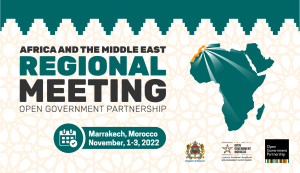
Africa and the Middle East Regional Meeting
The 2022 OGP Africa and the Middle East Regional Meeting is taking place on November 1-3 in Marrakech, Morocco.
2024-2026
Action Plan 5
South Africa’s fifth action plan takes a citizen-centric approach to government data transparency. The two commitments seek to expand open budget data and establish a framework for open data principals at the national and municipal levels. The action plan was developed collaboratively between government and civil society, with an aim to revive the OGP process in South Africa. (More)
The 2022 OGP Africa and the Middle East Regional Meeting is taking place on November 1-3 in Marrakech, Morocco.
In South Africa, public budget data was static, unintegrated, and inaccessible to citizens. Zuki Kota shares how the Vulekamali platform is addressing these issues.

Help co-create OGP's new strategy. This page is your go-to resource for all the materials you need to host and join conversations and share your views on how OGP can tackle the challenges of today and tomorrow.
Point of Contact
2025, Letter, Web page
2025, IRM Report, Web page
2025, Report Comments, Web page
2024, Letter, Web page
2024, Letter, Web page
2024, Letter, Web page
2024, Action Plan, Web page
2023, Letter, Web page
2023, IRM Report, Web page
2023, Report Comments, Web page
2023, Letter, Web page
2022, IRM Report, Web page
2021, IRM Report, Web page
2021, Report Comments, Web page
2021, Letter, Web page
2021, Action Plan, Web page
2020, Letter, Web page
2019, IRM Report, Web page
2019, Report Comments, Web page
2019, Letter, Web page
2018, Letter, Web page
2018, IRM Report, Web page
2018, Letter, Web page
2018, Report Comments, Web page
2016, IRM Report, Web page
2016, Self Assessment, Web page
2016, Action Plan, Web page
2016, Research Product, Web page
2015, IRM Report, Web page
2015, IRM Report, Web page
2015, Action Plan, Web page
2015, Action Plan, Web page
2015, Research Product, Web page
2015, Resource, Web page
The following variables answer the question “Did this commitment open government?“, and focus on how government practices have changed as a result of the commitment’s implementation.
No IRM data
Pending IRM Review
Starred commitments in OGP are one of the ways the IRM designates promising reforms. The graph below shows where the major areas for improvement in action plan design and implementation should take place based on past action plans.
Stars (Global average 7%)
Focus on implementation
Focus on design
Pending IRM review
No IRM data
Focus on objectives and impact (ambition/potential impact)
Focus on relevance to open government
Focus on verifiability
This table shows: 1) the level of public influence during the development and implementation of OGP action plans, 2) whether consultations were open to any member of the public or only to those invited; and 3) whether a forum existed that met regularly.
Participation was closed
Participation was open to any interested party
No IRM data
Forum
Pending IRM review
Collaborate: Iterative dialogue and public helped set agenda
Involve: Government gave feedback on public inputs
Consult: Public gave input
Inform: Government provided public with information on plan
The data below is drawn from the 2019 OGP Global Report. You can view and learn more about the report here.
This section captures how each OGP member can play a leadership role, based on IRM-based findings and third-party scores. This list does not cover all of open government and OGP members are not required to take any action.
These are recommendations on the role that each OGP member might play in each policy area. The recommendations are derived from a combination of the IRM-based findings and third-party scores.
Reflect the performance of commitments in a particular policy area, as assessed by the IRM.
(NC) No Commitments
(CA) Commitment(s) in the policy area.
(IR) IRM-Reviewed: At least one IRM-assessed commitment.
(C) Was Complete: At least one commitment was substantially or fully completed.
(A) Was Ambitious: At least one commitment with moderate or transformative potential impact.
(ER) Showed Early Results: At least one commitment opened government in a “Major” or “Outstanding” way.
Reflect “real-world” performance, i.e., performance outside of the OGP framework. Scores are comprised of various indicators collected by respected organizations.
IRM-Based Findings
IRM-Based Findings
IRM-Based Findings
IRM-Based Findings
IRM-Based Findings
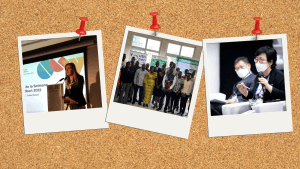
Throughout the years, Open Gov Week has shown that the open government community is stronger when it works together to build stronger societies and more resilient democracies. This year was no exception. Here are few highlights from this year’s Open Gov Week.
In South Africa, public budget data was static, unintegrated, and inaccessible to citizens. Zuki Kota shares how the Vulekamali platform is addressing these issues.

Through the Treasury, the South African government has invested in opening up budget information at the national and provincial levels. This has seen South Africa becoming a global leader in the Open Budget Survey.

In recent years, we’ve been working to answer the community’s call for a bolder and more engaging IRM through the IRM Refresh. Now, we’re excited to share the first of a series of new products – the Action Plan Review.
En años recientes, hemos trabajado en responder al llamado de la comunidad de tener un IRM más sólido y motivador a través de la actualización del IRM. Hoy, con mucha emoción, compartimos el primero de una serie de productos nuevos en los que estamos trabajando: la revisión del plan de acción
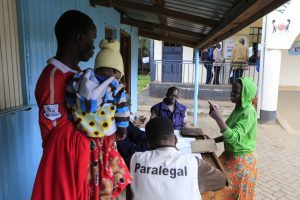
Learn how OGP members are improving access to and the quality of legal aid.
Click here for more information about the Open Government Partnership's terms of use.
Terms & Conditions Close