
Brazil’s Open Government Journey
As a founding member of OGP, Brazil has long been a leader in open government. In this report, learn how the national government and OGP Local members have advanced open government reform since 2011.
2023-2027
Action Plan 6
Brazil’s sixth action plan includes eight commitments prioritized by government and civil society. Commitments to promote transparency and citizen oversight in infrastructure projects, and to increase transparency of scientific research both show substantial potential to deliver results. As Brazil’s first four-year action plan, the mid-point refresh process would help to further specify and enhance the ambition of other commitments. (More)
As a founding member of OGP, Brazil has long been a leader in open government. In this report, learn how the national government and OGP Local members have advanced open government reform since 2011.

Brazil is partnering with civil society to make infrastructure contracts more transparent by applying open contracting principles. Read to learn how their effort aims to improve oversight, reduce corruption, and ensure public funds deliver real results.
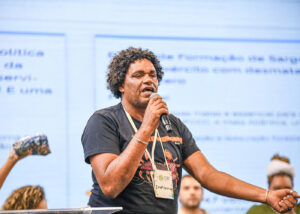
Building on its deep-rooted tradition of engaging the public, the government of Brazil has launched Brasil Participativo, a platform that combines traditional forms of citizen engagement into federal policy-making.
2026, Research Product, Web page
2025, IRM Report, Web page
2025, Report Comments, Web page
2024, IRM Report, Web page
2024, IRM Report, Web page
2024, Report Comments, Web page
2024, Report Comments, Web page
2024, IRM Report, Web page
2024, Action Plan, Web page
2023, Report Comments, Web page
2023, Self Assessment, Web page
2023, IRM Report, Web page
2023, Inception Report, Web page
2023, Inception Report, Web page
2023, Final Learning Exercise, Web page
2022, End of Commitment Report, Web page
2022, End of Commitment Report, Web page
2022, End of Commitment Report, Web page
2022, End of Commitment Report, Web page
2022, Inception Report, Web page
2022, Action Plan, Web page
2022, Inception Report, Web page
2022, Letter, Web page
2022, Action Plan, Web page
2022, Self Assessment, Web page
2021, Action Plan, Web page
2021, Action Plan, Web page
2021, Action Plan, Web page
2021, IRM Report, Web page
2021, Letter, Web page
2021, Letter, Web page
2020, Report Comments, Web page
2020, IRM Report, Web page
2020, IRM Report, Web page
2020, Report Comments, Web page
2019, Self Assessment, Web page
2019, Report Comments, Web page
2019, IRM Report, Web page
2019, IRM Report, Web page
2019, Action Plan, Web page
2018, Self Assessment, Web page
2018, Action Plan, Web page
2018, Report Comments, Web page
2017, IRM Report, Web page
2017, Report Comments, Web page
2017, Self Assessment, Web page
2017, IRM Report, Web page
2017, Report Comments, Web page
2017, Report Comments, Web page
2017, Research Product, Web page
2017, Letter, Web page
2016, Action Plan, Web page
2016, Action Plan, Web page
2016, Letter, Web page
2016, Self Assessment, Web page
2016, Letter, Web page
2016, Letter, Web page
2015, Self Assessment, Web page
2015, Action Plan, Web page
2015, IRM Report, Web page
2014, IRM Report, Web page
2014, Letter, Web page
2014, Research Product, Web page
2013, Self Assessment, Web page
2012, Action Plan, Web page
The following variables answer the question “Did this commitment open government?“, and focus on how government practices have changed as a result of the commitment’s implementation.
No IRM data
Pending IRM Review
Starred commitments in OGP are one of the ways the IRM designates promising reforms. The graph below shows where the major areas for improvement in action plan design and implementation should take place based on past action plans.
Stars (Global average 7%)
Focus on implementation
Focus on design
Pending IRM review
No IRM data
Focus on objectives and impact (ambition/potential impact)
Focus on relevance to open government
Focus on verifiability
This table shows: 1) the level of public influence during the development and implementation of OGP action plans, 2) whether consultations were open to any member of the public or only to those invited; and 3) whether a forum existed that met regularly.
Participation was closed
Participation was open to any interested party
No IRM data
Forum
Pending IRM review
Collaborate: Iterative dialogue and public helped set agenda
Involve: Government gave feedback on public inputs
Consult: Public gave input
Inform: Government provided public with information on plan
The data below is drawn from the 2019 OGP Global Report. You can view and learn more about the report here.
This section captures how each OGP member can play a leadership role, based on IRM-based findings and third-party scores. This list does not cover all of open government and OGP members are not required to take any action.
These are recommendations on the role that each OGP member might play in each policy area. The recommendations are derived from a combination of the IRM-based findings and third-party scores.
Reflect the performance of commitments in a particular policy area, as assessed by the IRM.
(NC) No Commitments
(CA) Commitment(s) in the policy area.
(IR) IRM-Reviewed: At least one IRM-assessed commitment.
(C) Was Complete: At least one commitment was substantially or fully completed.
(A) Was Ambitious: At least one commitment with moderate or transformative potential impact.
(ER) Showed Early Results: At least one commitment opened government in a “Major” or “Outstanding” way.
Reflect “real-world” performance, i.e., performance outside of the OGP framework. Scores are comprised of various indicators collected by respected organizations.
IRM-Based Findings
IRM-Based Findings
IRM-Based Findings
IRM-Based Findings
IRM-Based Findings
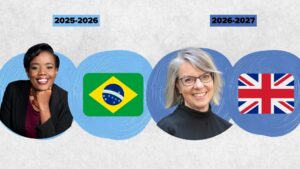
The Open Government Partnership is pleased to announce the Government of Brazil and civil society leader Steph Muchai as Co-Chairs...

On the sidelines of the high-level event “Democracia Siempre” Aidan Eyakuze, CEO of the Open Government Partnership (OGP), joined heads of state...
Ante el auge del autoritarismo, la reducción del espacio cívico y el deterioro de la confianza pública en todo el mundo, líderes democráticos y reformadores de la sociedad civil se reunieron esta semana en Santiago de Chile con un mensaje…

In 2022, the OGP Steering Committee introduced the option for countries to develop four-year action plans, giving them a longer timeframe to tackle ambitious reforms that need more time to take root. This blog covers progress to date from members implementing these plans.

Brasilia, Brazil - Today, a comprehensive report on Brazil’s efforts to promote open government was released by the Independent Reporting Mechanism (IRM), an accountability body that assesses the progress of countries participating in the Open Government Partnership (OGP). Titled Brazil’s…
Brasilia, Brasil – Hoy, el Mecanismo de Reporte Independiente (IRM, por sus siglas en inglés), un organismo de rendición de cuentas que evalúa el progreso de los países participantes de la Alianza para el Gobierno Abierto (OGP, por sus siglas…

Brasilia, Brazil – Leaders from across the Americas convened in Brasilia this week for America Abierta 2024, the region’s premier event for advancing open government and open data practices. America Abierta brings together events like AbreLatam, ConDatos, la Conferencia Brasileña…
Brasilia, Brasil – Líderes y lideresas en las Américas se reunieron en Brasilia esta semana para América Abierta 2024, el evento principal en la región para fortalecer las prácticas de gobierno abierto y datos abiertos. América Abierta combina eventos importantes…
Click here for more information about the Open Government Partnership's terms of use.
Terms & Conditions Close