
Europe Regional Meeting
The OGP Europe Regional Meeting will take place on October 11-12, 2022 in Rome, Italy.
2023-2025
Action Plan 5
Sweden’s fifth OGP action plan achieved positive and sustained early results in adopting and implementing the principles of the Open Data Charter as well as in developing the country’s second anti-corruption plan. There were notable improvements to the process for developing commitments, with government and civil society having different expectations about how engagement could be further strengthened. (More)
The OGP Europe Regional Meeting will take place on October 11-12, 2022 in Rome, Italy.

Help co-create OGP's new strategy. This page is your go-to resource for all the materials you need to host and join conversations and share your views on how OGP can tackle the challenges of today and tomorrow.
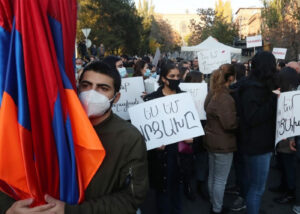
Everyone has a story. Together we have a mission. Explore stories from across the open government community, and submit your own.
Point of Contact
2026, IRM Report, Report
2026, Report Comments, Report
2025, IRM Report, Document
2024, Research Product, Document
2023, IRM Report, Document
2023, Report Comments, Document
2023, Guidance Document, Document
2023, Letter, Letter
2023, IRM Report, Report
2023, Report Comments, Report
2023, Letter, Document
2023, Action Plan, Document
2023, Letter, Letter
2023, Document
2022, IRM Report, Report
2021, Research Product, Document
2021, Letter, Letter
2021, Letter, Letter
2021, IRM Report, Report
2020, Resource, Web page
2020, Report Comments, Report
2019, Action Plan, Document
2019, IRM Report, Report
2019, Letter, Letter
2019, Report Comments, Report
2018, Self Assessment, Report
2018, IRM Report, Report
2018, Report Comments, Report
2018, Letter, Web page
2017, Letter, Letter
2017, Letter, Letter
2017, IRM Report, Report
2017, Self Assessment, Report
2016, Action Plan, Document
2016, Letter, Letter
2016, IRM Report, Report
2015, Self Assessment, Report
2015, Action Plan, Document
2015, IRM Report, Report
2015, Action Plan, Document
The following variables answer the question “Did this commitment open government?“, and focus on how government practices have changed as a result of the commitment’s implementation.
No IRM data
Pending IRM Review
Starred commitments in OGP are one of the ways the IRM designates promising reforms. The graph below shows where the major areas for improvement in action plan design and implementation should take place based on past action plans.
Stars (Global average 7%)
Focus on implementation
Focus on design
Pending IRM review
No IRM data
Focus on objectives and impact (ambition/potential impact)
Focus on relevance to open government
Focus on verifiability
This table shows: 1) the level of public influence during the development and implementation of OGP action plans, 2) whether consultations were open to any member of the public or only to those invited; and 3) whether a forum existed that met regularly.
Participation was closed
Participation was open to any interested party
No IRM data
Forum
Pending IRM review
Collaborate: Iterative dialogue and public helped set agenda
Involve: Government gave feedback on public inputs
Consult: Public gave input
Inform: Government provided public with information on plan
The data below is drawn from the 2019 OGP Global Report. You can view and learn more about the report here.
This section captures how each OGP member can play a leadership role, based on IRM-based findings and third-party scores. This list does not cover all of open government and OGP members are not required to take any action.
These are recommendations on the role that each OGP member might play in each policy area. The recommendations are derived from a combination of the IRM-based findings and third-party scores.
Reflect the performance of commitments in a particular policy area, as assessed by the IRM.
(NC) No Commitments
(CA) Commitment(s) in the policy area.
(IR) IRM-Reviewed: At least one IRM-assessed commitment.
(C) Was Complete: At least one commitment was substantially or fully completed.
(A) Was Ambitious: At least one commitment with moderate or transformative potential impact.
(ER) Showed Early Results: At least one commitment opened government in a “Major” or “Outstanding” way.
Reflect “real-world” performance, i.e., performance outside of the OGP framework. Scores are comprised of various indicators collected by respected organizations.
IRM-Based Findings
IRM-Based Findings
IRM-Based Findings
IRM-Based Findings
IRM-Based Findings

The OGP Nordic+ group met in April 2024 and again during Open Gov Week to discuss how to advance fiscal transparency and enhance participation in fiscal policy.

This year, OGP’s Independent Reporting Mechanism (IRM) started rolling out the Co-Creation Brief, a new product that shares lessons from past action plans and open government practice to support reformers in co-designing ambitious and feasible commitments.
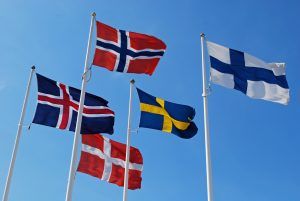
The Nordics top the rankings on good governance, showing strong institutions, rule of law, and high levels of public trust See what they're doing in OGP.
Los cuatro países nórdicos, Dinamarca, Noruega, Suecia y Finlandia, se incorporaron a Open Government Partnership (OGP) con una línea base de apertura y transparencia muy alta. Estos países ocupan los primeros lugares en las clasificaciones de buena gobernanza, instituciones sólidas,…
In October 2014 OGP-executive officers from the public administration in Denmark, Finland, Norway and Sweden met in Berlin. The main purpose was to discuss and exchange experiences about OGP Actions Plans. In addition we wanted to learn more about the…
Durante los últimos seis meses, la mayoría de los países que ingresaron a la Alianza para el Gobierno Abierto en abril de 2012 y en el 2014 han trabajado duro para desarrollar compromisos ambiciosos que fomenten el acceso a la…