
Europe Regional Meeting
The OGP Europe Regional Meeting will take place on October 11-12, 2022 in Rome, Italy.
2023-2027
Action Plan 5
Norway’s fifth action plan includes commitments addressing public procurement, digital inclusion, and anti-corruption. The action plan presents an opportunity to implement mechanisms for broader participation of civil society groups and other interested groups, beyond those stakeholders already participating in the process. The ambition of commitments can be enhanced by including actions that represent policy changes rather than intermediate outcomes of a process. Norway can take advantage of the action plan’s midterm refresh to account for emerging lessons from the first two years of implementation and adapt the action plan commitments accordingly. (More)
The OGP Europe Regional Meeting will take place on October 11-12, 2022 in Rome, Italy.
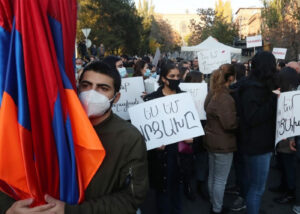
Everyone has a story. Together we have a mission. Explore stories from across the open government community, and submit your own.

This year, OGP’s Independent Reporting Mechanism (IRM) started rolling out the Co-Creation Brief, a new product that shares lessons from past action plans and open government practice to support reformers in co-designing ambitious and feasible commitments.
Point of Contact
2024, IRM Report, Document
2024, Report Comments, Document
2024, Research Product, Document
2023, Action Plan, Document
2023, Guidance Document, Document
2023, Letter, Letter
2023, IRM Report, Report
2023, Letter, Document
2023, Report Comments, Report
2023, Letter, Letter
2022, IRM Report, Report
2021, Letter, Letter
2020, IRM Report, Report
2020, Resource, Web page
2020, Report Comments, Report
2019, Action Plan, Document
2019, IRM Report, Report
2019, Letter, Letter
2018, Report Comments, Report
2018, IRM Report, Report
2018, Report Comments, Report
2017, Self Assessment, Report
2017, Report Comments, Report
2017, IRM Report, Report
2017, Report Comments, Report
2017, IRM Report, Report
2016, Action Plan, Document
2015, IRM Report, Report
2015, IRM Report, Report
2015, Action Plan, Document
2015, Self Assessment, Report
2015, Action Plan, Document
2013, Research Product, Web page
The following variables answer the question “Did this commitment open government?“, and focus on how government practices have changed as a result of the commitment’s implementation.
No IRM data
Pending IRM Review
Starred commitments in OGP are one of the ways the IRM designates promising reforms. The graph below shows where the major areas for improvement in action plan design and implementation should take place based on past action plans.
Stars (Global average 7%)
Focus on implementation
Focus on design
Pending IRM review
No IRM data
Focus on objectives and impact (ambition/potential impact)
Focus on relevance to open government
Focus on verifiability
This table shows: 1) the level of public influence during the development and implementation of OGP action plans, 2) whether consultations were open to any member of the public or only to those invited; and 3) whether a forum existed that met regularly.
Participation was closed
Participation was open to any interested party
No IRM data
Forum
Pending IRM review
Collaborate: Iterative dialogue and public helped set agenda
Involve: Government gave feedback on public inputs
Consult: Public gave input
Inform: Government provided public with information on plan
The data below is drawn from the 2019 OGP Global Report. You can view and learn more about the report here.
This section captures how each OGP member can play a leadership role, based on IRM-based findings and third-party scores. This list does not cover all of open government and OGP members are not required to take any action.
These are recommendations on the role that each OGP member might play in each policy area. The recommendations are derived from a combination of the IRM-based findings and third-party scores.
Reflect the performance of commitments in a particular policy area, as assessed by the IRM.
(NC) No Commitments
(CA) Commitment(s) in the policy area.
(IR) IRM-Reviewed: At least one IRM-assessed commitment.
(C) Was Complete: At least one commitment was substantially or fully completed.
(A) Was Ambitious: At least one commitment with moderate or transformative potential impact.
(ER) Showed Early Results: At least one commitment opened government in a “Major” or “Outstanding” way.
Reflect “real-world” performance, i.e., performance outside of the OGP framework. Scores are comprised of various indicators collected by respected organizations.
IRM-Based Findings
IRM-Based Findings
IRM-Based Findings
IRM-Based Findings
IRM-Based Findings
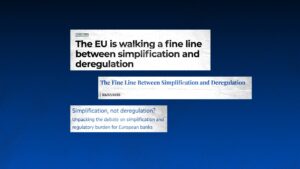
Across Europe, simplification is a key reform priority for governments.A recent Europe Dialogue explored potential tension and synergies between simplification and open government. The discussion showed that results depend on the political goals pursued by policy-makers, and three key lessons stood out to ensure synergies.

In 2022, the OGP Steering Committee introduced the option for countries to develop four-year action plans, giving them a longer timeframe to tackle ambitious reforms that need more time to take root. This blog covers progress to date from members implementing these plans.
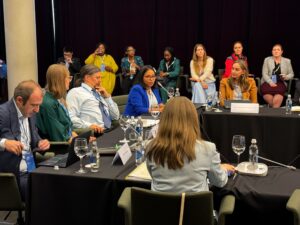
This blog post was originally posted on Open Ownership’s website. Read the original post here. The International Anti-Corruption Conference (IACC), hosted by the Government of Lithuania in June 2024, gathered practitioners from around the globe to discuss and advance action…

The OGP Nordic+ group met in April 2024 and again during Open Gov Week to discuss how to advance fiscal transparency and enhance participation in fiscal policy.

Launched in 2019, the Beneficial Ownership Leadership Group (or the Leadership Group) set out to advance global policy toward open beneficial ownership (BO) data, and achieve concrete progress by 2023. This summary examines the group's achievements, lessons learned by Open Ownership and the Open Government Partnership from co-convening the group, and future directions to advance BO reform.