










Making Access Easier: Responsible Right to Information Simplification
We seem to be in a moment of regulatory simplification. Can the right to information (RTI) benefit from simplification too?
This series explores inspiring reforms by OGP members around the world, from tackling corruption through open contracting reform to addressing the challenges posed by artificial intelligence and other emerging technologies.
Check out all of our Feature Stories here.
What do governments and international organizations mean when they say that they aim to advance gender equity in the context of natural resource governance?
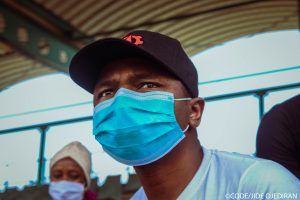
Since the return to democracy in 1999, nothing exposed Nigeria’s negligence, unpreparedness and unwillingness to deliver quality healthcare more than COVID-19. During the military dictatorship, Nigeria had earned notorious labels as irredeemably corrupt, and hopeless by the international community. So,…
As part of the regional discussions around the Open Response + Open Recovery, the Latin American community got together a month ago, convinced that the solutions to the pandemic must rely on openness, and exploring ways to better articulate our…
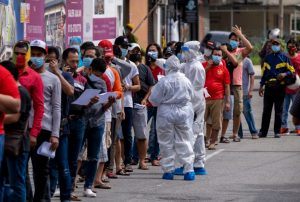
COVID-19 shocked our lives. More than 7 million people worldwide have tested positive for the virus, with frontline workers, health systems, and vulnerable populations suffering the most. COVID is disrupting our working routines and changing our plans and strategic priorities.…
Algorithms - analytical systems that process data and supplement or replace decision-making previously undertaken by people - have become an essential way for governments to improve delivery of public services and implementation of policy...
For the first time in 20 years, governments are the most trusted institutions, according to recent data from Edelmann, a global communications firm. From Mexico to South Korea to Canada, trust in government increased by ten points alone since the start of 2020.
Currently we face both a swell of support for open educational resources (OER) and devastating upheaval of our traditional education systems...
The spread of Covid-19 has closed much of the world, and the strain on healthcare and other essential workers is unprecedented. For the most vulnerable, lockdowns impose extreme hardships. It will take the collective action of citizens, civil society and governments to respond and recover from this pandemic. But in order to be fair and effective, that response and recovery must be open and inclusive.
As global distrust in democracies grows, we believe intransparent legislative structures are a big factor. When lobbyists influence laws, it can create feelings of injustice and distrust within a society. Yet, lobbying, or the articulation of and advocacy for various interests, is essential for democracies. So, what does a fair and transparent lobbying system that enhances trust for political procedures look like?
There’s a damaging rumor doing the rounds in Kibera, Nairobi’s massive informal settlement: that COVID-19 is a fabrication invented by the country’s elite to raise money from the World Bank and the World Health Organization (WHO) to pay off the elite’s debts.
Shortly after the WHO declared a global pandemic, the OGP Support Unit announced a COVID-19 crowdsourcing exercise. We asked for examples from the open government community to tackle the pandemic using open government approaches including citizen participation, transparency and accountability.…
The global emergency posed by Covid-19 marks a before and after in the way we live. It might also help us rethink how we govern...
We seem to be in a moment of regulatory simplification. Can the right to information (RTI) benefit from simplification too?
Click here for more information about the Open Government Partnership's terms of use.
Terms & Conditions Close